iAspirants
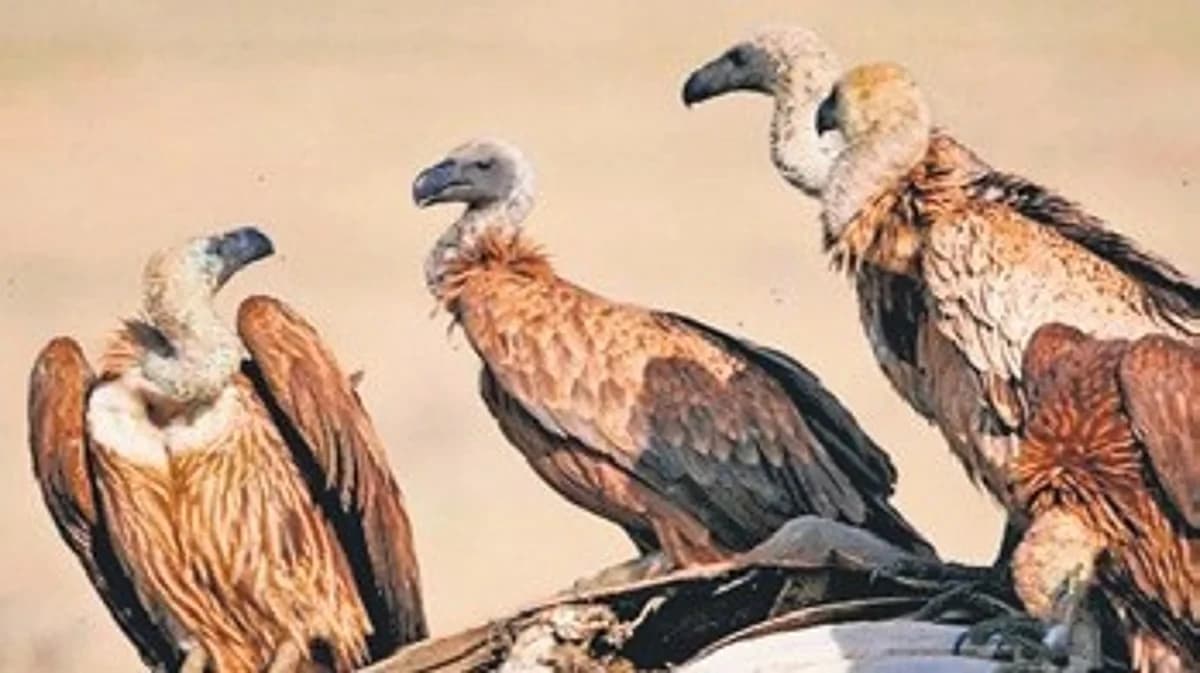
First Slender-Billed Vultures Released
Published on:
Share this post
Article Summary
Summary of Key Facts and Data
Conservation and Wildlife Breeding:
- Species Released: Five Slender-billed vultures (Gyps tenuirostris) and five White-rumped vultures (Gyps bengalensis).
- Location: Jatayu Soft Release Centre in Biswanath Division, Kaziranga National Park, Assam.
- Significance: First-ever release of captive-bred Slender-billed vultures globally.
- Breeding Facility: Bombay Natural History Society (BNHS) in Assam, conservation program initiated in collaboration with the State Forest Department since 2007.
Threats to Vulture Population:
- Population Decline: Gyps vultures in India have experienced a 99% decline in the past two decades.
- Causes:
- Use of veterinary painkillers, with four drugs banned: diclofenac, aceclofenac, ketoprofen, nimesulide.
- Pesticide poisoning, particularly affecting vultures that ingest carcasses contaminated with toxic substances.
- Casualty Statistics: Over 700 vultures, including Himalayan griffons, have died in Assam since 2018 due to accidental secondary poisoning linked to pesticides.
Government and Institutional Actions:
- Awareness Campaigns: Conducted to educate the public on the dangers of using banned drugs for livestock and on the safe disposal of carcasses to protect vultures.
- Tracking and Monitoring: Released vultures are equipped with blue rings around their legs and tags on their backs for tracking and research purposes.
Key Individuals:
- BNHS Deputy Director: Sachin Ranade, who emphasized the significance of this release for conservation efforts.
- Assam’s Environment and Forest Minister: Jayanta Mallabaruah, present during the release event.
Environmental Impact:
- Ecological Role of Vultures: Vultures serve as essential scavengers, cleaning up carrion and preventing the spread of diseases by consuming dead animals.
Importance of the Event:
- The release of these vultures represents a critical step in global conservation efforts and highlights the ongoing challenges faced by wildlife in terms of habitat preservation and the impacts of human activity on animal populations. The initiative underscores the importance of collaborative conservation work between governmental departments and non-governmental organizations.
Key Terms & Concepts
| Bombay Natural History Society | Conservation facility for vultures |
| Assam | Location of vulture release |
| Kaziranga National Park | Vulture release site |
| Gyps tenuirostris | Species of released vulture |
| Gyps bengalensis | Species of previously released vulture |
| Vulture Conservation Breeding Centre | Breeding site for vultures |
| 99% | Population decline of Gyps vultures |
| Diclofenac, aceclofenac, ketoprofen, nimesulide | Banned veterinary drugs harming vultures |
| 2007 | Year BNHS began vulture conservation |
| 700 | Deaths of vultures due to poisoning |
| Awareness drives | Initiatives to prevent pesticide use |