iAspirants
Galactic Discoveries Challenge Formation Theories
Published on:
Share this post
Article Summary
Astronomy Discoveries and Theories on Galaxy Formation
Recent Discoveries:
- Discovery of Ancient Galaxies:
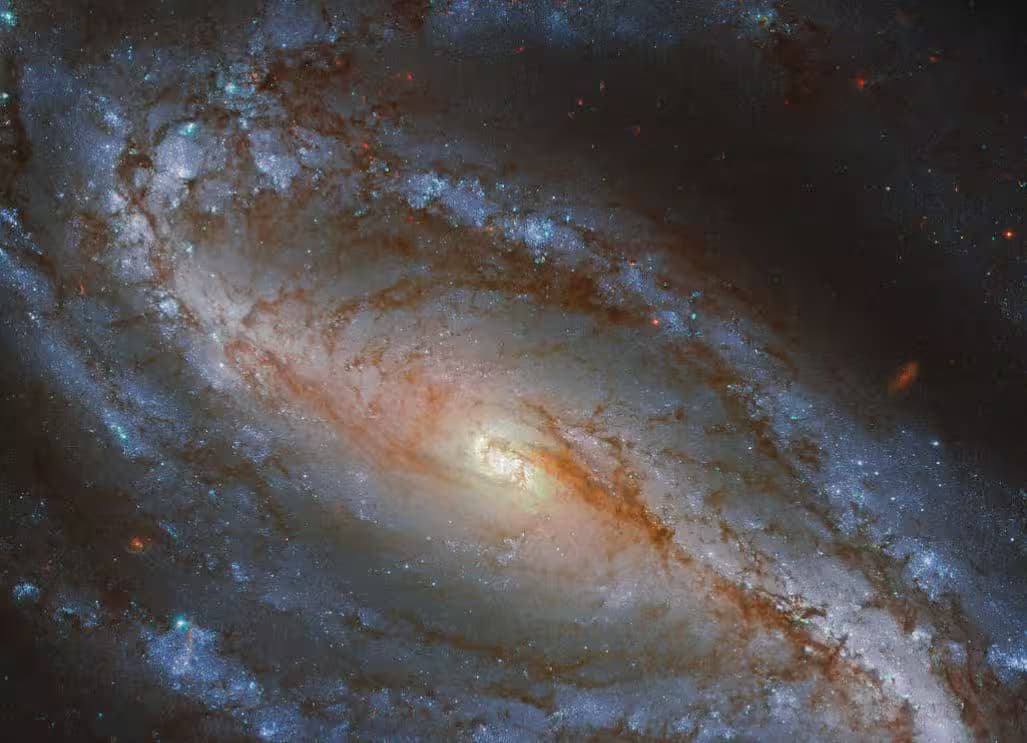
- Zhúlóng (“A Torch Dragon”): A massive galaxy found when the universe was approximately 1 billion years old. It shares similarities in size and spiral arm structure with the Milky Way.
- Big Wheel: Another ancient galaxy, identified when the universe was under 2 billion years old, thought to be rare for that period.
- Alaknanda: Identified by researchers from the National Centre of Radio Astrophysics, Pune; existed when the universe was about 200 million years old and is significantly massive, similar to the Milky Way.
Formation Theories:
Spiral Galaxies Structure:
- Galaxies like the Milky Way possess spiral arms that form due to star density variations, akin to “traffic jams” where gas compresses and leads to new star formation.
- Contradicts the earlier belief that spiral galaxies were fragile and took billions of years to form.
Formation Timeline:
- Previously accepted theories posited a "bottom-up" formation process where small galaxies merged to form larger ones over time.
- The newfound ancient galaxies challenge the notion of the timeline of galaxy formation, suggesting that large, complex structures could form much earlier than previously thought.
Methodology:
- Astronomers estimate galaxy mass and age by analyzing the spectrum of light emitted from these galaxies, comparing it against theoretical models of stellar evolution.
Implications:
- The increasing discoveries of massive ancient galaxies prompt a reevaluation of existing models explaining how galaxies, especially spiral ones, form and evolve.
Conclusion:
- The discoveries by the Pune researchers, particularly of Alaknanda, illustrate the complexity and surprising nature of galaxy evolution, marking a significant advancement in the field of astrophysics and challenging preconceived notions regarding the age and formation of galaxies in the early universe.
Key Terms & Concepts
| National Centre of Radio Astrophysics, Pune | Research institution for astronomy |
| Milky Way | Galaxy mentioned for comparison |
| Zhúlóng | Ancient galaxy discovered |
| Big Wheel | Ancient galaxy discovered |
| Alaknanda | Ancient galaxy discovered |
| Himalayan river | Name origin for Alaknanda |
| Spiral arms | Distinct structure in galaxies |
| Billion years | Age of the universe reference |
| Stellar mass | Parameter for galaxy analysis |
| Spectrum of light | Used for galaxy analysis |
| Space warping | Phenomenon aiding galaxy discovery |
| Star formation | Process related to galaxies |
| Dust grains |