iAspirants
Current AffairsPrelims PYQsUPSC CSE SyllabusUPSC CSE StrategyBlogsPricing
Login
iAspirants

Your AI-powered companion for UPSC preparation.

Quick Links

  • Home
  • About Us
  • Current Affairs
  • Prelims PYQs
  • UPSC CSE Syllabus
  • UPSC CSE Strategy
  • Blogs

Company

  • Pricing
  • FAQs
  • Contact Us
  • Login

Legal

  • Privacy Policy
  • Terms & Conditions
  • Return Policy

© 2025 iAspirants, Inc. All rights reserved.

  1. Blogs
  2. International Relations

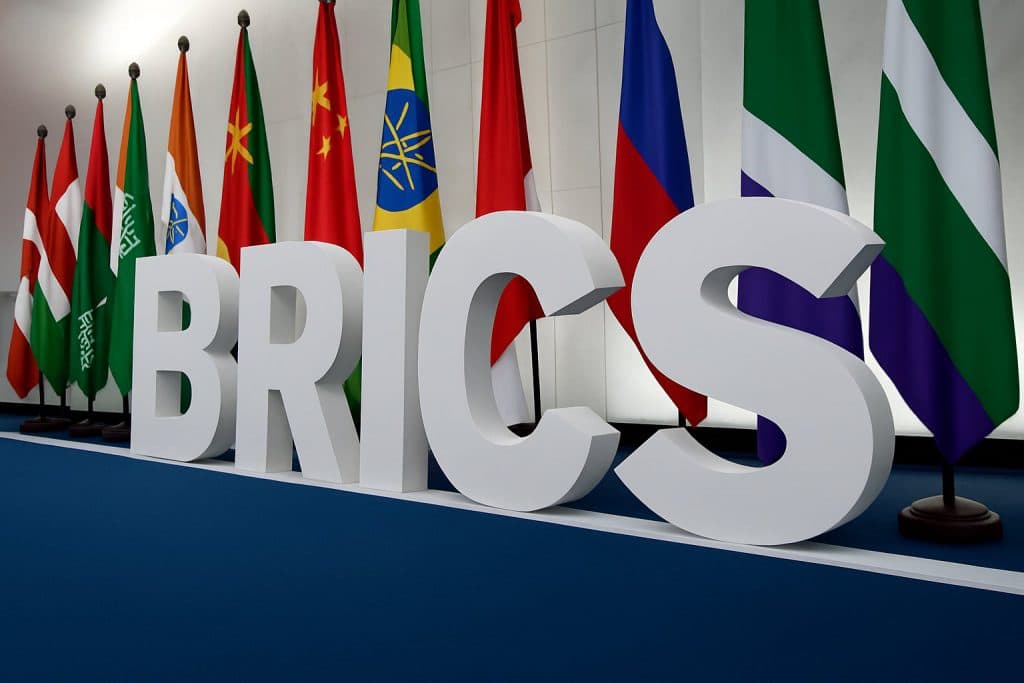
Geopolitical Shifts Post BRICS Summit

Published on: 16-Sep-2026

Share this post

Geopolitical Shifts Post BRICS Summit

Article Summary

Summary of Key Points on Global Geopolitical Dynamics

  • Geopolitical Context:

    • Shift from BRICS summit in New Delhi to upcoming meetings between U.S. President Donald Trump and Chinese leader Xi Jinping.
    • Discussions around potential G2 (U.S.-China) and G3 (adding Russia) structures.
  • BRICS and G7 Analysis:

    • Economic Influence of China:
      • In 2006, China accounted for less than half of BRICS' GDP; now, it constitutes about 60%.
      • U.S. represents nearly 60% of G7's output, an increase from below 40% three decades ago.
      • Structural changes in global power dynamics favoring U.S. and China.
  • International Diplomacy:

    • Meetings Timeline:
      • Trump and Xi to meet in Washington, followed by APEC summit in Shenzhen, China.
      • Possible trilateral discussions including Russia's Vladimir Putin.
    • G20 Summit:
      • Scheduled for December, hosting major global economies including China, Russia, India, and Brazil.
  • U.S.-China Relations:

    • Continuous rivalry over trade, technology, and Taiwan.
    • Recognition needed for managing tensions through high-level dialogue despite disputes.
    • Bilateral agreements risk marginalizing other G20 members.
  • Russian Influence:

    • Despite economic challenges, Russia's military power and diplomatic reach remain significant in geopolitical discussions.
    • Ongoing complexities due to the conflict with Ukraine and U.S.-Russia relations.
  • Implications for India and Global Order:

    • India's desire for a multipolar world contrasts with an emerging G2 structure.
    • Indian foreign policy must adapt to the intensified great-power competition.
    • Organizations (APEC, BRICS, EU, G7, NATO) operate within the parameters defined by the U.S., China, and Russia, lacking true world order shaping capabilities.

Key Data and Figures:

  • China’s Economic Growth in BRICS: 60% of BRICS GDP.
  • U.S. Output in G7: Nearly 60% of nominal output.
  • Duration of Meetings: Regular bilateral meetings between Trump and Xi.

Conclusion:

The evolving geopolitical landscape, characterized by the rising influences of the U.S. and China, poses significant implications for global diplomacy and economic order. As organizations like BRICS and G20 grapple with these dynamics, India's strategic positioning becomes critical in navigating the challenges and opportunities of this changing environment.

Key Terms & Concepts

BRICSMultilateral grouping of nations
G7Group of major advanced economies
G20Forum for international economic cooperation
APECAsia-Pacific economic cooperation forum
ShenzhenLocation for upcoming US-China meeting
Economic OutputChina's dominance in GDP
UkraineConflict affecting US-Russia relations
Artificial IntelligenceEconomic advantage for the US
WashingtonLocation for US-China summit
RussiaInfluencer in US-China dynamics
ChinaEmerging global power
United StatesDominant economic power

Mind Map for UPSC Civil Services Revision

Turn UPSC Civil Services Current Affairs Into Exam-Ready Notes

Reading International Relations current affairs is half the work. Revise them with ready-made notes and test what actually stuck.

  • Daily UPSC Civil Services current affairs analysis
  • Revision notes, mind maps & MCQs
  • Prelims mock tests with instant results

Related UPSC Civil Services Current Affairs Articles

AI Development and Global Cooperation
International Relations16-Sep-2026

AI Development and Global Cooperation

Exam-Focused Notes on Artificial Intelligence and International Dynamics

Key Themes:

  • The intersection of Artificial Intelligence (AI) development with global geopolitics, particularly in the context of the United States and BRICS nations.
  • Concerns regarding the "weaponisation" of technology and its implications on national security and cooperation among nations.

Constitutional and Policy Context:

  • The BRICS Summit highlighted the need for a collaborative approach to technology development, contrasting with U.S. unilateralism.
  • India's Prime Minister Narendra Modi emphasized the importance of preventing the "weaponisation" of technology during the Summit, suggesting a recognition of technological sovereignty and national security interests.

International Agreements and Initiatives:

  • The establishment of a "BRICS AI open source community" proposed by Chinese President Xi Jinping aims to foster collaborative development in AI that moves away from U.S. dominance.
  • Joint initiatives among BRICS nations seek to enhance cooperation in the development and deployment of AI technologies, indicating a shift towards a multipolar technological landscape.

Economic and Technological Implications:

  • The global push for AI development is interconnected with economic competition, particularly between the U.S. and China. This competition is leading to significant investments in data centers and AI infrastructures.
  • Concerns raised about the potential for the Global South to be impacted by geopolitical rivalries, specifically regarding the withdrawal of influential AI models like Anthropic’s Fable and Mythos.

Security and Cyber Defense:

  • The proliferation of AI technologies necessitates improved cyber defense mechanisms. Nations need to collaborate to ensure that defensive capabilities against AI risks are made widely accessible.
  • The rise of AI systems that can execute tasks independently raises security concerns, especially for nations with weaker cyber defenses.

Recommendations for Cooperation:

  • Emphasis on the need for collaborative, open-source AI solutions as a means to mitigate risks and enhance national security.
  • The call for a comprehensive approach to make AI technologies broadly available to prevent imbalances caused by geopolitical tensions.

Scientific and Technological Advances:

  • AI advancements are evolving rapidly, prompting concerns about control and potential misuse. The expectation is that oversight mechanisms will need to adapt as AI capabilities grow.
  • The ongoing development of AI, being crucial for national economies, underscores the importance of participation in its deployment, even by nations with developing technological ecosystems.

Conclusion:

Countries, especially those in the Global South, must navigate the complexities of AI development amidst great power competition. Proactive measures for international collaboration, particularly through platforms like BRICS, are essential to ensure equitable technological advancement and enhanced national security.

BRICS Declaration Highlights Key Issues
International Relations15-Sep-2026

BRICS Declaration Highlights Key Issues

BRICS Declaration Highlights

  1. Consensus Building: The 45-page BRICS declaration emphasizes diplomatic consensus, allowing member nations to achieve their objectives while avoiding contentious issues.

  2. Key Themes Discussed:

    • Trade
    • Health
    • AI (Artificial Intelligence)
    • Tourism
  3. Condemnation of Sanctions:

    • The declaration (Para 22) condemns "unilateral coercive measures" and "economic sanctions," a reference to Western sanctions, particularly those imposed by the U.S. on Russia and Iran.
    • It also addresses the "tightening of unilateral blockade measures" in relation to Cuba.
  4. Stance on Trade Tariffs:

    • Emphasizes the adverse effects of "indiscriminate rising of tariffs" and opposes "carbon border adjustment mechanisms" indicative of U.S. and EU climate measures.
  5. U.S. Influence:

    • Repeated mentions of U.S. tariffs and the effects on BRICS nations, with a noted absence of direct references to former President Trump.
  6. Non-Inflammatory Language on Ukraine:

    • Unlike the previous BRICS declarations, the Delhi 2026 document omits any mention of the Ukraine conflict, instead reflecting the geopolitical weight of Russia as a BRICS member.
  7. UN Security Council Reform:

    • Reiterates support for Brazil and India in playing a greater role within the UN, highlighting China and Russia's backing as permanent members (Para 27).
  8. Position on Terrorism:

    • Condemnation of terrorism was reiterated, mirroring language from the 2025 declaration, specifically condemning a terrorist attack in Jammu and Kashmir with strong language.
  9. Support for Global South:

    • Acknowledgment of China’s expansion of zero-tariff treatment to 53 African nations, depicting China as a benefactor amidst global economic sanctions.
    • Support for Iran's WTO accession and mention of Ethiopia in this context.
  10. Conflict References:

    • Direct references are made to the Israel-Gaza situation, citing UNSC Resolution 2803, condemning actions prolonging occupation and stressing humanitarian obligations.
    • The document underscores violations against civilian infrastructure and nuclear facilities, attending to international law violations.
  11. Judicial Insights:

    • Refers to the International Court of Justice regarding Israel's obligations in humanitarian contexts, particularly related to aid.
  12. International Agreements:

    • The declaration reaffirms the collective stance on Palestine and condemns actions that affect Palestinian rights and displacement.

Economic Context

  • BRICS nations, including Iran and Russia, are under significant pressure from Western economic sanctions, which influences the economic policies advocated in the declaration.

Conclusion

The BRICS 2026 declaration outlines significant diplomatic stances against unilateral sanctions and tariffs while navigating controversial geopolitical topics, maintaining a focus on collective economic benefits and regional stability, particularly in dealings related to trade and conflicts affecting the Global South.

India-US Joint Military Exercise 2026
National and International Importance15-Sep-2026

India-US Joint Military Exercise 2026

India-U.S. Joint Military Exercise "Yudh Abhyas 2026"

Overview:

  • The 22nd edition of the India-U.S. joint military exercise, "Yudh Abhyas 2026," commenced at the Auli Foreign Training Center, Uttarakhand.
  • The exercise also takes place simultaneously at the Mahajan Field Firing Range in Rajasthan.

Participants:

  • Each side comprises 600 soldiers, with Major General Amresh Gunjan from the Indian Army's 14th Infantry Division and Colonel Benjamin Jackman from the U.S. Army's 11th Airborne Division addressing the troops.

Objectives:

  • Enhance joint military capability in integrated battle groups for operations in mountainous and semi-mountainous terrains.
  • Focus on infantry-centric operations to improve interoperability and facilitate the exchange of best operational practices.
  • Strengthen joint planning and execution of military operations.

Technological Integration:

  • Emphasis on incorporating technology, including the use of drones and autonomous systems for surveillance and reconnaissance tasks.
Yemen Conflict Escalates with Airstrikes
International Relations15-Sep-2026

Yemen Conflict Escalates with Airstrikes

Summary of Key Points: Yemen Conflict and Regional Dynamics

  1. Conflict Overview:

    • Yemen's Houthis, an Iran-backed group, have been engaged in armed conflict against Saudi Arabia and the Saudi-backed internationally recognized Yemeni government.
    • The Houthis recently seized control of Yemen's Red Sea coast and the strategically important Bab al-Mandab Strait.
  2. Military Engagement:

    • The Houthis claimed to have launched missiles and drones targeting Saudi military bases, reportedly resulting in significant retaliatory action from Saudi Arabia.
    • Saudi Arabia conducted approximately 54 airstrikes on Houthi positions over a 24-hour period in response to these attacks.
    • Recent clashes led to the death of eight Yemeni government troops and two civilians due to Saudi airstrikes in Taiz province.
  3. Casualty Statistics:

    • According to sources, eight Yemeni government forces were killed due to Houthi missile strikes.
    • The conflict has resulted in various civilian casualties, raising concerns over humanitarian issues amidst ongoing military operations.
BRICS Celebrates 20 Years of Growth
International Relations14-Sep-2026

BRICS Celebrates 20 Years of Growth

BRICS 20th Anniversary Summit Key Highlights

  1. Significance of BRICS:

    • Prime Minister Narendra Modi emphasized that BRICS has developed its distinct identity in the global arena over its 20 years, promoting consensus and respect among its member nations instead of opposing any countries.
  2. Global South Empowerment:

    • Modi advocated for increased representation of the Global South in global decision-making, proposing a shift from a "pyramid of privilege" to a "platform of partnership."
  3. BRICS Consensus Declaration:

    • The summit culminated in a BRICS declaration adopted through consensus, signaling unity among members despite geopolitical tensions (notably between UAE and Iran).
  4. Key Proposals for Global Governance:

    • Modi proposed creating a “BRICS Reform Roadmap” with three emphasis areas:
      • Representation: Urged reform of the UN Security Council, proposing text-based negotiations with a clear timeline.
      • Responsiveness: Suggested a “Seafarers Emergency Support Network” for maritime professionals in distress.
      • Rule-Making: Stressed the need for equal participation in establishing future global regulations concerning AI, outer space, biotechnology, and critical technologies.
  5. Implementation Mechanism:

    • Modi proposed a “BRICS Continuity and Implementation Mechanism” to maintain momentum in initiatives during the annual rotation of BRICS chairmanship, with a secure digital repository for tracking decisions.
  6. International Responses:

    • Leaders like Xi Jinping emphasized the importance of BRICS countries in maintaining international peace and justice, while Putin highlighted principles of equality and mutual respect within BRICS member interactions.
  7. Next Steps:

    • The next BRICS summit will be hosted by China, which presents challenges due to its position on various geopolitical issues, including India’s bid for a permanent UN Security Council seat.

Contextual Data:

  • BRICS comprises Brazil, Russia, India, China, and South Africa, representing a significant portion of the world's population and economic output.

Relevant Constitutional References:

  • The emphasis on global reforms aligns with the United Nations Charter principles, highlighting duties of member states to adhere to international cooperation.

Concluding Note:

  • The BRICS summit was characterized by a collaborative spirit aimed at enhancing the role of the Global South, advocating for structural changes in global governance, and fostering collective responses to international challenges.
BRICS Consensus on Middle East Conflict
International Relations14-Sep-2026

BRICS Consensus on Middle East Conflict

BRICS Joint Declaration on West Asia Conflict

Overview:

  • The BRICS summit resulted in a joint declaration addressing the recent conflict in West Asia (involving the US and Iran), following extensive diplomatic negotiations by Indian officials.

Key Diplomatic Efforts:

  • The negotiations spanned nearly 100 hours and were informed by previous Sherpa meetings in Delhi (February and May 2023) and involved extensive communication with member countries.
  • Indian diplomats used their diverse expertise to foster dialogue, including outreach by Prime Minister Narendra Modi and high-level ministers.

Significant Dates and Meetings:

  • First BRICS Sherpas meeting: February 9-11, 2023, in New Delhi outlined priorities under India’s chairmanship.
  • Second Sherpas’ meeting: May 11-13, 2023 - noted a shift in dynamics between the UAE and Iran.
  • Meetings between Modi and world leaders (including the UAE and Iranian presidents) in May and June laid the groundwork for BRICS consensus.

Ceasefire and Negotiations:

  • A 60-day ceasefire between the US and Iran created a temporary opportunity for diplomatic engagement.
Diplomatic Highlights from BRICS Summit
International Relations14-Sep-2026

Diplomatic Highlights from BRICS Summit

Summary of New Delhi Declaration 2026 and BRICS Context

BRICS Overview

  • BRICS (Brazil, Russia, India, China, South Africa) serves as a multilateral forum for emerging economies since its inception in 2006.
  • Its founding purpose was to provide a platform for united action among emerging powers in a unipolar world.

New Delhi Declaration 2026 Highlights

  1. Diplomacy and Cooperation:

    • The Declaration reaffirms the role of diplomacy and dialogue, suggesting that nations with opposing ideologies can negotiate and cooperate.
    • Calls for consensus-building amidst ongoing conflicts in West Asia, notably between Israel and Palestine, and Iran and the UAE.
  2. Economic Measures:

    • Addresses the consequences of “unilateral coercive measures” and “unilateral blockades,” notably criticizing these practices by the U.S. under former President Trump.
    • Emphasizes the need to prevent the weaponization of trade, especially in essential commodities like hydrocarbons, for the Global South.
  • Demonstration of modern weapon systems at the Mahajan Field Firing Range.
  • Discussions among subject matter experts from both armies on emerging technologies and changes in multi-domain warfare.
  • Strategic Importance:

    • The exercise provides an opportunity for both armies to share strategies, technologies, and processes.
    • Aims to enhance their capability for coordinated military actions in diverse terrains and operational environments.

    Key Takeaways:

    • The exercise exemplifies India and the U.S.'s commitment to strengthening defense ties and improving operational readiness.
    • The integration of modern technology highlights the evolving nature of warfare and the need for adaptability in military strategies.

    This military exercise underscores the strategic partnership between India and the United States, with a focus on enhancing joint operational capabilities and adapting to new technological advancements in defense.

  • Regional Context:

    • The conflict in Yemen is part of a broader regional power struggle, notably tied to the U.S.-Iran tensions, particularly around the control and safety of maritime routes, including the Strait of Hormuz.
    • U.S. President expressed a willingness to engage in talks with Iran, indicating potential diplomatic shifts that could impact the situation in Yemen.
  • Humanitarian Situation:

    • Civilians in both Saudi Arabia and Yemen are facing significant hardships due to the ongoing military exchanges and resultant infrastructure damage, such as the destruction of bridges.
  • Geopolitical Implications:

    • The strategic significance of the Bab al-Mandab Strait is highlighted, given its role in international maritime trade and security.
    • The developments may have repercussions for international efforts to stabilize the region and manage competing influences from Iran and Saudi Arabia.
  • Potential for Diplomatic Resolution:

    • Statements from U.S. leadership suggest an opening for potential negotiations, which could influence future ceasefire efforts or diplomatic interventions in the Yemen conflict.
  • This summary encapsulates the current tensions in Yemen, providing insight into the military confrontations, regional implications, and the humanitarian crisis exacerbated by ongoing conflicts.

  • Discussion included territories, civilian protections, and a united front against escalation in the Middle East.
  • Final Declaration and Content:

    • The declaration, referred to as Paragraph 28, displays collective concern over rising tensions and endorses maximum restraint.
    • Key points:
      • Emphasizes the need to protect civilians and infrastructure.
      • Calls for diplomatic dialogue towards lasting peace and stability in the region.
      • Encourages smooth trade and energy flow in accordance with international law.

    References to Constitutional and International Law:

    • Emphasizes adherence to UN Charter principles, specifically regarding sovereignty and territorial integrity of states.

    Roles of Key Diplomatic Personnel:

    • Sudhakar Dalela: BRICS Sherpa and leader in negotiations; extensive experience in diplomacy with a background in trade policy.
    • Shambhu Lingappa Hakki: Sous Sherpa, key in managing communications; fluent in Mandarin.
    • Dr. Basir Ahmad: Joint Secretary focused on multilateral economic relations.
    • Rajiv Bodwade and Mini Devi Kumam: Contributing to the MER division in key roles during negotiations.

    International Involvement:

    • China and Russia played critical roles in facilitating the agreements, with support from Brazil and Egypt.

    Potential Outcomes:

    • The declaration aims to preserve regional stability and protect global economic interests amid rising geopolitical tensions.

    Summary:

    The efforts culminated in a carefully crafted BRICS joint declaration that calls for a collective approach to mitigate conflict in West Asia, exemplifying significant diplomatic engagement and collaboration among member nations, and underscoring the relevance of international law in regional disputes.

    Energy and Payment Systems:

    • Focuses on linking payment systems amongst member states instead of pursuing a common BRICS currency.
    • Highlights the potential utility of India’s UPI (Unified Payments Interface) for enhancing trade and cooperation.
  • AI and Digital Capacity Building:

    • Emphasizes importance of AI capacity building and enhancing digital resilience among member states.
    • Reflects India's leadership in technology and digital innovation within the BRICS framework.
  • Political Context and Dynamics

    • The Declaration moves away from the notion of BRICS being anti-West, highlighting the diverse political alignments of its members.
      • Countries like China are seeking better relations with the U.S., and several West Asian nations maintain ties with Washington.

    Strategic Goals and Future Directions

    • BRICS aims to maintain a multifaceted, inclusive approach to global issues, aspiring towards a multipolar world while balancing the interests of its diverse members.
    • The Declaration advocates for diverse voices within BRICS, signifying a shift towards a more pluralistic decision-making environment.

    Implications for the Global South

    • Advocates for cooperation and development strategies that prioritize sovereignty and independent decision-making of Global South countries.
    • Addresses energy security as a critical issue facing developing nations, particularly in light of global economic shifts and political alliances.

    Key Takeaways

    • The New Delhi Declaration represents a significant diplomatic milestone for BRICS, focusing on trade, technology, and multipolar cooperation amidst global challenges.
    • It underscores the fundamental principle that collective action and dialogue can foster meaningful partnerships, transcending traditional geopolitical divides.