iAspirants
Giant African Snail Infestation in Schools
Published on:
Share this post
Article Summary
Summary of Invasive Giant African Snail Impact in Kerala
Key Facts:
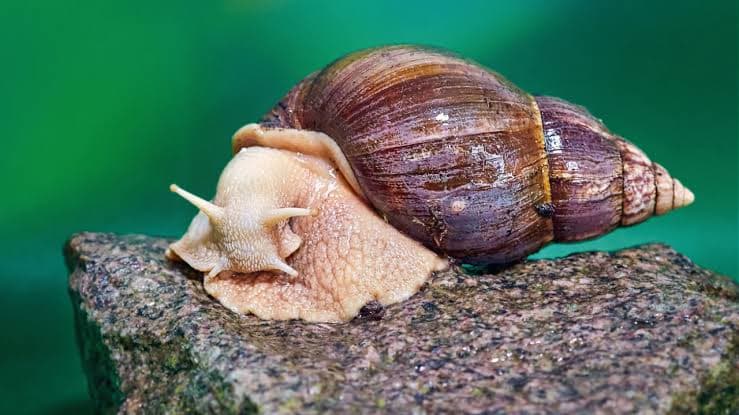
- Species: Giant African Snail (Lissachatina fulica)
- Origin: Native to East Africa, introduced to India in 1847.
- Historical Spread:
- Reached Madras in the early 1900s.
- First reported in Kerala in the 1950s (Elapully, Palakkad).
- Significant spread in the 1970s and 2005.
- Found in Palakkad, Ernakulam, and Pathanamthitta by 2005.
- By 2022, present in all 14 districts of Kerala; over 270 locations recorded by 2023.
Health Concerns:
Health Risks:
- The snail carries the rat lungworm parasite (Angiostrongylus cantonensis) associated with eosinophilic meningitis, particularly affecting children under 10 years of age.
- Recent reports indicated a rise in eosinophilic meningitis cases in Kochi hospitals.
- Potential for allergic reactions due to mucus.
Preventive Measures:
- Recommendations: Use of mesh screens in classrooms, gloves when handling snails, and removing them with salt and tobacco-copper sulphate mixtures.
Environmental Impact:
- Listed among the 100 worst invasive species by the International Union for Conservation of Nature (IUCN).
- Damage to crops and potential spread of other pathogens (linked to septicemia and peritonitis).
Community Response:
- Ongoing infestation in Tirunavaya panchayat causing disruptions in schools and impacting children’s safety and health.
- Need for coordinated efforts from civic authorities for effective control measures as suggested by Salman Karimpanakkal, teacher and environmental activist.
Research Collaboration:
- Study led by Keerthy Vijayan from the Kerala Forest Research Institute in collaboration with the University of Nottingham, Natural History Museum (London), and Environmental Agency (UAE).
- Emphasis on the heightened risk for schoolchildren due to proximity and lack of awareness regarding health risks.
Conclusion:
The spread of the giant African snail in Kerala poses significant health and environmental concerns, particularly for young students in affected areas. Coordinated efforts and public awareness campaigns are necessary to mitigate the risks associated with this invasive species.
Key Terms & Concepts
| Lissachatina fulica | Invasive snail causing health issues |
| Angiostrongylus cantonensis | Parasite carried by snails |
| Kerala Forest Research Institute | Conducted research on infestation |
| University of Nottingham | Collaborated on research study |
| Environmental Agency in UAE | Collaborated on research study |
| International Union for Conservation of Nature | Listed snail among worst invasives |
| 1847 | Year introduced to India |
| 1970s | Major spread wave observed |
| 2005 | Year found in Palakkad, Ernakulam, Pathanamthitta |
| 2022 | Snail spread to all 14 districts |
| 270 locations | Number of locations recorded in 2023 |
| Septicemia and Peritonitis | Diseases linked to snail bacteria |