iAspirants
Global Tensions and BRICS Challenges
Published on:
Share this post
Article Summary
Summary of Key Points from Article
International Relations and Geopolitical Developments
- U.S. Strategy: U.S. Secretary of State Marco Rubio advocated for a return to a pre-Second World War international order, promoting Western hegemony over the Global South. This reflects an imperialistic approach and signals a desire to counter decolonization efforts.
- Iran Conflict: The U.S. and Israel attacked Iran, resulting in the assassination of Ayatollah Khamenei. This action raises questions about violations of international law and Congressional authority regarding war declarations.
BRICS and Global Polarity
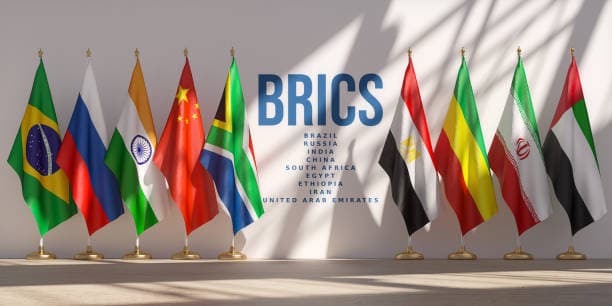
- BRICS Formation: Established as a counterbalance to U.S. dominance post-1945, BRICS (Brazil, Russia, India, China, South Africa) aims at financial independence through initiatives like the New Development Bank (NDB) and de-dollarization.
- Iran and BRICS: Iran’s membership in BRICS reflects growing influence and challenges faced by the bloc in contrasting U.S. supremacy. India, as current chair, has been criticized for its silence and lack of a collective response to U.S. aggression.
India's Foreign Policy
- Shift in Alignment: India’s current government under Prime Minister Narendra Modi has aligned more closely with the U.S., deviating from a historical non-aligned stance.
- BRICS Leadership: Under India's chairship, BRICS has become less effective, with India failing to condemn the U.S.-Israel attack on Iran, leading to questions about its role as a leader of the Global South.
Economic and Strategic Indices
- Market Competition: Rubio mentioned the need for a unified effort to reclaim market share in the Global South, indicating an aggressive economic strategy by the U.S. aimed at countering the influence of emerging economies.
Legal and Judicial Aspects
- Authorization of War: The article raises issues regarding the constitutionality of engaging in military action without Congressional approval, suggesting potential violations of checks and balances in U.S. governance.
Challenges to Global Governance
- Failure of International Institutions: Rubio characterized existing international institutions as ineffective, calling for a new order that serves Western interests, which challenges the ideals of multilateral cooperation.
Historical Context
- East India Company Parallel: The article draws parallels between current U.S. actions in Iran and historical British imperialism, suggesting similar tactics of economic exploitation through military intervention.
Calls for Indian Leadership
- Need for Ethical Leadership: Emphasis on India's historical precedence of moral leadership and its potential capacity to mediate between conflicting powers. The article advocates for a return to strategies that prioritize India’s sovereignty and collective welfare in international relations.
Conclusion
- The dynamics highlighted signify a critical juncture for BRICS as a platform for enhancing political solidarity among non-Western nations. The ongoing geopolitical tensions necessitate a reevaluation of India’s approach and a return to its foundational principles of strategic autonomy and ethical diplomacy.
Important References
- International Law: Discussion on violations of sovereignty and the implications of unilateral military actions.
- U.S. Congressional Authority: Reference to the need for formal declarations of war as a constitutional requirement.
- BRICS Initiatives: Mention of key projects like NDB and agreements like CIPS which aim to foster economic independence from Western financial systems.
Final Note
The article reflects crucial geopolitical shifts and the increasing complexity of international relations involving BRICS and U.S. foreign policy strategies, posing significant implications for India’s identity on the global stage.
Key Terms & Concepts
| BRICS | 10-nation bloc formed for balance |
| Munich Security Conference | Venue for international policy dialogue |
| U.S.-Israel Attack on Iran | Military strike without Congress approval |
| De-dollarisation | BRICS agenda to reduce U.S. influence |
| New Development Bank (NDB) | BRICS alternative to western-led banks |
| East India Company | Historical example of imperialism |
| 12-day conflict | U.S.-Israel aggression against Iran |
| Strategic Autonomy | India's current foreign policy stance |
| Quad | India's alignment towards U.S. |
| Iran's Membership in BRICS | Sign of BRICS's globalization |
| Ayatollah Khamenei | Iran's Supreme Leader assassinated |
| Global South | Regions targeted for market share |