iAspirants
Great Nicobar Project Environmental Issues
Published on:
Share this post
Article Summary
Summary of the Great Nicobar Project and Related Issues
Project Overview:
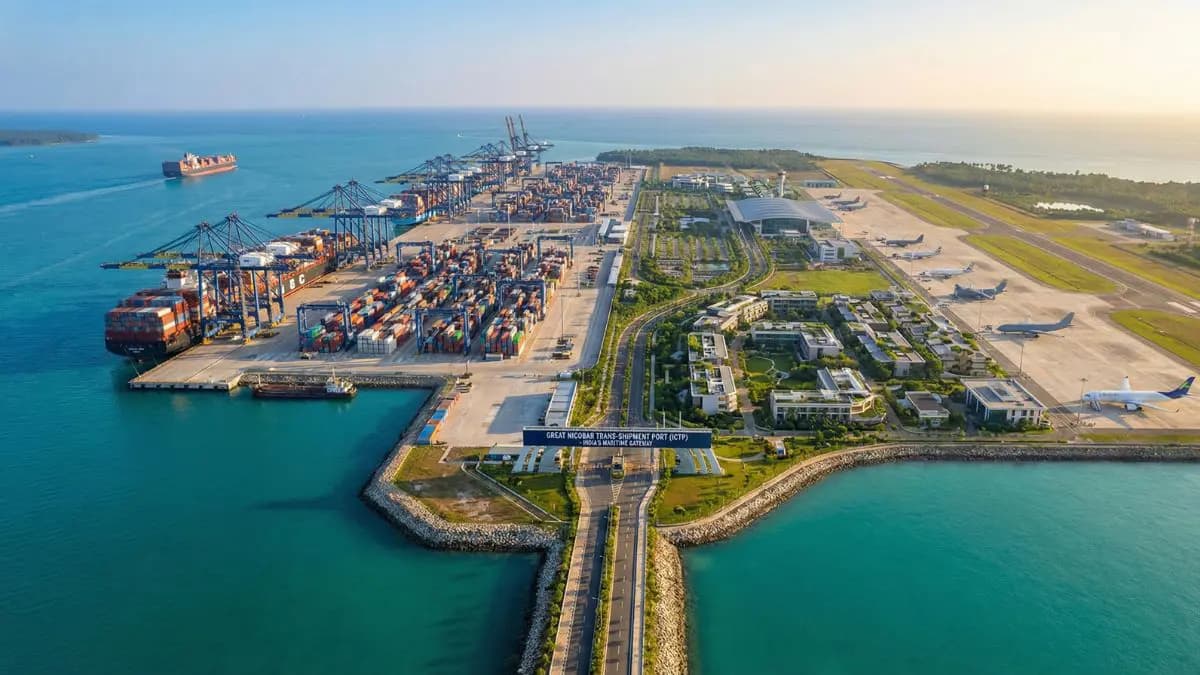
- Great Nicobar Island Project (GNIP): Involves significant infrastructural development including:
- A trans-shipment port
- An international airport
- Township development
- A 450 Megavolt-Amperes (MVA) gas and solar-based power plant
Legal and Environmental Context:
- National Green Tribunal (NGT) Ruling: The Kolkata bench of the NGT ruled that all necessary environmental safeguards are in place, underscoring the project's "strategic utility." However, concerns persist regarding transparency in government disclosures.
- Environmental Clearances: The project has received preliminary environmental and forest clearances from the Union Environment Ministry. Further review of environmental implications was ordered due to concerns about biodiversity loss and native habitats.
Environmental Concerns:
- Biodiversity Impact:
- Approximately 900,000 trees expected to be uprooted across 130 sq.km, risking biodiversity and contributing to an irreparable ecological impact.
- Damage to important habitats, including leatherback turtle nesting grounds and coral reefs.
- Indigenous Rights:
- Questions raised over compliance with the Forest Rights Act regarding the rights of local tribes, such as the Shompen and Nicobarese.
- Accusations of local communities being pressured to agree to land transfers through "surrender certificates."
Historical Precedents:
- The situation draws parallels to historical land exploitation, such as the forced relocation of the Banabans due to phosphate mining, raising alarms about prioritizing economic interests over indigenous rights and environmental preservation.
Judicial and Administrative Observations:
- The NGT's stance has been criticized for lacking an independent appraisal of the environmental and social concerns, essentially validating the government’s evaluation process.
- Developers and proponents of the GNIP argue for its economic importance, while opponents contend it risks irreversible damage to a pristine ecosystem and indigenous cultures.
Constitutional References and Relevant Laws:
- Forest Rights Act: Acknowledges and protects the rights of forest-dwelling communities, crucial in assessing the legitimacy of land use and project impacts.
- The narrative depicts an ongoing conflict between development (as defined by economic growth) and environmental protection, emphasizing fundamental rights articulated in constitutional provisions.
Future Implications:
- The assessment of the GNIP's impacts will consider both ecological and social dimensions, with an emphasis on how future generations will evaluate the sustainability of such projects.
- The debate surrounding the project highlights a broader discourse on balancing developmental needs with the preservation of indigenous rights and biodiversity.
The Great Nicobar Project exemplifies the complexities inherent in large-scale development projects within ecologically sensitive areas, illustrating the need for comprehensive evaluations that encompass environmental, social, and economic factors.
Key Terms & Concepts
| Great Nicobar Project | Controversial development initiative |
| National Green Tribunal | Oversight on environmental matters |
| 450 Megavolt-Amperes (MVA) | Energy output of power plant |
| 9 lakh trees | Estimated deforestation amount |
| 130 sq.km | Area affected by project |
| Forest Rights Act | Legal framework for community rights |
| Shompen and Nicobarese tribes | Indigenous communities affected |
| Coral reefs | Ecosystem threatened by project |
| Leatherback turtle nesting grounds | Critical wildlife habitat |
| Union Environment Ministry | Granting environmental clearance |
| British Phosphate Commissioners | Historical phosphate mining entity |
| Nauru and Banaba | Island affected by mining |