iAspirants
Current AffairsPrelims PYQsUPSC CSE SyllabusUPSC CSE StrategyBlogsPricing
Login
iAspirants
Current AffairsPrelims PYQsUPSC CSE SyllabusUPSC CSE StrategyBlogsPricingContact UsLoginSignUp
iAspirants

Your AI-powered companion for UPSC preparation.

Study Resources

  • Current Affairs
  • Prelims PYQs
  • UPSC CSE Syllabus
  • UPSC CSE Strategy
  • Blogs

Practice & Plans

  • Mains Answer Evaluation
  • Pricing
  • Sign Up
  • Login

Company

  • Home
  • About Us
  • Contact Us
  • FAQs

Legal

  • Privacy Policy
  • Terms & Conditions
  • Return Policy

© 2026 iAspirants, Inc. All rights reserved.

  1. Blogs
  2. International Relation

Hamas Hostage Release and Summit Plans

Published on: 12-Oct-2025

Source: The Hindu

Share this post

Hamas Hostage Release and Summit Plans

Article Summary

Exam-Focused Notes on Israel-Palestine Hostage and Peace Talks

1. Hostage Release:

  • Hamas will begin releasing Israeli hostages on October 13, 2025.
  • Approximately 20 Israeli captives are believed to be alive.
  • In exchange, Israel will release nearly 2,000 Palestinian prisoners, including 250 national security detainees, some serving life sentences.

2. U.S.-led Peace Summit:

  • An international summit, chaired by U.S. President Donald Trump and Egyptian President Abdel Fattah al-Sisi, will take place in Sharm el-Sheikh, Egypt.
  • The summit aims to conclude the ongoing conflict in Gaza and pursue regional peace and stability.
  • Attendees include UN Secretary-General Antonio Guterres, UK Prime Minister Keir Starmer, Italian Prime Minister Giorgia Meloni, Spanish Prime Minister Pedro Sanchez, and French President Emmanuel Macron.

3. Key Figures and Statistics:

  • Over 500,000 Palestinians have returned to Gaza City post-conflict as of October 11, 2025.
  • The total death toll from the conflict stands at 67,682, as reported by the Health Ministry in Gaza.

4. Conditions for Future Peace:

  • Discussions will center on complex issues pertaining to Hamas disarming and relinquishing control over Gaza.
  • The Trump plan proposes the establishment of a multinational force composed of Egypt, Qatar, Turkey, and the UAE to replace Israeli forces in Gaza cities, coordinated by a U.S.-led command structure in Israel.

5. Humanitarian Situation:

  • The UN's humanitarian office reports that Israel has permitted the transport of 170,000 tonnes of aid into Gaza if the ceasefire is maintained.
  • The humanitarian situation remains dire, with many returning to destroyed homes amidst rubble and devastation.

6. Infrastructure Damage:

  • Drone footage indicates significant destruction in Gaza City, with entire blocks of buildings reduced to debris.

7. Contextual Data:

  • Total abducted during the Hamas attack two years ago is recorded at 251.
  • As part of the hostage return, one more remained hostage, abducted in 2014, is also expected to be returned.

8. Additional Information:

  • The complexity of reaching a lasting political solution remains high, with mediation efforts focusing on achieving grounds for ceasefire and potential peace agreements.

These notes summarize the critical developments surrounding the hostage situation, the ongoing international responses, and the broader implications for peace in the Middle East.

Key Terms & Concepts

HamasMilitant group releasing hostages
IsraelCountry involved in conflict
U.S. President Donald TrumpChairing peace summit
EgyptHost of international summit
QatarMediator in talks
TurkeyPart of multinational force
United Arab EmiratesPart of multinational force
UN Secretary-General Antonio GuterresAttending the summit
Sharm el-SheikhLocation of international summit
1,219Casualties from Hamas attack
67,682Reported deaths in Gaza
250 prisonersTo be released by Israel
170,000 tonnes

Mind Map for UPSC Civil Services Revision

Turn UPSC Civil Services Current Affairs Into Exam-Ready Notes

Reading International Relation current affairs is half the work. Revise them with ready-made notes and test what actually stuck.

  • Daily UPSC Civil Services current affairs analysis
  • Revision notes, mind maps & MCQs
  • Prelims mock tests with instant results

Related UPSC Civil Services Current Affairs Articles

India's Stance on Climate Goals
International Relations04-Nov-2026

India's Stance on Climate Goals

Summary Notes on COP 31 and India's Climate Strategy

Event: 31st United Nations Annual Climate Conference (COP 31)
Location: Antalya, Türkiye
Dates: November 9 - 21, 2026

Key Points from India's Participation:

  1. : Bhupender Yadav will represent India at COP 31.

Aid transported into Gaza
October 13, 2025Date of hostage release
Practise Mains answer writingUpload a handwritten answer and get it evaluated
Union Environment Minister
  • Electrification Target Proposal: Türkiye has proposed a global target to meet 35% of energy needs from electricity by 2035 to curb emissions. India has not yet committed support for this target, emphasizing the need to consider national circumstances and sovereignty in such pledges.

  • India's Climate Priorities:

    • Advocacy for adherence to principles of equity and common but differentiated responsibilities (CBDR).
    • Acknowledgment that an immediate phase-out of fossil fuels is unrealistic as energy access is prioritized for the population.
    • Strong emphasis on addressing poverty-eradication programs alongside climate obligations.
  • India's Commitments:

    • India's stance is to be part of the solution to climate change issues.
    • Call for developed countries to fulfill their climate finance obligations and support the initiation of the Climate Finance Work Programme at COP 31.
  • Other Proposals from Türkiye:

    • Halving global waste growth by 2035.
    • Reducing energy consumption intensity in the building sector by at least 25%.
  • Contextual Background:

    • International Context: COP 31 follows seasons of heightened global dialogue on climate, emphasizing commitments under the Paris Agreement, where nations are tasked with measurable emissions reduction contributions.

    • India's Position: Reflects the need to balance developmental goals with environmental obligations, citing concerns on energy security, poverty alleviation, and sovereignty as critical factors in climate negotiations.

    Constitutional and Policy Framework References:

    • Common but Differentiated Responsibilities (CBDR): A principle delineating the responsibility of developed and developing countries in addressing climate change based on their varying contributions to the problem and respective capabilities.

    • Sovereignty and National Circumstances: Discussions around climate obligations must respect the contexts and conditions each nation faces, including energy demands and socioeconomic needs.

    This summary encapsulates India's expectations and approaches towards global climate negotiations, highlighting its commitment to sustainable development while advocating for equitable climate action frameworks.

    Quad Alliance Strengthens Indo-Pacific Cooperation
    International Relations01-Nov-2026

    Quad Alliance Strengthens Indo-Pacific Cooperation

    Quad Ministerial Meeting Highlights - November 2026

    1. Background:

      • The Quad (United States, India, Japan, Australia) held its third Foreign Ministers' meeting in less than six months, following gatherings in New Delhi (May 2026) and Manila (July 2026).
    2. Key Participants:

      • U.S. Secretary of State Marco Rubio
      • Indian External Affairs Minister S. Jaishankar
      • Japanese Foreign Minister Toshimitsu Motegi
      • Australian Foreign Minister Penny Wong
    3. Discussions and Agreements:

      • Supply Chains and Economic Security:

        • Quad ministers emphasized building "reliable and open supply chains" and "trusted and resilient infrastructure."
        • Concerns raised regarding economic coercion, export restrictions, and disruptive non-market policies affecting global supply chains.
      • Maritime Cooperation:

        • Reaffirmed the necessity to protect navigational rights in key maritime areas: Strait of Hormuz, Red Sea, and Bab el-Mandeb Strait, as per international law (UNCLOS).
    4. Financial Commitments:

      • U.S. pledged $10 million to develop infrastructure for recovering critical minerals from waste in India and ASEAN nations.
      • Quad members committed over $85 million for technical and financial assistance in relation to AI and initiatives like Pax Silica.
    5. Energy Security:

      • The first-ever Quad Fuel Security Forum was held, focusing on advancing fuel security in the Indo-Pacific and enhancing strategic petroleum reserves.
    6. Cyber Security:

      • Quad nations expressed concern over online and cyber scams threatening national and international peace, committing to dismantle such operations.
    7. Business Promotion:

      • Launch of the inaugural Quad Business Leaders’ Forum aimed at enhancing ties between public and private sectors.
    8. Overall Goals:

      • Cooperation on next-generation technologies, maritime security, and critical mineral sourcing highlighted as priorities to counter China's assertiveness in the Indo-Pacific region.
    9. International Law Reference:

      • Emphasis on navigational rights and freedoms in accordance with international law reflects adherence to standards established under UNCLOS (United Nations Convention on the Law of the Sea).
    10. Conclusion:

      • The meeting signified a continued commitment among Quad nations to strengthen economic and strategic ties, balancing power dynamics in the Indo-Pacific and enhancing collaborative frameworks for security and prosperity.
    India-China Relations Challenges Overview
    International Relations31-Oct-2026

    India-China Relations Challenges Overview

    Summary of India-China Relations

    Managed Coexistence

    • Current state of relations between India and China is characterized as "managed coexistence."
    • Increasing border tensions lead to concerns about potential conflicts, despite the absence of formal hostilities.

    Historical Context

    • The 1962 Sino-Indian War stemmed from various factors, including strategic miscalculations by Mao Zedong during the Great Leap Forward.
    • Historical grievances have persisted due to unresolved territorial disputes, notably in the regions of Ladakh and Arunachal Pradesh.

    Border Disputes

    • The border in the Ladakh region continues to be a significant point of contention, influencing mutual perceptions.
    • India perceives the territorial losses as a betrayal of trust following previous friendly diplomatic sentiments ("Hindi–Chini Bhai Bhai").

    Impact on Bilateral Relations

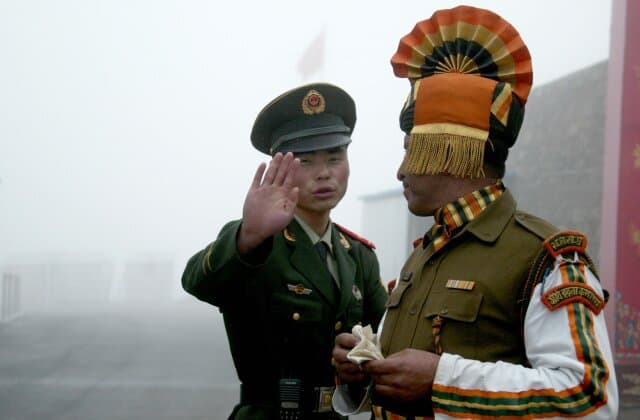
    • Frequent military encounters and "patrolling deviations" are seen as provocations, raising tensions and challenging peaceful coexistence.
    • Ongoing grievances render the bilateral relationship fragile, with distrust remaining a central issue for both nations.

    Future Outlook

    • The long-term prospects for peaceful coexistence depend on resolving historical misunderstandings and territorial disputes.
    • Both nations face the challenge of ensuring stability in the region while managing territorial disagreements.

    Key Points for Examination

    • Definition of "managed coexistence" in diplomatic relations.
    • Significance of the 1962 Sino-Indian conflict in current affairs.
    • The importance of border disputes in shaping national sentiment and diplomacy.
    • The effects of historical grievances on contemporary international relations between India and China.