iAspirants
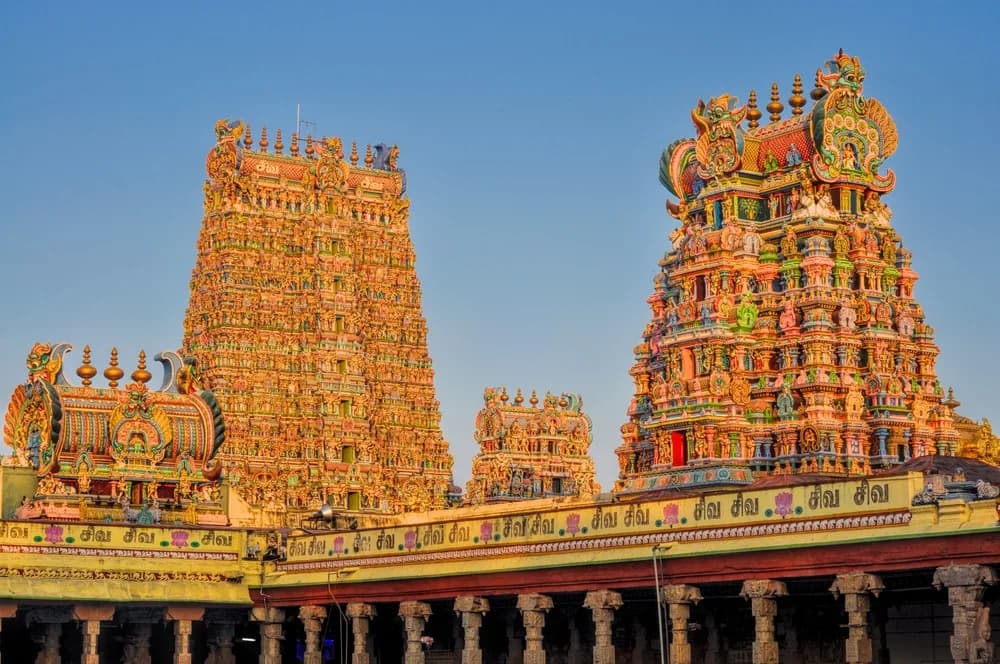
Historic Temple Entry in Tamil Nadu
Published on:
Share this post
Article Summary
Exam-Focused Notes on the Madurai Meenakshi Amman Temple Entry Movement
Historical Context
- Date of Significance: July 8, 1939.
- Event: Members of oppressed castes, including the Nadar community and ‘untouchables’, entered the Madurai Meenakshi Amman Temple for worship, marking a pivotal moment in the movement for social equality in Tamil Nadu.
Key Figures
- A. Vaidyanatha Iyer: Leader of the Tamil Nadu Harijan Sevak Sangh, instrumental in the temple entry movement.
Constitutional References
- Fundamental Rights: Article 15 of the Indian Constitution prohibits discrimination on grounds of religion, race, caste, sex, or place of birth, which aligns with the movement's aim for equal access to places of worship.
- DPSP: Article 46 promotes the educational and economic interests of Scheduled Castes and Scheduled Tribes.
Government Actions
- The Madras government enacted an ordinance to support the temple entry, facilitating access to temples for all castes.
Cultural Impact
- Kummi Songbooks:
- These chapbooks documented the temple entry movement and its implications through songs.
- Notable publications included:
- “Madurai Aalaya Pravesam Ennum Aananda Geetham” (1939) by V. Nataraja Kavirayar, celebrating the event.
- “Muthamizh Kshetra Madurai Meenakshi Amman Kovil Harijana Aalaya Pravesa Geetham” (1939) by A.M. Abdul Karim, featuring songs of higher literary quality.
- Opposition songbooks included “Aalaya Ethirppu Kummi” (1939) and “Aalaya Pravesa Kandana Paattu Pusthakam” (1940), criticizing the temple entry and reflecting the societal tensions of the time.
Social Dynamics
- The temple entry was met with resistance from orthodox communities, leading to the formation of groups like the Varnashrama Swarajya Sangam, which condemned the movement.
- The community's response included the establishment of a new temple, the New Meenakshi Amman Temple, emphasizing religious practices aligned with their beliefs.
Judicial and Legal Developments
- Legal disputes surrounding the temple entry concluded by the mid-1940s, with priests eventually accepting the temple management's decisions.
Economic Indicators
- The songbooks were sold at affordable prices (1 anna to 2 annas), indicating the economic accessibility of cultural literature during that period.
Scholarly Insights
- Historian A.R. Venkatachalapathy noted that Kummi songbooks emerged in the late 19th century, peaking in the 1920s, reflecting public interest in current events and societal issues, albeit often biased in their representation.
Conclusion
The Madurai Meenakshi Amman Temple entry marked a significant step towards social reform in Tamil Nadu, highlighting the intersection of religion, caste, and cultural expression through song literature. The event and its documentation serve as a crucial reference point for understanding the broader socio-political landscape of India during the pre-independence era.
Key Terms & Concepts
| Madurai Meenakshi Amman Temple | Site of historic temple entry |
| July 8, 1939 | Date of temple entry event |
| Tamil Nadu Harijan Sevak Sangh | Organization leading the movement |
| Kummi songbooks | Documented the temple entry |
| Madras government ordinance | Legislation supporting temple entry |
| Varnashrama Swarajya Sangam | Opposed the temple entry |
| Sri Bala Meenambigai | Deity worshipped at new temple |
| A.R. Venkatachalapathy | Historian discussing Kummi songs |