iAspirants
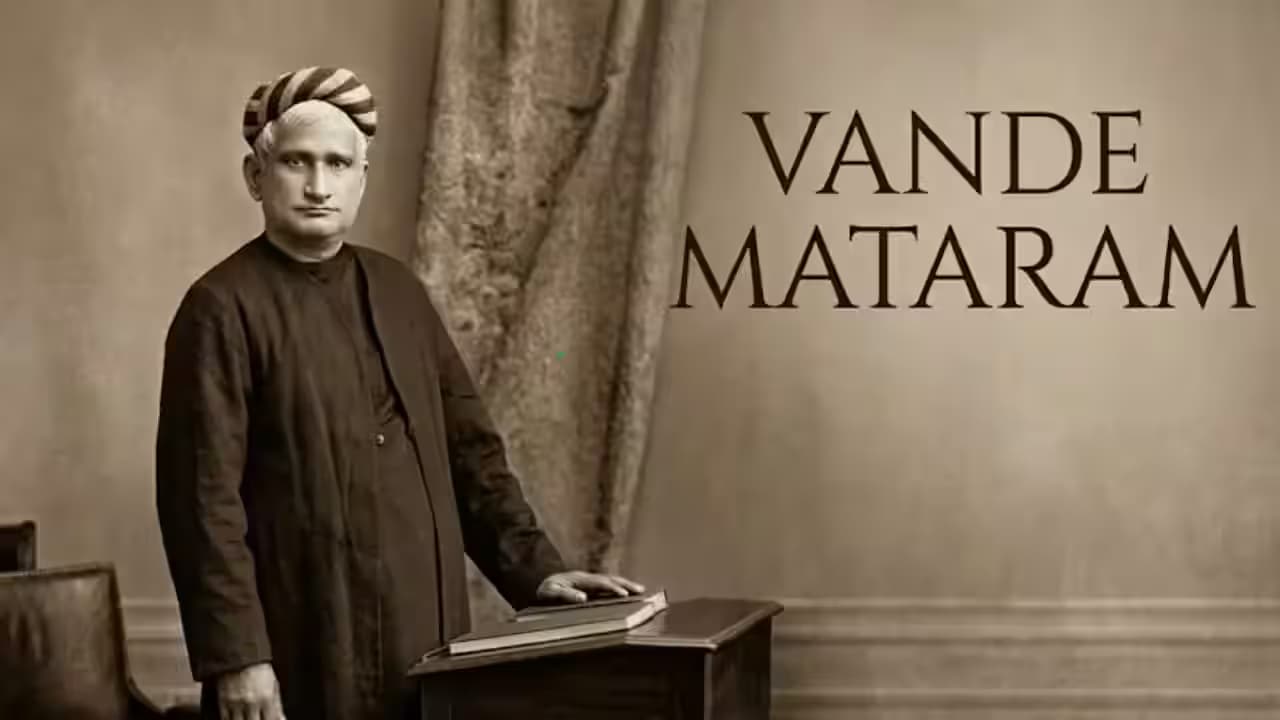
Historical Significance of Vande Mataram
Published on:
Source: The Hindu
Share this post
Article Summary
Exam-Focused Notes on the Historical Significance of 'Vande Mataram' at Osmania University
Historical Context:
- The incident revolves around the singing of "Vande Mataram" at Osmania University (OU) during the late 1930s, a period marked by significant nationalistic fervor against the Nizam's government in Hyderabad.
- The Nizam's government viewed the song as a threat to its authority, interpreting it as a catalyst for patriotism rather than a mere cultural expression.
Key Events:
- 1938: Construction of the ‘A’ and ‘B’ hostels at OU coincided with rising nationalist sentiments.
- Singing of Vande Mataram:
- Initiated by students in various schools and colleges, including notable figures like P.V. Narasimha Rao and Laddipalli Anjayya, who faced expulsion and punishment for singing the anthem.
- A pivotal moment occurred on November 14, 1938, when Govindbhai Shroff, a dismissed teacher, encouraged students at Aurangabad Government Intermediate College to sing "Vande Mataram," which led to widespread protests among students across the Dominion.
Government Response:
- The Nizam's government invoked the Public Safety Regulation to suppress the singing of the song.
- A ban was imposed on November 28, 1938, leading to mass rustications:
- 350 students from Osmania University College.
- 70 students from City College.
- 310 students from Gulbarga College.
- 120 students from Mahboobnagar High School.
Judicial and Legislative Context:
- The protests highlighted the conflict between the students' rights to expression (Article 19 of the Indian Constitution – Freedom of Speech) and the government's suppression of dissent.
- The government's actions were perceived as a violation of students' rights to express their national identity and aspirations.
Cultural Significance:
- "Vande Mataram" emerged as a symbol of resistance against oppressive regimes, serving as a unifying anthem for various student bodies and the broader freedom movement.
- The chant became integral to the identity of the Telangana region, influencing future movements for statehood and integration into the Indian Union.
Notable Figures:
- Jaisoorya Naidu, son of Sarojini Naidu, played a significant role in mobilizing support from national leaders like Jawaharlal Nehru and Subhash Chandra Bose for the movement.
- Ramachandra Rao, a satyagrahi who faced severe punishment but continued to sing "Vande Mataram," later contested and won elections, showcasing the enduring spirit of the movement.
Aftermath and Legacy:
- By June 1939, some students began to negotiate with university officials, leading to a compromise on the slogans to be used, reflecting a shift in the movement's strategy.
- The phrase "Vande Mataram" evolved to become a common greeting in the region, signifying the deep-rooted impact of the movement on local culture and identity.
Conclusion:
- The events surrounding the singing of "Vande Mataram" at Osmania University serve as a testament to the power of student activism and the role of cultural symbols in the struggle for freedom. This historical moment underscores the intersection of education, politics, and national identity in pre-independence India.
Key Terms & Concepts
| Osmania University | Site of protests and events |
| Vande Mataram | National anthem chant |
| Nizam’s government | Authority opposing protests |
| Public Safety Regulation | Law invoked to ban protests |
| P.V. Narasimha Rao | Early protestor expelled |
| Govindbhai Shroff | Teacher leading protests |
| November 14, 1938 | Date of significant protest |
| 350 students | Rusticated from Osmania University |
| Jawaharlal Nehru | Involved in Vande Mataram Movement |
| Subhash Chandra Bose | Involved in Vande Mataram Movement |
| Hyderabad State Congress | Political group seeking representation |
| June 1939 | Date of student apologies |