iAspirants
Holy City Status for Amritsar Granted
Published on:
Share this post
Article Summary
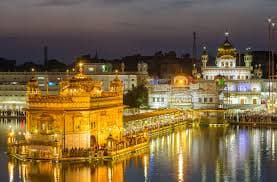
Summary of Key Facts and Developments: Granting "Holy City" Status to Amritsar, Anandpur Sahib, and Talwandi Sabo
Government Notification: The Punjab government has officially granted “Holy City” status to Amritsar, Anandpur Sahib, and Talwandi Sabo through a recent notification.
Legislative Action: This decision was preceded by a unanimous resolution passed by the Punjab Legislative Assembly during a special session in Anandpur Sahib. This session marked the 350th martyrdom anniversary of Guru Tegh Bahadur.
Cultural and Religious Significance:
- The selected cities host three of the five Sikh Takhts:
- Akal Takht (Amritsar)
- Takht Keshgarh Sahib (Anandpur Sahib)
- Takht Damdama Sahib (Talwandi Sabo)
- Akal Takht, established in 1606 by Guru Hargobind, symbolizes the unity of temporal and spiritual authority within Sikhism.
- The selected cities host three of the five Sikh Takhts:
Regulatory Changes:
- The Holy City designation introduces a ban on the sale of liquor, tobacco, and meat within designated areas, particularly in the walled city of Amritsar and the municipal limits of the other two cities.
- Provision of additional facilities such as mini buses and e-rickshaws will support religious tourism.
Decades-Long Demand: The move to grant Holy City status is a response to longstanding demands from political and religious groups, including the Shiromani Gurdwara Parbandhak Committee (SGPC) since 1980.
Political Implications: The decision, while not part of the AAP's election promises, is viewed as a gesture towards aligning with Sikh religious organizations.
Concerns and Controversies:
- The meat ban raises issues for Nihang Sikhs, who traditionally consume jhatka meat, especially given the significance of meat in their community practices and langars (community kitchens).
- There are concerns about the impact of these regulations on the livelihoods of shopkeepers who sell liquor, tobacco, and meat in these areas, alongside discussions on rehabilitation policies for these vendors.
Social and Ethical Considerations: The declaration aims to align with the sentiments of the Sikh and Punjabi community regarding purity in lifestyle choices, although differing interpretations of “holiness” within religious groups create complexity in enforcement.
Academic Insight: Professor Paramvir Singh from Punjabi University highlighted the importance of genuinely reflecting values of purity in food, thoughts, and behavior in the implementation of this status.
This summary encapsulates pivotal details regarding the recent designation of "Holy City" status to Amritsar, Anandpur Sahib, and Talwandi Sabo, including its legislative background, cultural relevance, regulatory impacts, social challenges, and ongoing debates within the community.
Key Terms & Concepts
| Holy City status | Cultural and religious designation |
| Punjab Legislative Assembly | Passed the resolution |
| Akal Takht | Supreme Sikh authority |
| Takht Keshgarh Sahib | Important Sikh Takht |
| Takht Damdama Sahib | Important Sikh Takht |
| Liquor ban | Prohibition in Holy City |
| Tobacco and meat ban | Prohibition in Holy City |
| Minister Bhagwant Mann | Announced the decision |
| Nihang Sikhs | Cultural group affected by ban |
| 1980 demand | Historical request for status |
| SGPC | Sikh governing body |
| Purity in food and behaviour | Cultural significance of status |