iAspirants
Implementation of India's New Labour Codes
Published on:
Share this post
Article Summary
Summary of Key Points on India's Labour Codes and Economic Insights
Labour Codes Implementation:
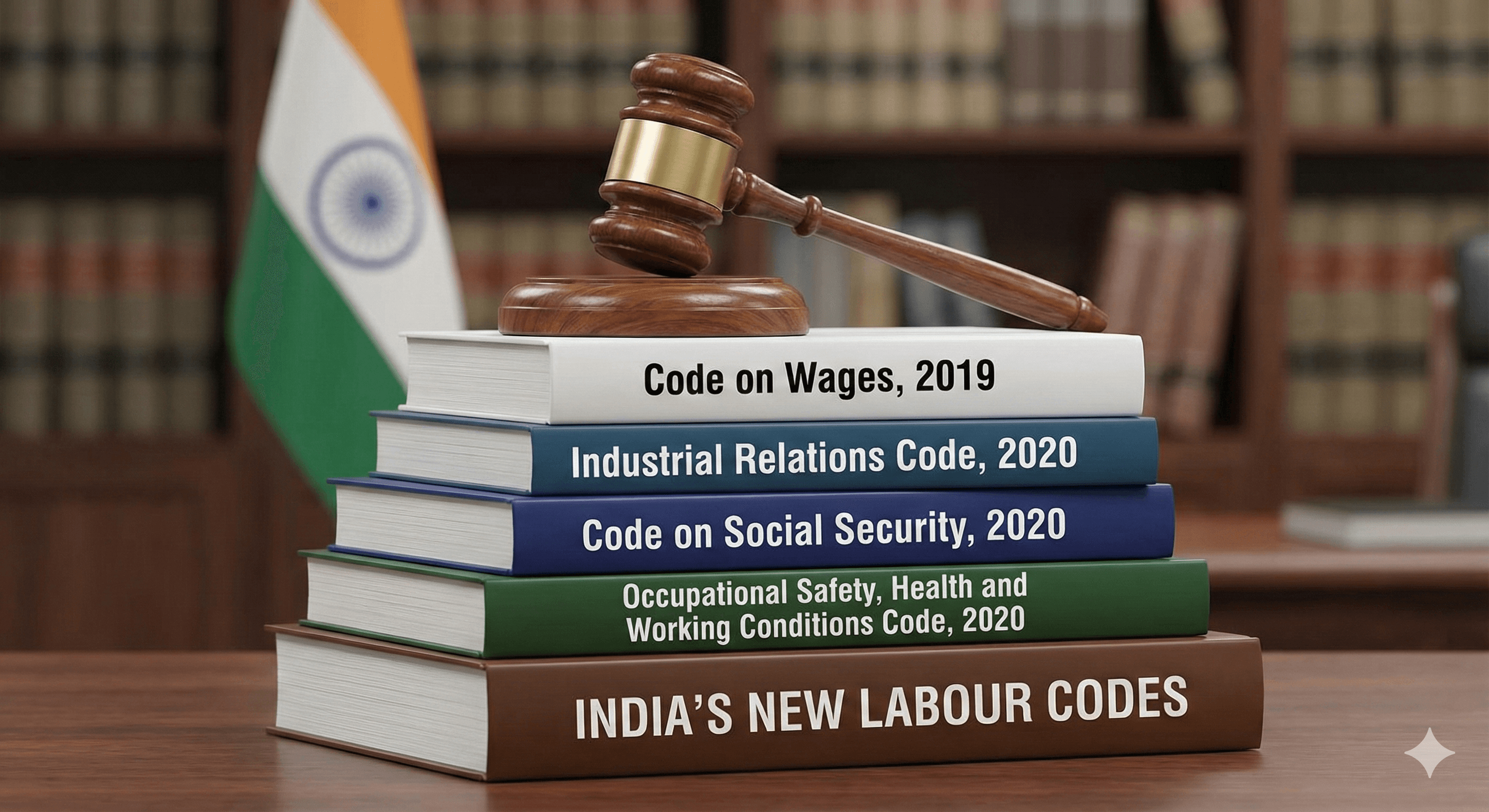
- New Labour Codes: Implemented five years after parliamentary passage; replace 29 existing labour laws.
- Objectives:
- Modernization of labour market regulations.
- Easing compliance burdens for businesses.
- Expansion of protections for workers, including gig and platform workers.
- Aiming to streamline the engagement of labour in a predictable framework.
Economic Impact:
- Potential job creation for youth as a critical measure of success.
- Historical context: Indian states with surplus labour and low wage rates have lagged in economic growth (e.g., Uttar Pradesh and Bihar).
- Counterexamples: Other Asian countries (China, Vietnam, Bangladesh) have effectively utilized surplus labour for manufacturing growth.
Global Supply Chain Dynamics:
- HSBC Global Investment Research Report:
- Highlights changes in global supply chains seeking labour-intensive manufacturing in sectors like textiles and furniture.
- Opportunity for India to attract mid-tech Foreign Direct Investment (FDI) by leveraging lower wage advantages and improving infrastructure.
Wage and Economic Output Insights:
- Wage Comparison:
- Indian states' wage rates (e.g., Maharashtra, Karnataka) are higher than those in Vietnam, yet progress in lagging states (e.g., UP, Bihar) is essential.
- Manufacturing Competitiveness:
- China's manufacturing advantage is not solely based on low wages but has shifted towards efficiency and innovation.
Recommendations for Growth:
- Incentive Structures: Suggested focus on creating better infrastructure and reforming labour laws to drive growth in economically lagging states.
- Strategic Predictions: If combined with appropriate reforms, these states can improve their economic conditions and become integral to global manufacturing narratives.
Constitutional References & Framework
- Labour Rights: Enshrined under the Constitution of India (Articles related to labour rights, including Article 39, which mandates the state to secure equal pay for equal work and ensure just and humane conditions of work).
Policies and Government Schemes
- Formalization Strategy: Aim to transition informal workers into a structured and regulated framework through new legal codes.
Economic Indicators
- Wage Statistics: Comparison of wage rates between various Indian states and neighbouring countries, focusing on their economic impacts.
- Nexus with Global Supply Chains: Importance of improving business conditions to position India favorably in global manufacturing sectors.
International Context
- Regional Comparison: Vietnam's approach to manufacturing as a model for India to emulate, particularly in utilising lower wage costs effectively.
Conclusion
The successful implementation of the new labour codes is crucial for positioning India as a competitive player in global manufacturing, particularly by addressing the unique challenges faced by economically lagging states while leveraging its workforce strengths.
Key Terms & Concepts
| Four new labour codes | Reform India's labour regulations |
| 29 existing laws | Replaced by new codes |
| HSBC Global Investment Research | Provided economic insights |
| Vietnam | Competitor in mid-tech sectors |
| Uttar Pradesh (UP) | Historically lagging state |
| Bihar | Historically lagging state |
| Maharashtra | Economic output leader |
| Karnataka | Economic output leader |
| Andhra Pradesh | Economic output leader |
| Kerala | Economic output leader |
| China | Past manufacturing leader |
| Economic advantages | Key to attracting FDI |
| Mid-tech sectors |