iAspirants
Importance of Urban Soil for Cities
Published on:
Share this post
Article Summary
World Soil Day - December 5 & Its Significance
Establishment & Theme:
- World Soil Day established by the Food and Agriculture Organization (FAO) of the United Nations.
- The 2025 theme is "Healthy Soils for Healthy Cities," aimed at emphasizing the importance of urban soil in combating contemporary urban challenges.
Global Urbanization Context:
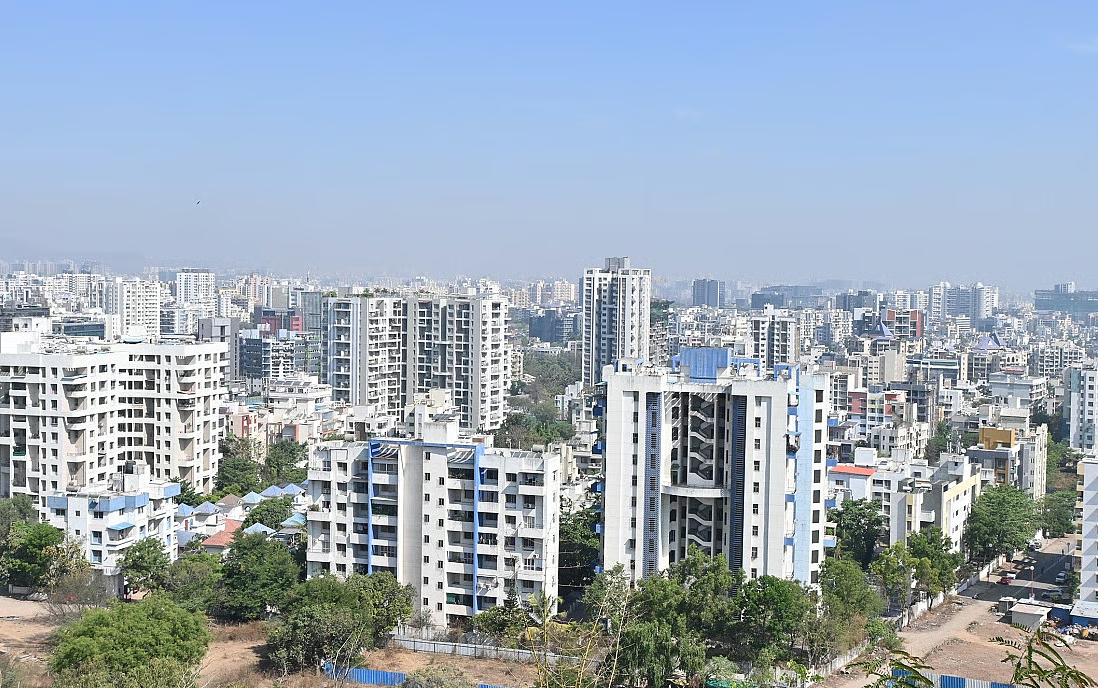
- Over 56% of the global population lives in urban areas, facing issues such as food insecurity, pollution, flooding, and extreme heat.
Value of Urban Soils:
- Urban soils are essential for:
- Climate Mitigation: Act as natural air conditioners and carbon sequestration agents; mitigate "heat island" effects in cities.
- Flood Management: Serve as sponges that absorb rainfall and replenish groundwater; key defense against flooding.
- Support for Urban Agriculture: Facilitate local food production (e.g., rooftop farms, community gardens) and enhance biodiversity.
- Enhancing Mental and Physical Health: Interaction with nature, provides "Vitamin N," reduces stress, and promotes physical activity.
- Urban soils are essential for:
Current Soil Degradation Challenges:
- The FAO reports that nearly 31% of global soils are degraded, particularly in urban environments.
- Factors include industrial waste contamination, soil compaction from development, organic matter loss, and sealing by concrete.
Call to Action:
- The Healthy Soils for Healthy Cities campaign urges:
- Urban Soil Restoration: Priority on rehabilitating degraded urban land through composting, soil testing, and organic amendments.
- Green Infrastructure Promotion: Building green spaces like parks and rain gardens to replace concrete, which supports ecological balance and reduces urban heat and flooding.
- Support for Urban Agriculture: Encouraging the establishment of community gardens, which foster community ties and improve local food access.
- Responsible Soil Management Practices: Reducing chemical fertilizer use, planting native species, and protecting topsoil to maintain soil health.
- Soil Literacy and Composting Initiatives: Educating communities about effective soil management and encouraging household composting.
- The Healthy Soils for Healthy Cities campaign urges:
Conclusion:
- Recognizing soil as a vital infrastructure is essential for building resilient cities. Healthy soils lead to healthier urban environments, emphasizing community engagement in soil stewardship.
Important Note: The urgent need for action is highlighted by the direct correlation between urban soil health and the overall wellbeing of urban populations.
Key Terms & Concepts
| World Soil Day | Recognizes importance of soil |
| Food and Agriculture Organization | UN body promoting agriculture |
| 2025 | Year for upcoming theme |
| 56% | Percentage of global urban population |
| Climate change | Cause of urban challenges |
| Urban heat islands | Cities becoming warmer areas |
| FAO | Notes soil degradation rate |
| One-third | Proportion of degraded soils |
| Green infrastructure | Promoted solution for cities |
| Urban agriculture | Supports local food systems |
| Composting | Supports soil health improvement |
| Vitamin N | Benefits of nature contact |