iAspirants
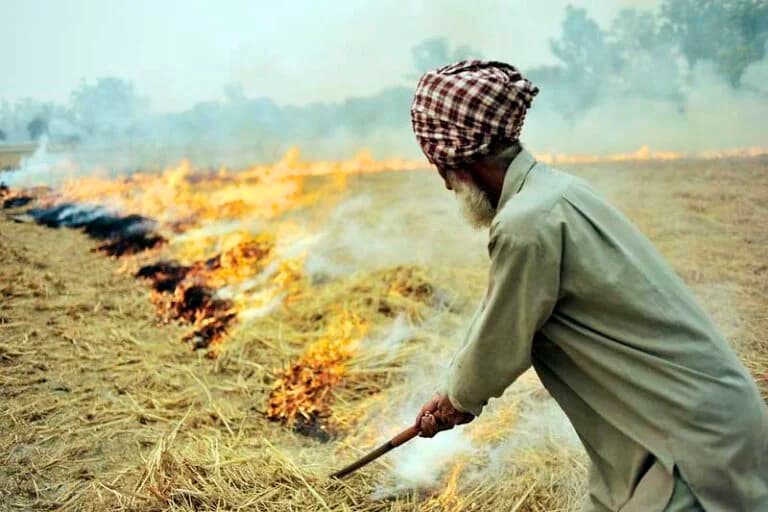
Increase in Winter Waste Burning
Published on:
Source: The Hindu
Share this post
Article Summary
Summary of Key Findings on Open Waste Burning in Indian Cities
Key Findings from WRI Study (2019-2026)
- Waste Burning Increase: Open waste burning incidence rises sharply in winter cities, with an average increase in quantity of waste burned and associated emissions being three times higher than in summer.
- Cities Surveyed: The study involved field surveys across 11 polluted Indian cities.
- Tier 2 and 3 Cities:
- Tier 2 Cities (population: 500,000 - 5 million):
- Highest quantity of waste burned.
- Waste burned volume doubled from ~21 tonnes/day in summer to ~41 tonnes/day in winter.
- Tier 3 Cities: Highest winter incidence of burning, with an average of 49.6 incidents/km²/day, compared to 46 in Tier 2 and 39.4 in Tier 1 cities.
- Tier 2 Cities (population: 500,000 - 5 million):
Public Health and Pollution
- Pollution Contribution: Open waste burning contributes less than 1% to citywide PM2.5 and PM10 emissions but is significant in localized areas due to proximity to homes and streets.
- Socio-Economic Impact:
- Poorer areas demonstrate a higher frequency of burning incidents (~84 incidents/km²/day in Tier 2 cities).
- Indicates disparities in waste management services across socio-economic strata.
Environmental Conditions
- Seasonal Factors:
- Winter conditions lead to weaker winds and stable atmospheric conditions, causing difficulty in the dispersion of pollutants.
- Increased waste burning is partly attributed to its use as a source of warmth during colder months.
Government and Policy Responses
- Commission for Air Quality Management (CAQM): Introduced initiatives aimed at curbing open waste burning in the National Capital Region (NCR).
- Identifying waste dumping/burning sites.
- Training waste management personnel and conducting awareness campaigns.
- Development of pilot solutions for future scalability.
- Zero-Tolerance Approach: Emphasis on stringent inspections under ‘Operation Clean Air’.
- Union Environment Ministry Initiatives: In May, the ministry urged Delhi authorities to:
- Increase waste processing capacity before September.
- Implement enforcement teams to prevent winter waste burning.
- Provide heating facilities for workers to minimize the motivation for burning waste for warmth.
Conclusion
The rise in open waste burning during winter months in Indian cities poses significant public health risks and highlights socio-economic disparities in waste management. Government initiatives, particularly from the CAQM and the Union Environment Ministry, are being implemented to manage and reduce these emissions, focusing on enhancing waste management infrastructure and community awareness.
Key Terms & Concepts
| World Resources Institute (WRI) | Conducted waste burning study |
| September 10, 2026 | Date of report publication |
| 11 polluted Indian cities | Cities studied for waste burning |
| Tier 2 cities | Highest waste burned quantity |
| 49.6 incidents per sq km | Winter burning incidence in Tier 3 |
| PM2.5 and PM10 emissions | Type of particulate pollution |
| Commission for Air Quality Management | Regulatory body for air quality |
| Operation Clean Air | Inspection initiative for air quality |
| Union Environment Ministry | Guided waste processing improvements |
| 21 tonnes to 41 tonnes | Increase in waste burned amount |
| Socio-economic conditions | Factor in waste burning disparity |
| Public awareness campaigns | Initiative for waste management |