iAspirants
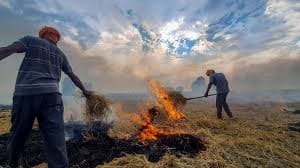
Increased Stubble Burning in NCR
Published on:
Share this post
Article Summary
Stubble Burning & Air Quality Management in the NCR
Stubble Burning Statistics:
- Punjab: 8,986 incidents reported from April 1 to May 15, 2026, a rise of 38.80% compared to 6,474 incidents during the same period last year.
- Haryana: 3,290 incidents reported, up 118.89% from 1,503 incidents in the corresponding period in 2025.
Overall Air Quality Regulation:
- Meeting held by the Commission for Air Quality Management in National Capital Region and Adjoining Areas (CAQM) emphasized the need for stricter enforcement mechanisms to control air pollution.
- Recognition of vehicles as major contributors to PM2.5 emissions; calls for accelerated transition to cleaner mobility.
Government Directives:
- Electric Vehicle Mandate:
- Registration of electric three-wheelers for passenger and goods transport will be mandated in Delhi starting January 1, 2027.
- In neighboring districts (Gurugram, Faridabad, Sonipat, Ghaziabad, and Gautam Buddha Nagar), the mandate will commence from January 1, 2028.
- Ban on autorickshaws running on conventional fuel in remaining NCR districts to be implemented by January 1, 2029.
Air Quality Monitoring Enhancements:
- Approval for an additional 46 air quality monitoring stations across the NCR.
- Distribution: 14 in Delhi, 16 in Haryana, 15 in Uttar Pradesh, 1 in Rajasthan.
- Total air quality monitoring stations in NCR will increase to 157.
Constitutional and Policy Context:
- Air quality management aligns with the Fundamental Right to Life (Article 21) of the Indian Constitution, emphasizing the right to a clean environment.
- Relevant policies under the National Clean Air Programme (NCAP) which aims to reduce air pollution levels across India.
Environmental Impact:
- Air pollution control is critical for public health, with stubble burning being a major seasonal contributor to air quality deterioration.
These statistics and policy directions reveal the urgent need for coordinated action to improve air quality and address the environmental challenges posed by stubble burning in the northern states of India. The CAQM's initiatives underscore the interplay between environmental regulations and public health rights.
Key Terms & Concepts
| 38.80% | Increase in Punjab stubble burning |
| 118.89% | Increase in Haryana stubble burning |
| 8,986 | Stubble burning incidents in Punjab |
| 3,290 | Stubble burning incidents in Haryana |
| CAQM | Commission for Air Quality Management |
| electric three-wheelers | New vehicle registration mandate |
| January 1, 2027 | Electric vehicle mandate start date |
| January 1, 2028 | Mandate in neighboring districts |
| January 1, 2029 | Ban on conventional autorickshaws |
| PM2.5 emissions | Major pollutant identified |
| 46 air quality monitoring stations | New stations added to network |
| NCR | Region affected by air pollution |
| 157 |