iAspirants
India Achieves Naxal-Free Status
Published on:
Share this post
Article Summary
Summary of Naxal-Free India Achievement
Historical Context and Achievement
- As of March 31, 2026, India has effectively become free from left-wing extremism (Naxalism) after nearly six decades of violence.
- This achievement is attributed to twelve years of persistent government efforts, focusing on the pillars of Trust, Construction, and Public Welfare.
Strategic Approach
- The government adopted a comprehensive strategy integrating decisive security operations with developmental and welfare initiatives.
- Technology-enabled measures enhanced intelligence, monitoring, and coordination.
- Rehabilitation policies encouraged thousands of Naxalites to surrender and reintegrate into society, leading to improved infrastructure and public service access.
Key Data and Statistics
- From 2014 to 2026, the number of districts affected by Naxalism decreased from 126 to just 2.
- Major violence indicators showed significant declines, with incidents dropping from 1,936 in 2010 to 234 in 2025, and fatalities from 310 to 100 in the same period.
- Infrastructure improvements included the construction of over 12,249 kilometers of roads in affected areas and installation of 9,600 mobile towers, ensuring 96% of villages now have mobile connectivity.
Government Policies and Initiatives
- National Policy and Action Plan (2015): Established a systematic, whole-of-government framework to combat left-wing extremism, focusing on security, development, and community rights.
- Rehabilitation Schemes: Financial incentives for surrendering Naxalites included immediate cash assistance and monthly stipends, fostering greater participation in mainstream society.
- Aspirational District Programme: Enhanced coordination of welfare schemes in health, education, and financial inclusion.
Judicial and Legislative Framework
- The government’s approach combined security measures with socio-economic interventions, addressing the root causes of extremism effectively.
- A dedicated division within the National Investigation Agency (NIA) was established to disrupt financing networks of Naxalites.
International and National Importance
- The success in eradicating Naxalism reflects a significant milestone in India’s internal security narrative and has implications for national stability and development.
- The strategy serves as a model for addressing similar insurgencies globally.
Science and Technology in Operations
- The use of modern technology such as UAVs, satellite imagery, and AI-driven data analysis has transformed Naxal operations, allowing for real-time monitoring and efficient resource allocation.
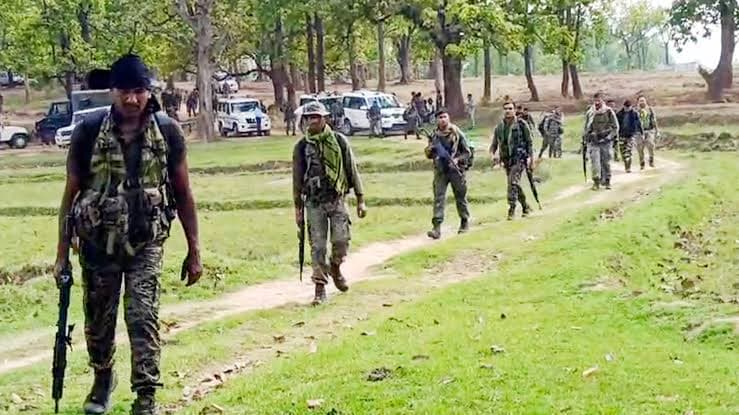
- Operations such as "Operation Black Forest" successfully dismantled major Naxalite strongholds.
Community Engagement and Development
- Local recruitment in security forces, such as the formation of the Bastariya Battalion, fostered community trust and improved intelligence networks.
- Development initiatives included establishing schools, health services, and banking facilities, directly enhancing the quality of life in previously Naxal-affected areas.
Future Directions
- The government aims to ensure that the gains achieved are sustainable through continuous engagement and development in affected regions.
- The focus will remain on integrating marginalized communities into the national development narrative, ensuring long-term peace and stability.
This comprehensive strategy highlights the importance of a multi-faceted approach in tackling internal security threats while promoting socio-economic development and community welfare.
Key Terms & Concepts
| March 31, 2026 | Date of achieving Naxal-free status |
| 12 years | Duration of government efforts |
| Red Corridor | Region affected by Naxalism |
| 1,936 incidents | Peak violence incidents in 2010 |
| 720 deaths | Civilian deaths in 2010 |
| 40 crore INR | Assets seized by NIA |
| 259 Eklavya Model Residential Schools | Schools approved for tribal education |
| 800 crore INR | Investment in skill development |
| 17,319 kilometers | Road projects approved |
| 96% villages | Villages with mobile connectivity |
| Operation Black Forest | Significant anti-Naxal operation |
| Operation Double Bull | Operation leading to Naxal-free areas |