iAspirants
India Achieves Strong GDP Growth Amid Challenges
Published on:
Share this post
Article Summary
Economic Overview of India (Q2 FY 2025-26)
GDP Growth
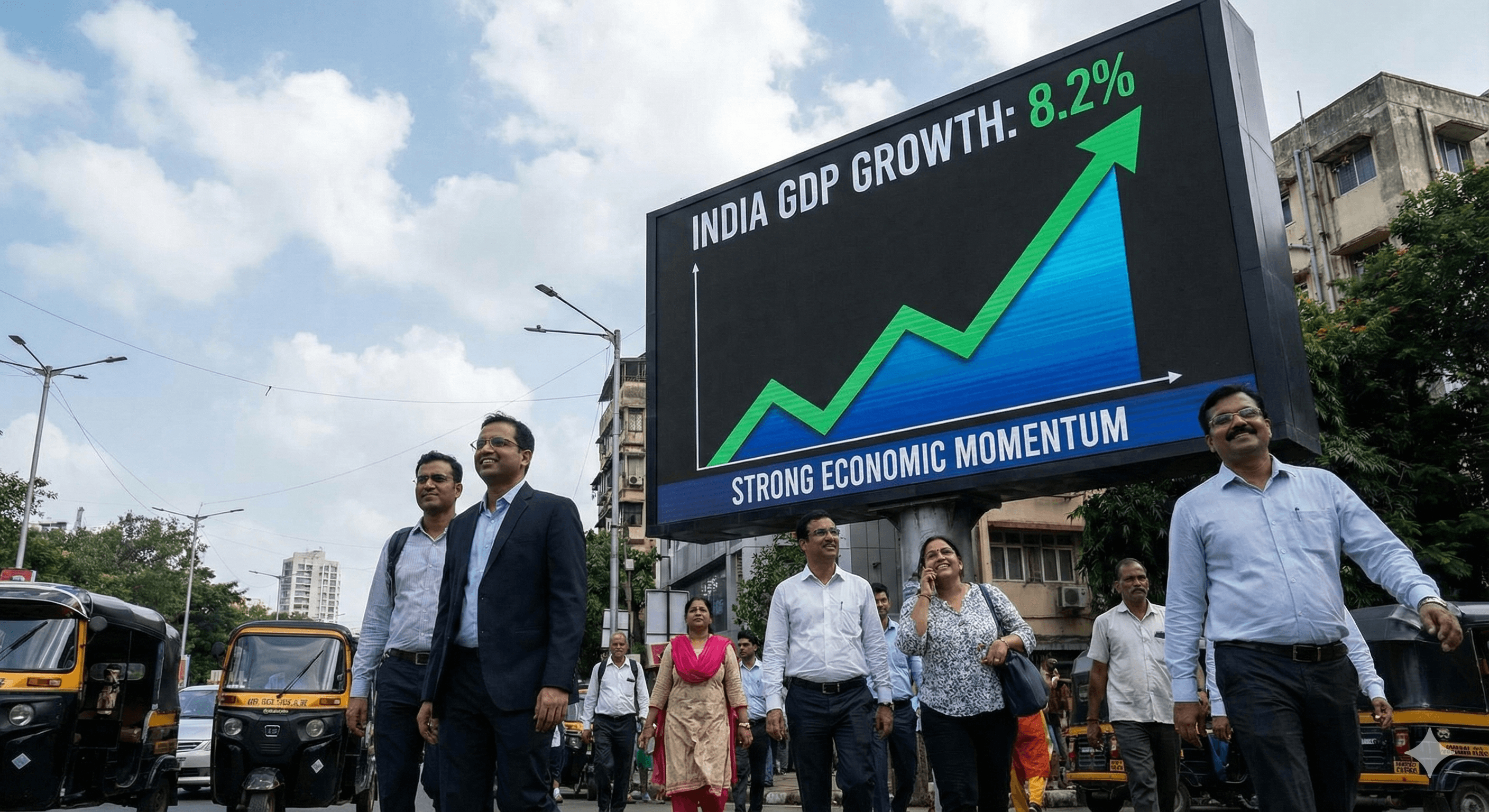
- Real GDP Growth: 8.2% year-on-year, the highest growth in six quarters.
- Nominal GDP Growth: 8.7%, indicating moderate price pressures.
- Absolute Real GDP: ₹48.63 lakh crore, up from ₹44.94 lakh crore in the same quarter of the previous year.
Sector Contributions
- Services Sector: Strong growth led by financial, communication, transport, and real estate services, with a growth rate of 10.2%.
- Manufacturing Sector: Increased by 9.1%, driven by higher domestic demand and industrial capacity utilization.
- Construction Sector: Grew at 7.2% due to infrastructure projects and real estate revival.
- Agriculture and Allied Activities: Only grew by 3.5% due to monsoon variability and structural constraints.
Factors Influencing Growth
- Domestic Consumption: Rebound noted with stable inflation supporting recovery.
- Government Expenditure: Increased but at a moderated pace, contributing to aggregate demand and gross fixed capital formation growth of 7.3%.
Considerations and Challenges
- Base Effect: Growth may appear stronger due to comparison with subdued previous year’s growth rates (6.5% and 5.6% in the first half).
- Methodological Concerns: Possible underestimation of inflation in services may overstate real GDP growth. Discrepancies between consumer price trends and wholesale indices raise accuracy questions.
- Composition of Growth: Heavy reliance on government spending raises fiscal sustainability concerns if private sector investment does not pick up.
Fiscal Indicators
- Nominal GDP vs. Budgeted Growth: Actual nominal growth (8.7%) is lower than the budgeted 10.1%, complicating fiscal calculations.
- Gross Tax Revenue: Up by just 4%, with gross tax revenue buoyancy of 0.32 against a budgeted assumption of 1.1, indicating potential future fiscal challenges.
Inflationary Trends
- Low Inflation Risks: Persistent low inflation amidst low nominal GDP growth can weaken business revenues, profits, hiring, and wage growth. It could also limit the central bank's monetary policy flexibility.
Global Economic Context
- External Demand Weakness: Concerns about geopolitical instability, tightening financial conditions, and commodity price volatility could impact India’s export performance.
Conclusion
The 8.2% growth of India's GDP in Q2 FY 2025-26 is indicative of strong domestic performance but masks underlying structural issues and risks from global economic uncertainties. Sustaining this growth rate will require effective policy measures and reliance on broad-based private sector investment.
Key Terms & Concepts
| 8.2% GDP Growth Rate | Strength of economic growth |
| ₹48.63 lakh crore | Absolute real GDP value |
| 9% GDP Growth in Manufacturing | Expansion in manufacturing sector |
| Government Capital Expenditure | Drive for economic growth |
| 4% Growth in Gross Tax Revenues | Fiscal revenue performance |
| 0.32 Gross Tax Revenue Buoyancy | Indicator of fiscal health |
| 9-9.5% Nominal GDP Growth | Revised economic growth expectations |
| 7.3% Gross Fixed Capital Formation | Investment activity growth |
| 3.5% Agriculture Growth | Performance of agriculture sector |
| 10.2% Growth in Financial Services | Strong performance in financial sector |
| Structural Challenges | Concerns for future growth |