iAspirants
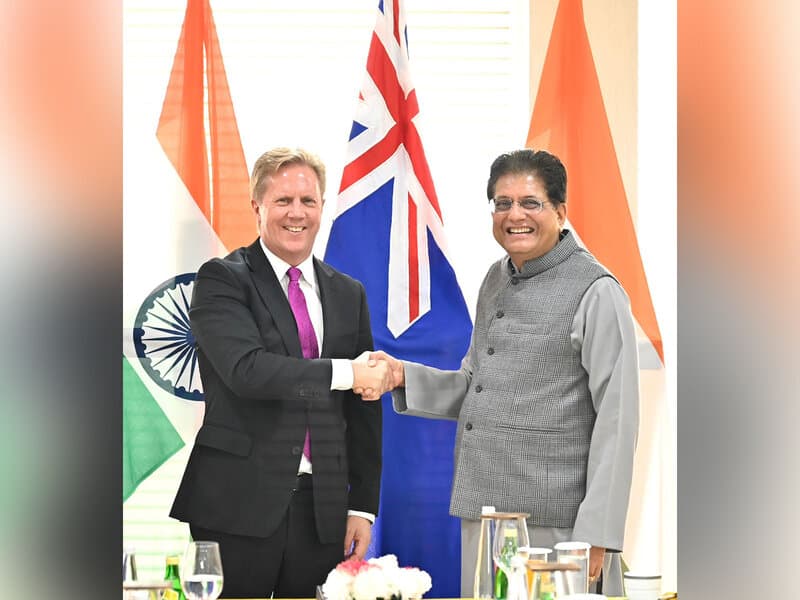
India and New Zealand FTA Agreement
Published on:
Share this post
Article Summary
India-New Zealand Free Trade Agreement (FTA) Summary:
Bilateral Trade Goals:
- Aim to double bilateral trade from $1.3 billion (2024-25) in the next five years.
- Concluded negotiations on the FTA expected to be signed within 2-3 months after legal reviews.
Key Highlights of the FTA:
- India will reduce tariffs on 95% of products exported from New Zealand.
- New Zealand will eliminate tariffs on 100% of its tariff lines for Indian exports.
- New Zealand's average import tariff is 2.3%, while India’s is 16.2%, showing a disparity favoring New Zealand.
- New Zealand plans to invest $20 billion in India over the next 15 years as part of this deal.
Visa and Mobility Provisions:
- Removes numerical caps on Indian students and guarantees 20 hours of work per week during studies.
- Extended post-study work opportunities:
- 3 years for Bachelor's and Master's graduates in STEM.
- 4 years for Doctorate holders.
- Introduces a Temporary Employment Entry (TEE) Visa for 5,000 Indian professionals across skilled sectors (IT, healthcare, etc.).
Economic Implications:
- Strong push for job creation and expansion of business opportunities.
- Concerns from New Zealand's political factions about the deal being “neither free nor fair”, especially concerning immigration and dairy concessions.
- Notably, dairy products remain excluded from tariff reductions for India.
Regulatory and Cooperation Aspects:
- The FTA will address non-tariff barriers with provisions for improved regulatory cooperation and streamlined customs protocols.
- Cooperation will also extend to sectors such as AYUSH, culture, fisheries, tourism, and traditional knowledge systems.
Strategic Significance:
- India seeks to enhance its access to a high-income, rules-based Pacific market.
- New Zealand aims to diversify its exports including dairy and horticulture.
Ministerial Statements:
- Prime Minister Narendra Modi describes the FTA as a historic milestone reflecting robust bilateral relations.
- Commerce Minister Piyush Goyal highlights the FTA as a conduit for Indian businesses in the region and boosts global skills development.
Comparison with Other Trade Agreements:
- The FTA with New Zealand comes after recent agreements with Oman and the UK.
- Indicates India's active pursuit of trade agreements amidst stalled talks with larger partners like the US.
Future Outlook:
- The implementation will require passage through New Zealand's Parliament, estimated to take at least six months post-signing.
- Both nations are optimistic that the FTA will significantly enhance economic ties and trade volumes.
This FTA signifies a strategic move for both nations to capitalize on each other’s economic strengths and broaden their trade landscape amidst global uncertainties.
Key Terms & Concepts
| India-New Zealand Free Trade Agreement (FTA) | Enhances trade cooperation |
| Bilateral trade | Projected at $2.6 billion |
| Tariff reduction | 95% of NZ products |
| Cabinet approval | Deal greenlighted in India |
| March 16, 2023 | Start of formal negotiations |
| 20 billion investments | New Zealand's investment in India |
| Temporary Employment Entry (TEE) Visa | New visa pathway for professionals |
| 5,000 visas quota | For Indian skilled professionals |
| 20 hours per week work guarantee | For students during studies |
| SPS measures | Standards for trade |
| Education, tourism, aviation training | Opportunities for Indian services |
| Exclusion of dairy products | From tariff reduction list |