iAspirants
India and Russia Strengthen Bilateral Ties
Published on:
Share this post
Article Summary
Summary of India-Russia Bilateral Relations and Upcoming Discussions
Key Points:
Bilateral Trade and Labour Mobility Pact:
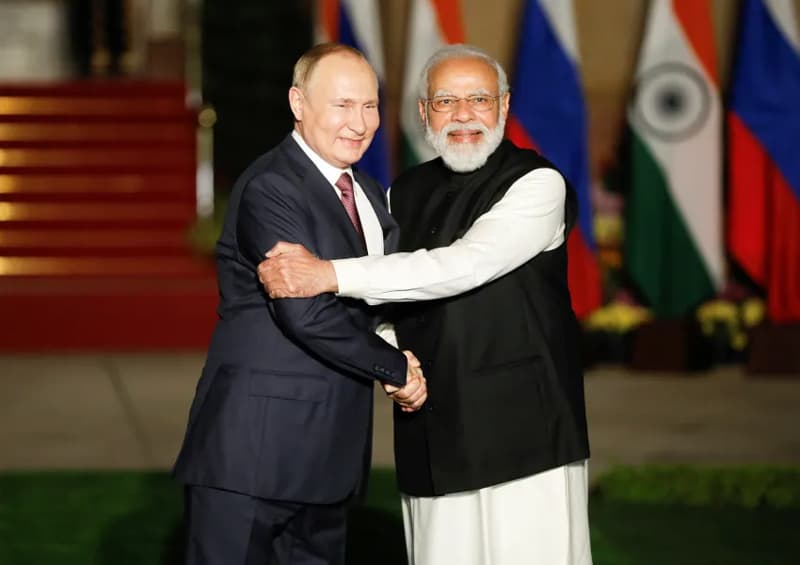
- Russian President Vladimir Putin and Indian PM Narendra Modi are set to discuss enhancing bilateral business ties during Putin’s visit on December 4-5.
- An agreement on labour mobility is under consideration, aimed at facilitating employment and skilled workforce exchange.
Military Cooperation:
- Discussions will include the ongoing supply of S-400 air defense systems and Sukhoi-57 fighter aircraft to India.
- Russia asserts that the Su-57 is considered among the best fighter jets globally.
Pressure from the US:
- The Kremlin acknowledges ongoing pressure on India, particularly concerning a 25% US penalty tariff on Indian purchases of Russian oil.
- It has been emphasized that India’s sovereignty in defending its national interests is respected by Russia.
Oil Imports and Sanctions:
- Some Indian companies are reportedly adjusting their oil purchase strategies due to external pressures; however, trade volume remains flexible.
- Russia views sanctions against its companies as illegal unless sanctioned by the UN Security Council, highlighting their resilience in maintaining trade.
Alternate Payment Methods:
- Russia is exploring alternative payment mechanisms to circumvent pressures linked to US sanctions, which will be discussed in upcoming negotiations.
International Relations Perspective:
- Peskov, Kremlin spokesperson, praised India's willingness to understand Russia’s position regarding the Ukraine conflict, advocating for mutual dialogue.
- A strong emphasis was placed on Russia’s friendship with both India and China, highlighting a multi-faceted strategic partnership without limits.
Nuclear Cooperation:
- Agreements on nuclear collaboration, including small modular reactors (SMRs), are expected to be part of talks, with Russia ready to offer its technology.
Legislative Framework:
- The discussions around the labour mobility agreement reflect efforts to formalize and enhance worker exchanges between the two nations, moving towards more structured bilateral agreements.
Contextual References:
Sovereignty and International Law:
- The Kremlin underscored the principle of state sovereignty and the right to engage in mutually beneficial trade, free from external interference.
Potential Impact of US Policies:
- The tariffs implicate a complex relationship involving India's dependence on Russian oil and its diplomatic stance towards the United States, tying back to international trade relations.
Technological Exchange:
- The introduction of advanced military technology and nuclear capabilities indicates a growing defense relationship, while also aligning with India’s international defense strategy.
Concluding Notes:
The upcoming India-Russia meetings symbolize a critical junction in international diplomacy where both nations seek to bolster their defense, trade relations, and energy partnerships despite external pressures. The outcome of discussions pertaining to military supplies, energy trade, and strategic cooperation will have significant implications for regional stability and global geopolitics.
Key Terms & Concepts
| S-400 air defence systems | Defence equipment supplied to India |
| Sukhoi-57 aircraft | Fighter aircraft for India |
| labour mobility pact | Agreement under discussion |
| Russia | Country providing defence systems |
| United States | Country imposing tariffs |
| December 4-5 | Scheduled visit dates for Putin |
| oil imports | Economic resource exchange |
| U.N. Security Council | Legal entity for sanctions |
| nuclear cooperation | Technology and research discussions |
| small modular reactors (SMRs) | Proposed technology for India |