iAspirants
Current AffairsPrelims PYQsUPSC CSE SyllabusUPSC CSE StrategyBlogsPricing
Login
iAspirants

Your AI-powered companion for UPSC preparation.

Quick Links

  • Home
  • About Us
  • Current Affairs
  • Prelims PYQs
  • UPSC CSE Syllabus
  • UPSC CSE Strategy
  • Blogs

Company

  • Pricing
  • FAQs
  • Contact Us
  • Login

Legal

  • Privacy Policy
  • Terms & Conditions
  • Return Policy

© 2025 iAspirants, Inc. All rights reserved.

  1. Blogs
  2. International Relations

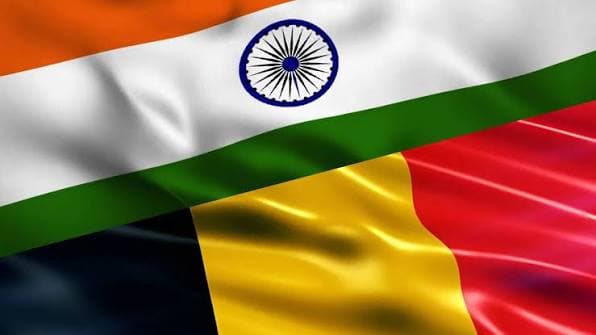
India-Belgium Strengthening Strategic Partnership

Published on: 03-Sep-2026

Source: PIB

Share this post

India-Belgium Strengthening Strategic Partnership

Article Summary

Joint Statement Highlights: India-Belgium Relations

  1. Historical Context:

    • India and Belgium share deep historical ties, notably during World War I when thousands of Indian soldiers fought in Belgium.
  2. Strategic Partnership:

    • Recent developments have expanded cooperation from traditional sectors to strategic areas such as defense and clean energy.
    • Collaboration includes the development of advanced defense equipment like the Zorawar tank.
  3. Economic Growth:

    • India’s economy recorded a growth rate of 7.8% in the last quarter.
    • The India-European Union Free Trade Agreement (2023) aims to enhance economic ties and promote global stability and shared prosperity.
  4. Investment Initiatives:

    • Establishment of an “Investment Fast-Track Mechanism” for Belgian companies in India.
    • Formation of the India-Belgium Business Forum to enhance business collaboration.
  5. Bilateral Trade Goals:

    • Target to double bilateral trade in the next five years through various initiatives.
  6. Defense and Security Cooperation:

    • Agreement to enhance military exchange and training cooperation.
    • Focus on defense co-development and co-production through government and defense industry agreements.
    • Strengthening intelligence sharing and cooperation against crime.
  7. Clean Energy and Sustainability:

    • Memorandum of Understanding (MoU) on renewable energy to enhance sustainability cooperation.
    • Collaboration on critical minerals processing and recycling.
    • Joint efforts in the semiconductor sector, leveraging Belgium's expertise and India's scale, particularly through the IMEC Institute partnership.
  8. People-to-People Ties:

    • Initiatives to strengthen connections between startups and enhance capacity building in the maritime sector.
    • Plans to solidify university and research collaborations.
    • Upcoming “Migration and Mobility Partnership Agreement” to facilitate talent mobility.
  9. Global and Regional Issues:

    • Both nations emphasize the rule of law, dialogue, and diplomacy in addressing global conflicts, including the situation in Ukraine and West Asia.
    • Commitment to countering terrorism in all forms.
  10. Cultural Ties:

    • Recognition of the long-standing connection between India and Belgium through the diamond trade, aiming to evolve this historical relationship into a broader partnership.

The joint statement underscores a commitment to fostering a robust partnership that addresses economic, defense, and cultural dimensions, paving the way for future collaborations.

Key Terms & Concepts

AntwerpCity with Indian community
Green Ammonia ProjectsMajor clean energy initiative
7.8%India's economic growth rate
India-European Union Free Trade AgreementHistorical trade agreement
Investment Fast-Track MechanismFacilitates investment from Belgium
Military Exchange and Training CooperationStrengthens defense relations
Renewable Energy MOUSustainability cooperation
IMEC InstituteSemiconductor expertise partner
Migration and Mobility Partnership AgreementFacilitates talent mobility
Hockey World CupRecent international event

Mind Map for UPSC Civil Services Revision

Turn UPSC Civil Services Current Affairs Into Exam-Ready Notes

Reading International Relations current affairs is half the work. Revise them with ready-made notes and test what actually stuck.

  • Daily UPSC Civil Services current affairs analysis
  • Revision notes, mind maps & MCQs
  • Prelims mock tests with instant results

Related UPSC Civil Services Current Affairs Articles

India's Oil Exports Amid Sanctions
Economic and Social Development19-Oct-2026

India's Oil Exports Amid Sanctions

Summary of Key Facts and Data on India's Oil Imports from Russia

Background Context

  • India and two other countries, Turkiye and Brunei, refined Russian crude and exported oil products worth 1 billion euros ($1.2 billion) to sanctioning nations in September 2026, a 43% increase from August.
  • Reliance Industries Ltd.'s Jamnagar refinery in Gujarat was a major contributor, supplying six of the seven cargoes received at EU ports despite the EU's ban on these products.

Import and Export Data

  • Exports Breakdown:

    • EU: 667 million euros
    • Australia: 168 million euros
    • U.S.: 154 million euros
    • New Zealand: 19 million euros
    • Total refined from Russian crude: estimated 295 million euros.
  • Destinations for EU-bound shipments:

    • Italy: 3 shipments
    • Romania: 2 shipments
    • Spain and Cyprus: 1 shipment each
  • Significant shipment: A single 104,000-tonne cargo of gasoil (diesel) from Jamnagar en route to Rotterdam.

EU Sanctions and Recommendations

  • The EU banned imports of oil products refined from Russian crude starting January 2026.
  • Current regulations permit exemptions for net crude exporters, but there are calls for a stricter ban at the refinery level, which would prohibit any products from a plant that has processed Russian crude in the prior six months.

Trends in Imports

  • India's imports of Russian crude fell 13% in September, marking the second consecutive month of decline, the lowest rates since April:
    • Jamnagar: 27% decrease
    • IOC's Paradip: 21% decrease
    • Nayara Energy's Vadinar: 8% decrease
  • Interestingly, Vadinar surpassed Jamnagar as India's largest importer of Russian crude.

Overall Imports Statistics

  • India ranked as the second-largest buyer of Russian fossil fuels in September 2026, totaling 4.1 billion euros in imports:
    • Crude oil constituted 88% (approx. 3.6 billion euros)
    • Coal: 309 million euros
    • Oil products: 161 million euros

Volume and Price Analysis

  • Clarification on price: Urals crude averaged $90.7 per barrel, about $23 below Brent prices, maintaining this gap since August.
  • Asia, particularly China, has become increasingly competitive for Russian crude imports.

Outlook

  • Analysts project India's October imports to remain stable at 1.8-1.9 million barrels per day.

This summarization outlines crucial details regarding India's involvement in the global oil market, particularly in relation to Russian crude imports amid changing sanctions and geopolitical dynamics, providing important context for economic and international relations studies.

Fires on Tankers in Strait of Hormuz
International Relations18-Oct-2026

Fires on Tankers in Strait of Hormuz

Key Notes on Iran's Control and Incidents in the Strait of Hormuz

Geopolitical Context

  • The Strait of Hormuz is a crucial maritime channel for global oil trade, through which approximately 20% of the world’s oil consumption is transported.
  • Since late February 2026, following the outbreak of conflict, Iran has asserted control over the Strait, demanding vessels seek authorization to transit.

Recent Incidents

  • October 15-17, 2026: A series of incidents involving oil tankers in the Strait of Hormuz were reported.
  • Two tankers were set ablaze after allegedly striking naval mines, as claimed by Iran's Revolutionary Guards.
    • Both vessels were reportedly carrying over two million barrels of crude oil and were accused of attempting to navigate illegally through the strait.

Military Activity

  • On October 17, Iranian military forces declared that a supertanker attempting to cross the strait, allegedly with U.S. backing and by deactivating tracking systems, struck a mine, resulting in an explosion and fire.
  • The Revolutionary Guards issued threats, stating that any vessel disabling navigation systems would be treated as “hostile”.

Escalation of Conflict

  • Between October 15 and October 16, two additional incidents involving tankers in the Gulf of Oman were reported, indicating a heightened frequency of maritime attacks in the region.
  • On October 17, a record six vessels were attacked in or near the Strait of Hormuz, marking the highest daily number of assaults since the conflict began.

International Response

  • In reaction to Iran's blockade, the United States has implemented a naval counter-blockade aimed at Iranian oil exports, signaling escalated geopolitical tensions in the region.

Maritime Safety Monitoring

  • Reports from maritime monitoring agencies, including Vanguard, the International Maritime Organization (IMO), and the UK Maritime Trade Operations (UKMTO), have confirmed the ongoing threats posed to vessels in this strategically significant corridor.

Concluding Observations

The current incidents reflect the ongoing volatility and security concerns in the Strait of Hormuz, emphasizing the critical international stakes involved in maintaining freedom of navigation in one of the world’s most pivotal maritime chokepoints.

India's Ambition for UNSC Seat
International Relations16-Oct-2026

India's Ambition for UNSC Seat

India's Bid for Non-Permanent Seat on UNSC: Objectives and Challenges

  1. General Context:

    • India aims to secure a non-permanent seat on the United Nations Security Council (UNSC) for the 2028-29 term.
    • Voting in the United Nations General Assembly (UNGA) is scheduled for June 2027.
    • India needs a minimum of 129 affirmative votes from the 193-member assembly to win the seat.
  2. Historical Background:

    • India has previously served on the UNSC for eight terms: 1950-51, 1967-68, 1972-73, 1977-78, 1984-85, 1991-92, 2011-12, and 2021-22.
    • Last tenure (2021-22) was affected by the COVID-19 pandemic, limiting India's ability to achieve its objectives.
  3. Strategic Factors:

    • Terrorism and UN Reform: India aims to complete pending objectives on terrorism and demand for UN reforms during its upcoming term.
    • Permanent Membership Ambitions: India continues to push for permanent membership but aims to increase its non-permanent tenure frequency as a strategy.
  4. Competitive Landscape:

    • Tajikistan has announced candidacy for the same Asia-Pacific seat, necessitating strategic negotiations.
    • India's historical competition includes past losses to Pakistan and Japan during election bids in 1975 and 1996, respectively.
    • Consensus within regional blocs plays a significant role in determining candidate strengths, often favoring smaller nations.
  5. Voting Dynamics:

    • Global North Support: India enjoys backing from countries such as the USA, Canada, Australia, and members of the EU.
    • Strategic Partnerships: India is likely to secure votes from Southeast Asian nations (ASEAN), Caribbean nations (CARICOM), and Pacific Island countries (PIC).
    • Global South Sentiment: Current trends among Global South countries show criticism of larger powers, presenting challenges for India’s candidacy due to its ties with Israel and the US.
  6. Potential Strategies:

    • Negotiation with Tajikistan: Possible strategies include convincing Tajikistan to withdraw its candidacy, a move successfully executed in past cases with Kazakhstan and Afghanistan.
    • India's Withdrawal Consideration: A tactical withdrawal could position India favorably for future elections, acknowledging Tajikistan’s bid as a growing power in UNSC politics.
    • Cost-Benefit Analysis: India must analyze its position in the global context, given the perception of the UNSC's relevance amid issues like the Ukraine conflict, pandemic responses, and other global crises.
  7. Conclusion:

    • India's pursuit for a non-permanent UNSC seat involves complex diplomatic maneuvering against the backdrop of shifting geopolitical allegiances.
    • Success will depend on building broader support, especially amid a critical Global South landscape that prioritizes equity among nations in UNSC representation.

This analysis demonstrates India's strategic positioning and the multifaceted approach required to navigate the challenges of UNSC elections in the evolving global climate.

Military Assistance and Recent Violence
International Relations16-Oct-2026

Military Assistance and Recent Violence

Key Facts and Data:

  1. Military Assistance to Pakistan:

    • Prime Minister Rajiv Gandhi expressed concerns regarding the military assistance Pakistan received from the US, totaling $4.6 billion for sophisticated military hardware.
    • Stated the need for India to match this assistance to prevent a military imbalance in the Subcontinent.
  2. Conflict in Sri Lanka:

    • Reported fatalities in Sri Lanka included 40 Tamil militants and 15 government soldiers during recent fighting.
    • Approximately 20 individuals were seriously injured.
    • Independent sources indicated potential civilian casualties, but government officials denied this, asserting that military actions were confined to regions between Mannar and Vavuniya.
  3. Circus Tent Collapse Incident:

    • A tragic accident involving the Venus Circus led to the death of 3 individuals and injuries to , including 2 children and 4 women.
12 others
  • Nearly 200 people were initially trapped inside the tent during a dust storm before the performance was halted.
  • Security Incident Involving Hasina Wajed:

    • Armed individuals attempted to storm the residence of Hasina Wajed, the president of the Awami League party in Bangladesh, intending to kill her and destroy her house.
    • The attack occurred during the day while she was present at her home.
  • Judicial and Legislative Context:

    • While no specific judicial rulings or legislative references were mentioned in the text, the reference to armed attacks and military engagement may invoke discussions around constitutional rights concerning self-defense and security provisions under the respective national laws.

    International Relations:

    • The strategic military assistance from the US to Pakistan may significantly impact Indo-US and Indo-Pak diplomatic relations, necessitating reevaluations of defense and foreign policies.

    Economic and Social Context:

    • The military assistance figure of $4.6 billion emphasizes the geopolitical economic dynamics in the South Asian region, particularly concerning defense spending and military preparedness.
    • Ongoing conflict in Sri Lanka highlights the complex socio-political landscape affecting civilian life and security in the region.

    Safety and Crisis Management:

    • The circus incident underlines the importance of safety measures and emergency protocols during public events, especially regarding structural integrity during adverse weather conditions.

    Cultural and Political Significance:

    • The attempted attack on a prominent political figure like Hasina Wajed reflects the volatility in Bangladesh's political environment and raises concerns regarding political violence and security for politicians.

    Conclusion: The news covered reflects critical issues pertaining to military balance between India and Pakistan, ongoing internal conflicts in Sri Lanka, safety crises during events, and the risks faced by political leaders in Bangladesh. These elements contribute to understanding the dynamics in South Asia, touching upon national security, political stability, and economic strategies in the region.