iAspirants
India-China Territorial Dispute Overview
Published on:
Share this post
Article Summary
Exam-Focused Notes on India-China Relations and the Line of Actual Control (LAC)
Historical Context
McMahon Line:
- Established during the Simla Conference of 1913–14; delineated boundaries between British India, Tibet, and China.
- India views it as the boundary with Tibet's recognition, while China has never accepted it.
- Tibetan representatives were deemed competent to enter treaties, and the line was formalized in 1914, but China refused to sign.
LAC Emergence:
- Concept first mentioned by Zhou Enlai in 1959 denoting actual control on both sides.
- Initial refusal by India to accept Zhou’s proposal for mutual withdrawal.
- A new LAC emerged post-1962 Sino-Indian War based on military positions after the conflict.
Subsequent Agreements:
- Border Peace and Tranquility Agreement (1993):
- Article 1 specifies both sides will respect and observe the LAC pending settlement.
- Incorporated LAC concept, marking a shift in India’s approach.
- Military Confidence Building Measures (1996):
- Emphasized mutual understanding and outlined mechanisms for border management.
- Border Peace and Tranquility Agreement (1993):
Recent Developments
Current Claims by China:
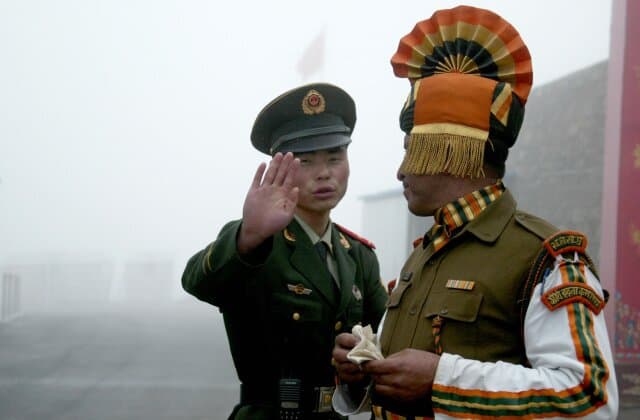
- China has labeled Arunachal Pradesh as part of its “core interests” with recent escalations including arbitrary detentions of Indian nationals.
- Increased propaganda asserting claims over Arunachal with terminology like “Zangnan” (South Tibet).
Recent Assertions:
- China’s border strategy involves “grey zone operations” to assert claims without immediate military conflict.
- Xi Jinping emphasizes non-ceding of territory reflecting a shift from earlier negotiations.
Economic and Strategic Considerations
Pockets of Contention:
- India is in control of most areas along the watershed in Arunachal, but three regions (Namka Chu Valley, Sumdorong Chu Valley, Longju) are contentious due to Chinese claims.
Deterrence Strategy:
- India has adopted a stronger deterrence strategy in response to aggressive Chinese claims, especially in Eastern Ladakh.
Diplomatic Negotiations:
- Engagements illustrate the complexity of boundary issues, highlighting India’s insistence on safeguarding interests in historically disputed areas like Tawang.
- Diplomatic relations have been marked by occasional cooperation but persistent undercurrents of tension over territorial claims.
International Implications
China's Unilateral Assertiveness:
- Over the last decade, China's aggressive posturing has highlighted a shift in its approach towards territorial claims, merging issues of sovereignty and national interests.
India's Strategic Position:
- Recognizes the need for a robust strategy to prevent the recurrence of military confrontations akin to those witnessed in Eastern Ladakh in 2020.
Conclusion
The India-China border dispute remains a critical aspect of bilateral relations, shaped by historical treaties, military engagements, and evolving strategic doctrines amidst increasing tensions. The LAC remains a focal point of negotiation and conflict, necessitating continuous diplomatic and military vigilance from India.
Key Terms & Concepts
| Arunachal Pradesh | Disputed territory claim by China |
| McMahon Line | Historical boundary reference |
| Simla Conference | 1913-14 boundary negotiations |
| LAC | Line of Actual Control definition |
| Border Peace and Tranquility Agreement | 1993 agreement on LAC |
| Zangnan | China's claim on Arunachal |
| Galwan | Site of military conflict 2020 |
| Constitutional Articles | Refer to governing legal principles |
| Tawang | Key area of interest for India |
| Eastern Ladakh | Area of military engagement |