iAspirants
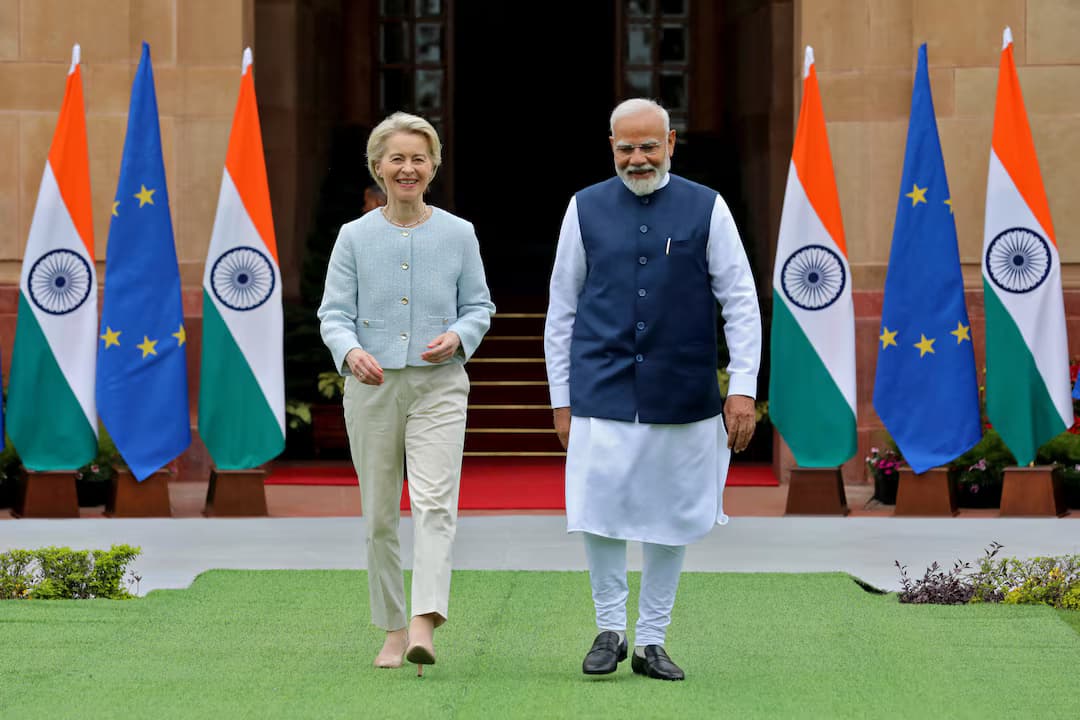
India-EU Free Trade Agreement Finalized
Published on:
Share this post
Article Summary
India-EU Free Trade Agreement (FTA) Summary
Background and Development:
- The India-EU FTA, initiated in 2007, has been nearly two decades in the making.
- Previous negotiations stalled in 2013 due to political changes in India and misalignment on key issues, such as tariffs on automobiles and spirits.
- The recent negotiations began in 2022 with a focus on urgency, strategic geopolitical factors, and avoiding past mistakes.
Geopolitical Drivers:
- Rising tensions between China and the US have heightened the strategic significance of the EU-India relationship.
- The EU and India share a mutual interest in establishing a multipolar global order to reduce dependence on the US, which has employed high tariffs and trade coercion.
Scope of the Agreement:
- The FTA is described as one of the most comprehensive India has engaged in, promising growth for labor-intensive sectors like textiles, marine products, and footwear.
- The EU aims for 97-99% of its exports to India to receive partial or full tariff liberalization, while key Indian sectors such as agriculture were notably excluded during negotiations due to their sensitivity.
- Noteworthy sectors include automobiles and alcoholic beverages, with a phased tariff reduction plan suggested over 10 years, focusing on India's robust small car market versus Europe’s larger vehicles.
Economic Context:
- As of 2024, India accounted for only 5% of EU textile and apparel imports, with major competitors like China (28%) and Bangladesh (22%).
- Current tariffs are approximately 10-12% for Indian imports from the EU and around 3-4% for EU imports from India.
- The potential impact of US tariffs on Indian products, especially gems and jewellery, has driven Indian exporters to seek alternative markets in the EU.
Challenges and Regulatory Concerns:
- The EU has complex regulations, including the Carbon Border Adjustment Mechanism (CBAM) set to start January 2024 and the EU Deforestation Regulation (EUDR) impacting Indian agricultural exports valued at $1.3 billion.
- Non-tariff barriers, such as India's Quality Control Orders (QCOs), create significant challenges for compliance and market access for Indian exporters. The EU is proposing a 'rapid response forum' to address such trade barriers.
Future Steps:
- Final legal vetting of the agreement is expected to take around five months, during which the text will be translated into the EU's 24 official languages.
- Ratification by the European Parliament is required before the trade deal can be officially signed, expected later in the year.
Strategic Importance:
- This FTA is positioned not merely as an economic agreement but as a reinforcement of political ties between the EU and India amidst global economic pressures.
- Both parties aim to collaborate on forming resilient supply chains and collectively combat economic volatility driven by international trade dynamics.
In summary, the India-EU FTA represents a significant milestone in trade relations, underpinned by geopolitical shifts, economic strategy, and a resolution of prior negotiation hurdles. The agreement’s focus on labor-intensive sectors and the push for a strategic partnership reflects a mutual understanding of the challenges posed by global trade dynamics and the importance of a collaborative approach to future economic resilience.
Key Terms & Concepts
| India-EU Free Trade Agreement | Comprehensive trade deal finalization |
| Geopolitics | Driving force for trade urgency |
| Automobiles and Spirits | Contentious trade negotiation topics |
| Carbon Border Adjustment Mechanism (CBAM) | New carbon tax implementation |
| EU Deforestation Regulation (EUDR) | Regulation on agricultural imports |
| Tariffs | Key negotiation aspect for exports |
| 2024 | Year for concluding EU-Mercosur negotiations |
| 10-12% | India's average tariffs on EU goods |
| 3-4% | EU's average tariffs on Indian goods |
| 2022 | Year negotiations restarted |
| 50% | US tariffs on Indian goods |
| 40% | Exports accounted by SMEs in India |