iAspirants
India-EU Security and Defence Pact
Published on:
Share this post
Article Summary
India-EU Security and Defence Partnership
Key Events
- A security and defense partnership agreement between India and the European Union (EU) is set to be signed on Republic Day, January 26, 2026.
- European Commission President Ursula von der Leyen and European Council President Antonio Luis Santos da Costa are attending the 77th Republic Day celebrations as chief guests.
Participants
- Indian External Affairs Minister S. Jaishankar hosted the EU leaders.
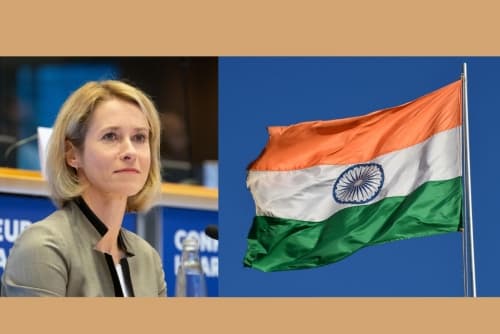
- The agreement will be signed by Indian Defence Minister Rajnath Singh and EU’s High Representative for Foreign Affairs and Security Policy, Kaja Kallas.
Agreement Overview
- The partnership will focus on:
- Maritime security
- Cybersecurity
- Hybrid threats
- Resilience and protection of critical infrastructure
- Counter-terrorism
- Organized crime
- Cooperation in multilateral forums (e.g., UN, peacekeeping operations)
- Non-proliferation and disarmament
- Space security and defense
Strategic Implications
- India becomes the third Asian country, joining Japan and South Korea, to sign a security and defense agreement with the EU.
- The partnership includes annual strategic dialogues and operational mechanisms, aiding in joint initiatives and defense cooperation.
- Negotiations for a Security of Information Agreement will begin to facilitate classified information exchange, thereby signaling enhanced trust.
Historical Context
- This agreement emerges amid a recalibration of US strategic posture towards China, as articulated in the latest US National Defense Strategy.
- Recent joint naval exercises by India and the EU highlight growing military collaboration.
Previous Engagements
- Joint naval exercises in:
- Indian Ocean (June 2025)
- Gulf of Guinea (October 2023)
- Gulf of Aden (June 2021)
- Humanitarian escort operations near Somalia (2018, 2019).
Bilateral Relations
- The strong EU-India partnership encompasses trade, security, and cultural exchanges.
- Aimed to provide political momentum for future engagements and negotiations, particularly related to the EU-India Free Trade Agreement (FTA).
Significance
- The partnership agreement is set against the backdrop of a shifting global security landscape and underscores the strategic collaboration between India and the EU in addressing mutual challenges, enhancing defense capabilities, and fostering a cooperative approach to security in the Indo-Pacific region.
Future Prospects
- Continued engagement and discussions are anticipated to bolster India-EU relations, reinforcing commitments towards stability, security, and sustainable development in a multifaceted, interconnected world.
Key Terms & Concepts
| European Union | Signatory of security pact |
| India | Participating in defense initiatives |
| Republic Day | Event for signing agreement |
| Ursula von der Leyen | European Commission President |
| Antonio Costa | European Council President |
| Rajnath Singh | Signing defense agreement |
| Kaja Kallas | EU's Foreign Affairs Representative |
| EU-India Summit | Co-chaired by leaders |
| Maritime security | Area of cooperation |
| Cyber issues | Area of cooperation |
| Counter-terrorism | Area of cooperation |
| UN | Multilateral cooperation forum |
| Non-proliferation and disarmament |