iAspirants
India-EU Trade Deal Insights
Published on:
Share this post
Article Summary
India-EU Trade Deal Highlights
Status of Agreement:
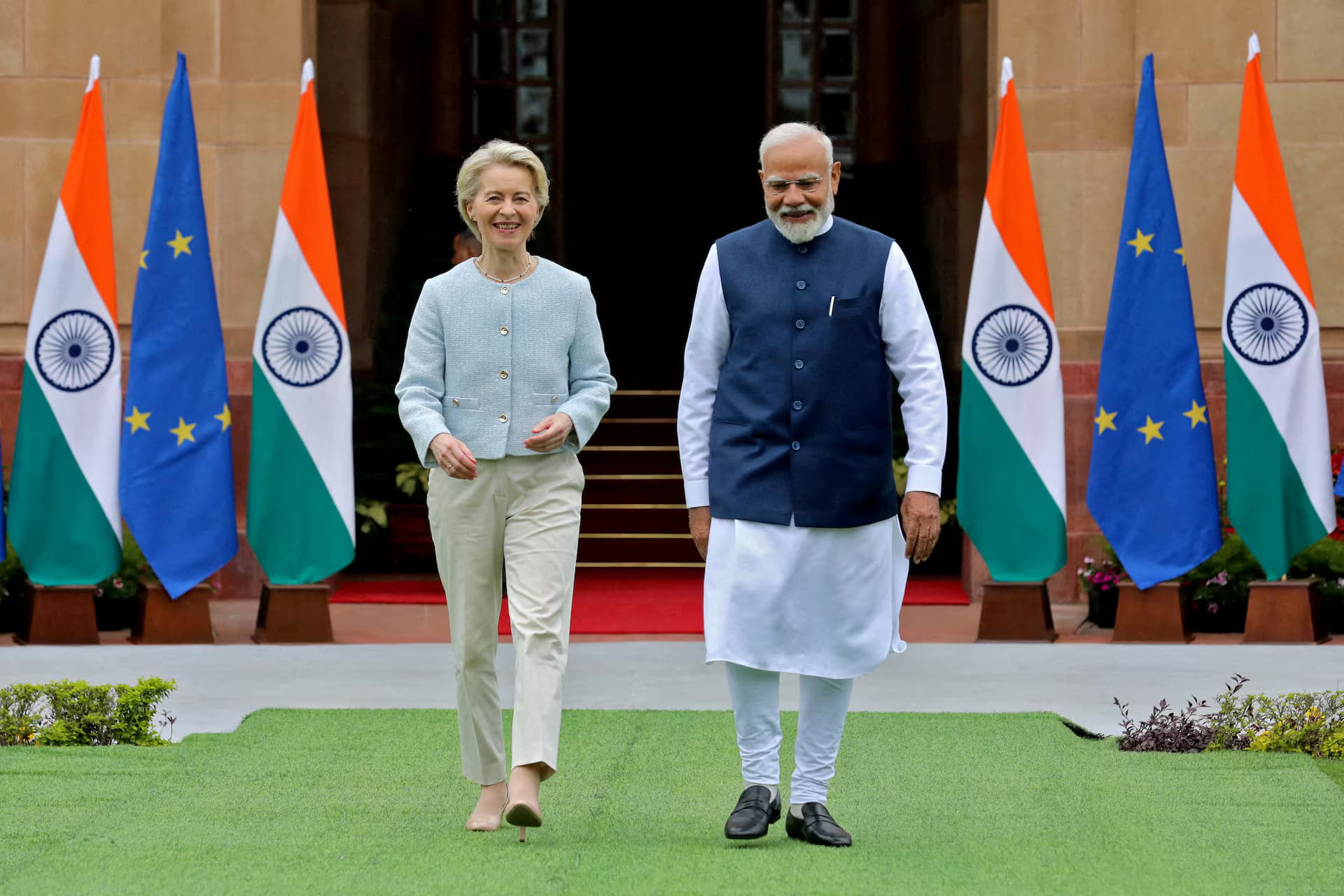
- The European Commission President, Ursula von der Leyen, announced that the European Union (EU) is nearing a trade deal with India, described as the “mother of all deals.”
- The trade agreement aims to create a market encompassing two billion people, representing nearly a quarter of global GDP.
Timeline:
- The agreement is anticipated to be signed on January 26, coinciding with the Republic Day celebrations in India.
- This significant development follows the resumption of trade negotiations in July 2022, after earlier talks which began in 2007 were stalled in 2013.
Economic Context:
- The trade deal comes amid uncertainties surrounding India’s trade relations with the United States, particularly amidst recent US threats of high tariffs on the EU and an already imposed 50% duty on Indian goods since August of the previous year.
- The urgency for the deal has also been influenced by changing global trade dynamics and mutual concerns regarding China’s dominance in various sectors, especially critical technologies.
Sectoral Focus:
- India's Interests: The deal is expected to facilitate market access in labor-intensive sectors like textiles, footwear, gems, and jewellery.
- EU's Interests: In return, the EU seeks market expansion for its automobiles and beverages.
Negotiation Progress:
- India and the EU have successfully negotiated 20 of the 24 chapters related to the trade deal, signaling significant progress.
- Commerce Secretary Rajesh Agarwal indicated that both sides are striving to finalize the agreement by the time of the EU leaders' visit.
Strategic Factors:
- The trade deal is viewed as a strategic move for both parties to strengthen economic ties and as a countermeasure to China's market power.
International Engagements:
- Ursula von der Leyen and the President of the European Council, Antonio Luís Santos da Costa, will also co-chair the 16th India-EU Summit on January 27.
Relevant Constitutional and Legal References
- This development aligns with the Directive Principles of State Policy (DPSPs) in the Indian Constitution that encourage India to promote international peace and security and to foster goodwill among nations (Article 51).
Conclusion
The impending India-EU trade deal illustrates a significant shift in international trade relationships and underscores the importance of strategic partnerships amidst global economic challenges.
Key Terms & Concepts
| European Union (EU) | Trade bloc negotiating with India |
| Ursula von der Leyen | President of European Commission |
| India | Negotiating trade agreement |
| India-EU trade agreement | Comprehensive trade negotiations |
| January 26 | Expected signing date |
| 20 of the 24 chapters | Progress in negotiations |
| July 2022 | Date negotiations re-launched |
| 2007 | Initial negotiations began |
| 2013 | Previous talks abandoned |
| Republic Day celebrations | Event attended by leaders |
| China | Market dominance concern |
| Textiles, Footwear, Gems, and Jewellery | Sectors for Indian market access |
| Automobiles and Beverages |