iAspirants
India Launches Heaviest Satellite Successfully
Published on:
Share this post
Article Summary
Key Highlights from the LVM-3 Mission
Launch Details:
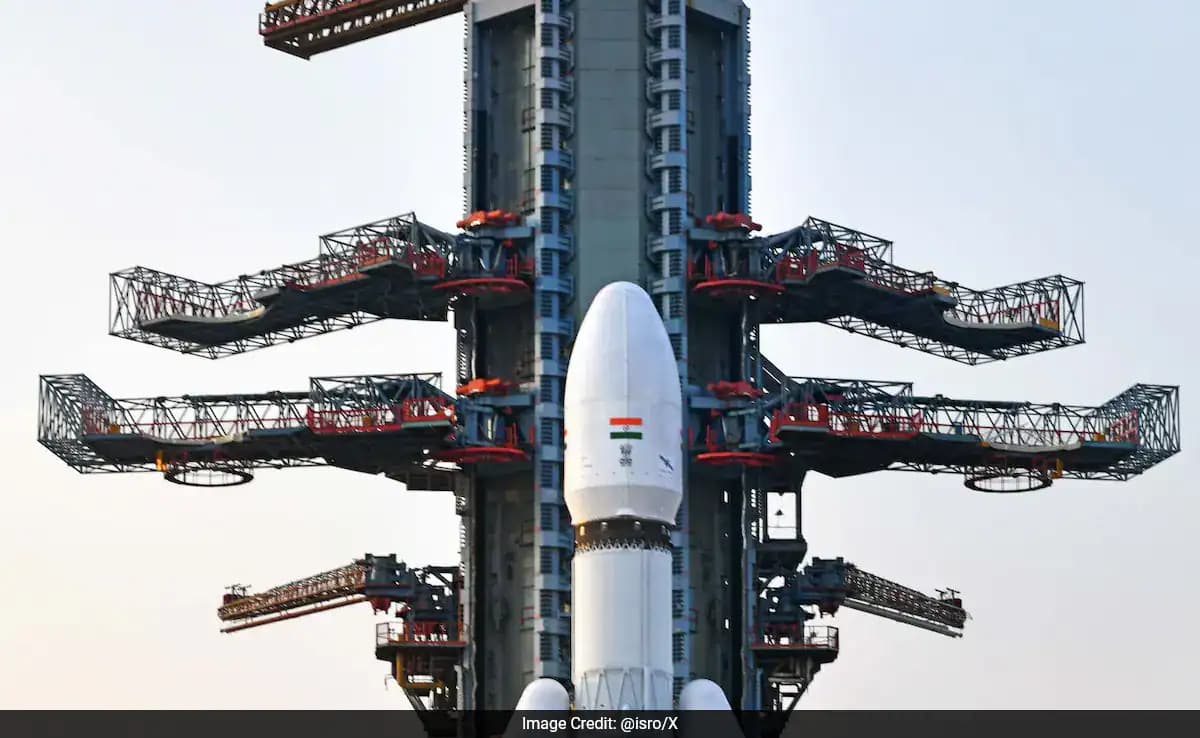
- Launch vehicle: LVM-3 (Geosynchronous Satellite Launch Vehicle Mark III).
- Mission: Third commercial mission for LVM-3.
- Payload: US communication satellite Bluebird Block-2.
- Payload weight: Approximately 6,100 kg (heaviest satellite launched by an Indian rocket).
Performance Metrics:
- This launch marked the ninth consecutive successful launch for LVM-3, demonstrating a 100% reliability rate.
- The satellite was placed in orbit with less than a 2-km deviation from the planned trajectory, highlighting precision performance.
Significance:
- The mission is pivotal as it enhances India's capabilities in heavy-lift launch operations, reducing reliance on foreign launch services (e.g., Ariane Space and SpaceX).
- It signifies India’s growing role in the global commercial launch market, expected to be further established with the future Gaganyaan mission, which will involve human space travel.
Historical Context:
- Previous heaviest satellites: GSAT-11 (5,854 kg) and GSAT-24 (4,181 kg) launched using foreign firms.
- Recent launches have involved heavier payloads: CMS-03 (4,410 kg) launched prior to Bluebird Block-2 and other missions including sets of OneWeb satellites.
Technological Advancements:
- Bluebird Block-2 is part of a low-Earth orbit constellation intended to offer direct mobile connectivity to commercial cell phones rather than relying on specialized ground stations.
International Collaboration:
- The launch reflects international partnerships, with the satellite developed by the US company AST Space Mobile.
Future Directions:
- The ISRO Chairperson, V Narayanan, emphasized the confidence gained from this mission to conduct future space operations and missions, particularly human-rated launches.
- Current management of ISRO's commercial arm, NewSpace India Limited (NSIL), aims to position India favorably in ongoing global space commerce.
Key Figures and Statistics:
- Number of foreign satellites launched by India: 434.
- Prior instances of heavy payload launches include two sets of 36 OneWeb satellites (2022, 2023).
- Continued advancements in technology and capability with a short turnaround time between missions.
Implications:
- The successful LVM-3 mission contributes to India's strategic positioning in international space exploration and commercial activities in outer space.
- It showcases advancements in engineering, technology, and operational capacity within ISRO, aligning with national objectives towards self-reliance in space capabilities.
Future Missions:
- The Gaganyaan mission will advance India’s human spaceflight capabilities, with plans in motion to enhance safety and reliability for manned missions.
The data derived from this mission and its context solidifies India's interest and commitment to expanding its ventures in the space sector, fostering further research and development in both domestic and international arenas.
Key Terms & Concepts
| LVM-3 | Launch vehicle for satellite |
| Bluebird Block-2 | Heaviest satellite by ISRO |
| ISRO | Indian Space Research Organization |
| NewSpace India Limited | ISRO's commercial arm |
| ASTSpace Mobile | Developer of Bluebird Block-2 |
| Gaganyaan | Upcoming crewed space mission |
| CMS-03 | Recent satellite launch record |
| GSAT 11 | Heaviest satellite launched by ISRO |
| GSAT-20 | Satellite launched via SpaceX |
| OneWeb | Satellite launched by LVM-3 |
| 434 | Foreign satellites launched by India |
| SpaceX | Private satellite launch partner |