iAspirants
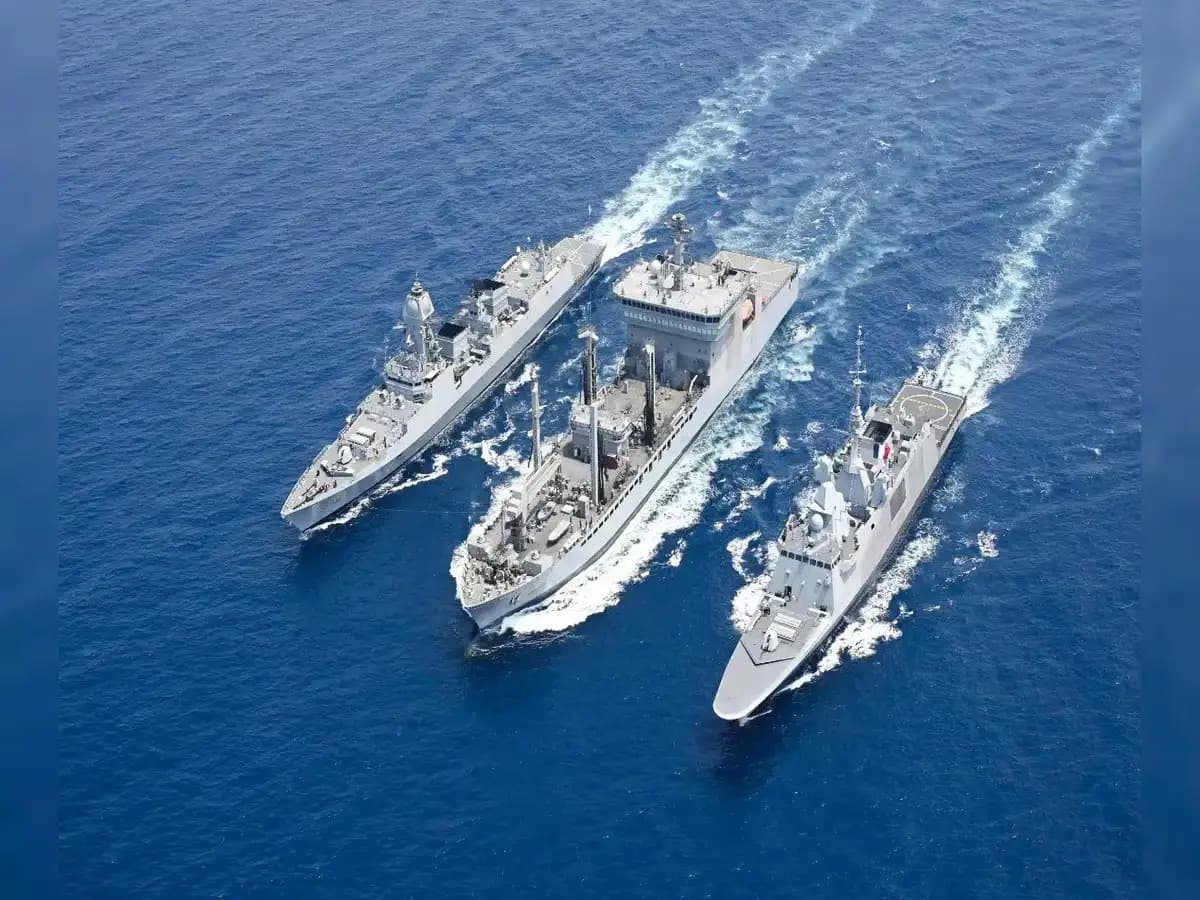
India Plans Naval Escort in Gulf
Published on:
Share this post
Article Summary
Indian Navy Operations and Persian Gulf Shipping Crisis: Key Facts
Deployment Considerations:
- The Indian government is contemplating deploying Navy ships to escort Indian-flagged vessels stranded in the Persian Gulf, with a decision expected within two days.
Shipping Statistics:
- Approximately 10% of the oil tankers and gas carriers stuck in the Persian Gulf are Indian-flagged.
- The Shipping Corporation of India operates vessels with over 800,000 tonnes of cargo capacity among the stranded vessels, equating to nearly 6 million barrels of oil.
Seafarer Presence:
- The International Maritime Organization estimates that around 20,000 seafarers are aboard the stranded vessels. Indian seafarers represent a significant portion, given that India is a major provider of maritime labor.
Indian Navy's Role:
- The Navy has previously engaged in operations such as Operation Sankalp to safeguard merchant ships from threats including Houthi attacks and piracy.
Iran's Assurance:
- Iran's President Masoud Pezeshkian has declared that Iran will not attack neighboring countries unless provoked. This statement aims to bolster shipping safety in the region.
- Indian sources indicate that cargoes previously stranded may now start moving more confidently due to this assurance.
Oil Supply Adjustments:
- Currently, 70% of India's crude oil supply is sourced in a manner that does not necessitate passage through the Strait of Hormuz, ensuring stability in retail fuel prices.
Iran’s Foreign Relations:
- The Iranian Deputy Foreign Affairs Minister has criticized the United States for purportedly targeting Iranian ships, asserting that Iranian vessels are not obstructing Indian ships.
Standard Operating Procedures (SoPs):
- The Union Ministry of Ports, Shipping, and Waterways has implemented SoPs to allow Indian ports to manage cargo destined for West Asian markets as transshipment cargo.
- The SoPs stipulate:
- Appointment of nodal officers at ports for crisis management.
- Ad-hoc berthing for ships originally bound for West Asia ports.
- Priority treatment for perishable goods and cargo coming from the Persian Gulf.
- Procedures to facilitate the return of export cargo to suppliers.
Maritime Security Operations:
- The Indian Navy, through its past operations in the region, reflects its capability and commitment to safeguarding maritime interests and ensuring the safety of Indian seafarers.
This summary encapsulates critical updates relevant to maritime security, economic implications of shipping disruptions, and the government's strategic response to international relations affecting trade routes.
Key Terms & Concepts
| Persian Gulf | Location of stranded ships |
| Shipping Corporation of India | Major ship owner |
| 8 lakh tonnes | Cargo capacity stranded |
| 6 million barrels | Equivalent oil capacity |
| 20,000 seafarers | Number onboard stranded ships |
| Operation Sankalp | Maritime security operation |
| Iran's affirmation | Confidence for ship movement |
| 70% crude oil supplies | Alternative supply arrangement |
| Union Ministry of Ports, Shipping and Waterways | Issued Standard Operating Procedures |
| Standard Operating Procedures | Shipping disruption measures |
| Nodal officers | Handle shipping situations |
| Back to town movement | Export cargo management |