iAspirants
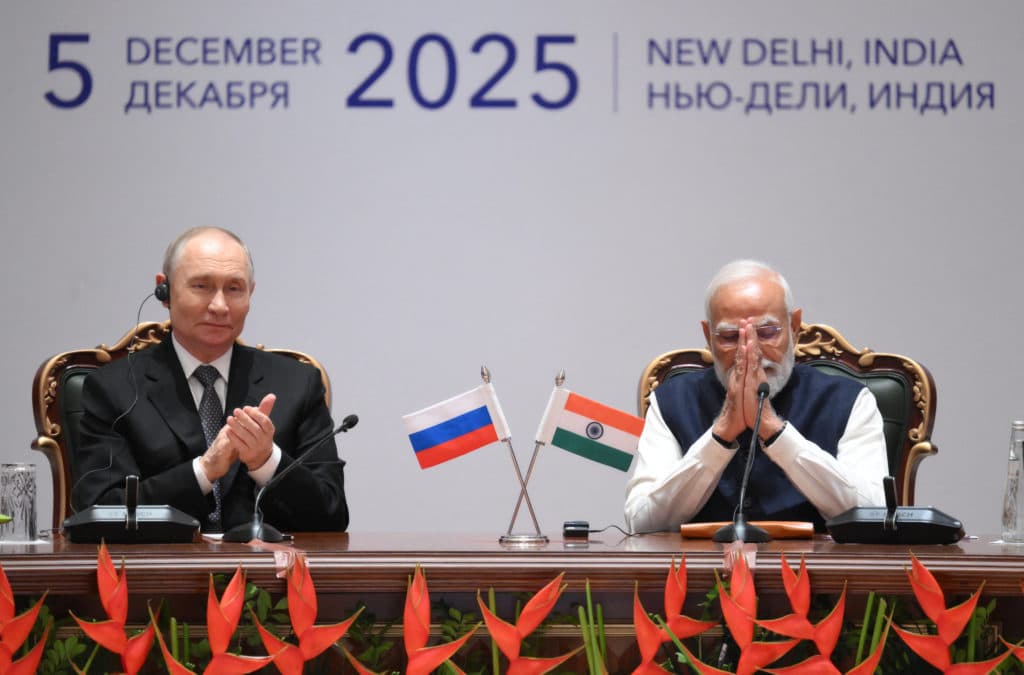
India-Russia Summit: Significance and Outcomes
Published on:
Share this post
Article Summary
Exam-Focused Notes on India-Russia Relations Post-Putin Visit
Diplomatic Protocol and Reception
- Russian President Vladimir Putin received a formal welcoming from Indian Prime Minister Narendra Modi—including a red carpet reception and a private dinner.
- A banquet hosted by President Droupadi Murmu marked the end of the visit.
Key Statements
- PM Modi described India-Russia relations as "steady like a pole star (dhruva tara)."
- Modi emphasized India's position of peace regarding the Russia-Ukraine conflict.
Focus Areas of the Summit
- The meeting did not yield significant announcements on defense cooperation (e.g., aircraft, missiles, drones).
- Major focus shifted towards economic cooperation aligning with the "Development of Strategic Areas of India — Russia Economic Cooperation till 2030."
Agreements Signed
- Labour Mobility Agreement: To facilitate Indian skilled workers in Russia, addressing projected manpower shortages (3 million jobs by the decade's end).
- MoU between Indian and Russian fertilizer firms: For a urea plant in Russia.
- Maritime Cooperation Agreements: To enhance trade routes including the Chennai-Vladivostok Eastern Maritime Corridor and the International North-South Transport Corridor.
- Trade in National Currencies: Continued efforts to improve bilateral trade through settlement in national currencies.
Economic Context
- India-Russia trade in 2024 valued at approximately $69 billion, with oil procurement constituting over $60 billion.
- Year-on-year intake of Russian oil significantly decreased by 38% in value as of October 2025.
Challenges Encountered
- Western sanctions on Russia influencing India's oil purchases and overall bilateral trade.
- CAATSA (Countering America’s Adversaries Through Sanctions Act) legal implications restraining defense, space, and nuclear cooperation.
- Rising tariffs imposed on Indian goods by the U.S. (25% tariff).
Implications of the Visit
- Amidst the Ukraine conflict and geopolitical tensions, India aspires to balance traditional ties with Russia while engaging in negotiations with the West.
- Expectations of future visits from European leaders and discussions on the EU-India Free Trade Agreement and AI Summit.
Comments on International Peace Efforts
- Modi thanked Putin for keeping India updated on the Ukraine conflict and expressed hope for a peaceful resolution, aligning India’s stance with global peace negotiations.
India's Strategic Dilemma
- The tightrope walk of maintaining strategic autonomy amidst increasing dependency of Russia on China and the polarized environment between Russia and Western countries.
Upcoming Geopolitical Events
- Anticipated visits from German Chancellor, EU leadership, and French President in early 2026.
- Progress on the U.S.–India free trade agreement negotiations also indicates a significant geopolitical evolution.
Conclusion
- The Putin visit, though lacking in substantial outcomes, presented a mixed perspective on India’s international strategy—reaffirming ties with Russia while attempting to manage sensitivity with Western nations. India continues to navigate complex geopolitical landscapes under its doctrine of strategic autonomy.
Key Terms & Concepts
| Development of Strategic Areas of India — Russia Economic Cooperation till 2030 | Roadmap for economic cooperation |
| Labour Mobility Agreement | Facilitates skilled Indian workers |
| Chennai-Vladivostok Eastern Maritime Corridor | Enhances bilateral trade route |
| International North South Transport Corridor | Trade facilitation route |
| $60 billion of $69 billion | Oil trade value last year |
| 38% y-o-y decrease | Reduction in Russian oil intake |
| U.S. tariffs | Economic pressure on India |
| Countering America’s Adversaries Through Sanctions Act (CAATSA) | Law affecting defense purchases |
| Ukraine conflict | Context for the summit |