iAspirants
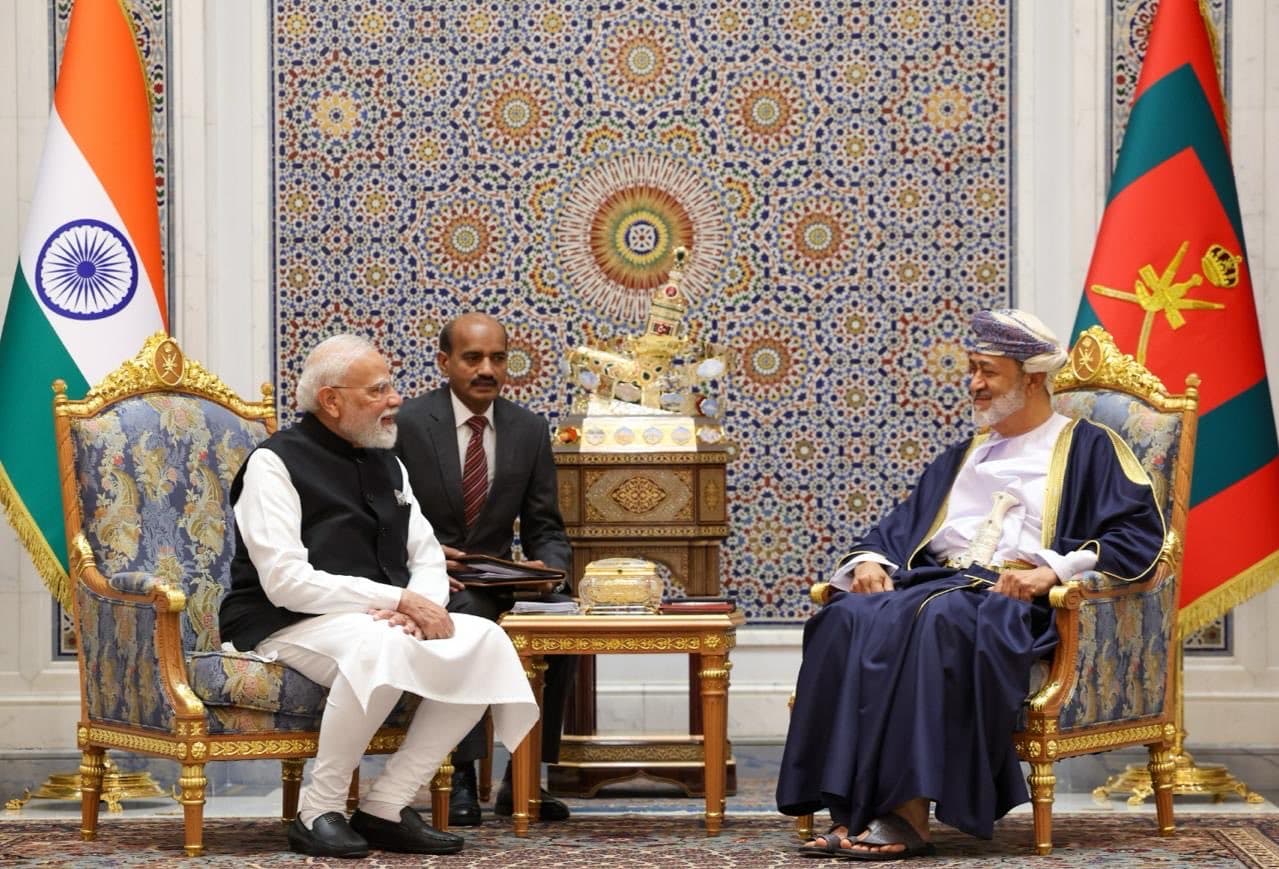
India Signs FTA with Oman
Published on:
Share this post
Article Summary
India-Oman Free Trade Agreement Overview
Agreement Details:
- Type: Comprehensive Economic Partnership Agreement (CEPA)
- Date signed: Recent agreement in Muscat, Oman.
- Parties involved: India and Oman (Gulf Cooperation Council member).
- Significance: Second FTA with a GCC country after the UAE, aimed at enhancing trade and investment amidst challenges in the US market.
Economic Impacts:
- Tariff Reductions:
- Oman to provide zero-duty access on 98% of tariff lines, potentially leading to $2 billion of additional Indian exports.
- India to liberalize tariffs on 77.79% of its tariff lines, protecting sensitive sectors (e.g., dairy, tea, coffee, rubber, tobacco, gold, and silver bullion).
- Projected Outcomes:
- Strengthened economic ties.
- Increased bilateral trade by reducing trade barriers.
- Creation of job opportunities and enhanced investment flows.
Trade Statistics:
- Oman's Imports: Approximately $40 billion annually; two-thirds are machinery, presenting opportunities for Indian exports.
- Indian Exports Growth: Increased from $2 billion to $6 billion over the last five years, with key exports including machinery, aircraft, and rice.
Services Sector:
- Intra-Corporate Transfers: Oman raised the quota for Intra-Corporate Transferees from 20% to 50%.
- Liberal Entry for Professionals: Enhanced conditions for entry and stay for skilled workers in accountancy, architecture, medical services, etc.
- Foreign Direct Investment (FDI): 100% allowed by Indian companies in major services sectors in Oman.
Additional Agreements:
- Along with CEPA, five other agreements were signed focusing on:
- Maritime heritage and museums.
- Agriculture.
- Higher education.
- Food innovation.
- Maritime cooperation.
Context and Strategic Importance:
- Past Collaborations: Over 6,000 India-Oman joint ventures currently exist.
- Joint Investment Fund: Oman-India Joint Investment Fund (OIJIF) established as a special vehicle to invest in India; fully invested $320 million, with an additional tranche of $300 million planned.
- Cultural Recognition: Prime Minister Modi received the Order of Oman for contributions to bilateral ties.
Remarks from Officials:
- Prime Minister Narendra Modi: Emphasized the historic and forward-looking nature of the CEPA, stressing that it serves as a blueprint for shared future growth and collaboration.
- Commerce Minister Piyush Goyal: Described the agreement as a defining milestone, advocating for cooperation in energy transition and economic integration.
Conclusion
The CEPA between India and Oman is poised to create significant economic opportunities, particularly enhancing trade relations and service sector engagements. The agreement is foundational for India’s expanding footprint in the Gulf region, fostering greater investments and intercultural exchanges.
Key Terms & Concepts
| Comprehensive Economic Partnership Agreement (CEPA) | Free trade agreement between nations |
| Oman | Recipient of India's exports |
| Gulf Cooperation Council (GCC) | Regional trade organization |
| Zero-duty access | Tariff concession offered by Oman |
| $2 billion | Estimated export value from CEPA |
| 77.79% | Percentage of tariff lines liberalized by India |
| Intra-Corporate Transferees | Increased quota for skilled workers |
| $40 billion | Oman's total annual imports |
| $6 billion | Value of Indian exports to Oman |
| Oman-India Joint Investment Fund (OIJIF) | Investment collaboration vehicle |
| $320 million | Investment value of OIJIF |
| Five agreements | Additional pacts signed with Oman |