iAspirants
India's Advancements in Helicopter Manufacturing
Published on:
Share this post
Article Summary
Summary of India's Military Aviation Challenges and Developments
Current Challenges:
- Reliance on aging helicopter fleets (Cheetah, Chetak, and Cheetal) poses critical operational challenges in the Himalayan terrain, highlighted by a recent helicopter crash near Leh.
- Limitations of older fleets include obsolete systems, increasing maintenance burdens, and operational risks in extreme environments.
Historical Context:
- The Cheetah and Chetak helicopters have been fundamental to India’s military operations for over 50 years, serving in high-altitude logistics, reconnaissance, and troop support.
Indigenous Development:
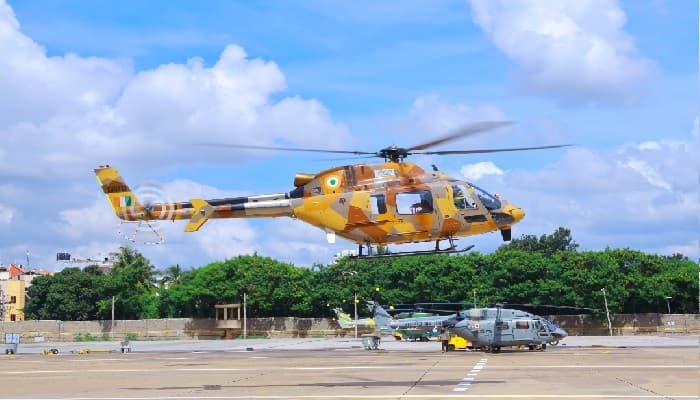
- HAL (Hindustan Aeronautics Limited) commenced indigenous helicopter manufacturing in 1969, leading to advancements such as the Dhruv and Light Utility Helicopter (LUH).
LUH Program Features:
- Designed to meet demanding operational requirements, capable of operations at altitudes above 21,000 feet.
- Incorporates advanced rotor technology, avionics, a glass cockpit, and a Safran Ardiden engine with Full Authority Digital Engine Control (FADEC).
Technical Complexity:
- Helicopter development is complex and iterative, requiring integration across rotor dynamics, structural loads, and control systems to operate effectively in challenging conditions.
Development Process:
- The LUH program has a structured development process based on military operational needs, focusing on performance parameters including payload, climb rate, endurance, and hot-and-high operability.
Testing and Validation:
- Extensive testing includes ground tests for materials and structural integrity, followed by flight testing of prototypes to validate flight performance metrics.
- Successful trials have accumulated over 1,300 hours across diverse terrains.
Indigenous Capability and Strategic Importance:
- More than 60% indigenous content achieved in LUH, promoting self-reliance in strategic aerospace technologies aligned with "Make in India" and "Aatmanirbhar Bharat" initiatives.
- Integration of private industries and MSMEs into the supply chain is fostering economic growth in the aerospace sector.
New Infrastructure:
- The Helicopter Division in Tumakuru, Karnataka, has a production capability of 60 helicopters per year and will support future military and civil helicopter programs.
Lifecycle Support:
- The LUH includes a lifecycle support framework with health monitoring, predictive diagnostics, and digital maintenance management to enhance fleet availability and operational readiness.
Conclusion:
- The LUH program signifies a shift toward advanced military capability through indigenous design and manufacturing, critically supporting India’s defense operations in challenging environments and ensuring strategic autonomy in aerospace.
These developments reflect India's commitment to modernizing its military aviation capabilities and enhancing self-reliance in defense technologies.
Key Terms & Concepts
| Cheetah helicopter | Ageing fleet in military use |
| Chetak helicopter | Another ageing military helicopter |
| Cheetal helicopter | Recent crash highlights issues |
| HAL | Manufacturer of helicopters |
| Dhruv | Advanced Indian helicopter model |
| LCH | Light Combat Helicopter |
| LUH | Light Utility Helicopter development |
| Aatmanirbhar Bharat | Self-reliance initiative |
| Make in India | Boost domestic manufacturing |
| Helicopter Division in Tumakuru | Facility for helicopter production |
| 50000 feet | Design altitude requirements |
| 60% indigenous content | Production target for LUH |
| 1,300 hours |