iAspirants
India's Earthquake Zoning Framework Revision
Published on:
Share this post
Article Summary
Key Highlights on India's Earthquake Zoning Revisions
Bureau of Indian Standards (BIS) Zoning Revision:
- The Indian government's rollback of BIS’s proposed changes to the earthquake zoning framework indicates a response to significant pushback from engineers and policymakers, citing the proposed revisions were too stringent and potentially detrimental to economic development.
Economic Impacts:
- Cost Implications:
- Estimates suggest a 20% increase in development costs for a one-zone upgrade and nearly a 33% increase for a two-zone upgrade.
- For essential infrastructure (metro systems, dams, power stations), the costs could escalate even further.
- Informal Housing Sector:
- A roughly 80% of Indian homes fall under the informal sector; stricter zoning could exacerbate housing shortages in economically vulnerable regions.
- Cost Implications:
Disaster Preparedness:
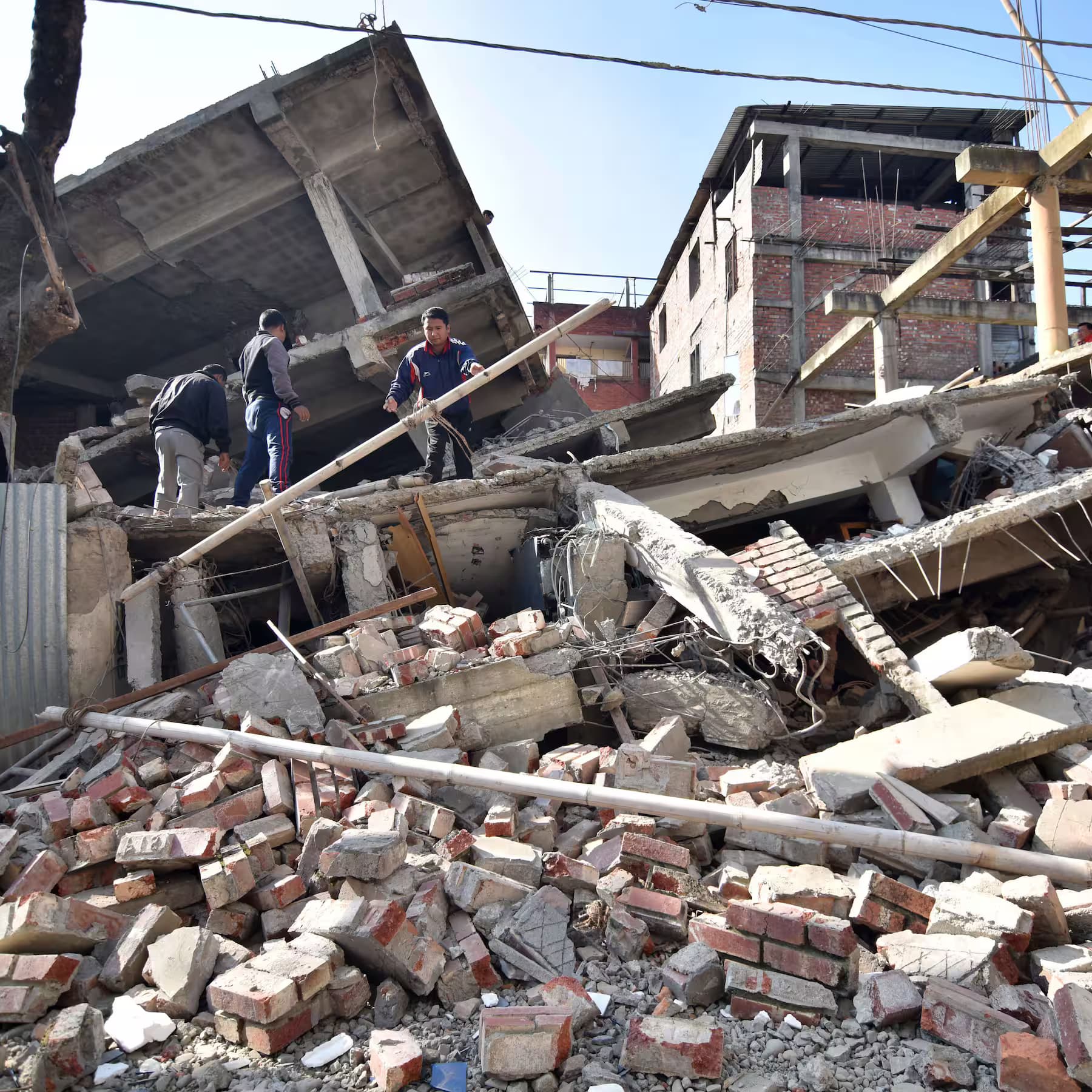
- The zoning revision is critical for urban planning, disaster preparedness, and climate resilience in light of India's ongoing urban infrastructure expansion.
- Proper zoning frameworks are essential to enhance the capability of built environments to withstand seismic activities.
Current Framework:
- India predominantly uses a fixed zoning model but is moving towards a Probabilistic Seismic Hazard Assessment (PSHA), which is a dynamic framework that estimates earthquake risks through probability-based ground motion modeling.
- The withdrawn revisions included a new top-risk category, Zone VI, affecting regions such as Kashmir, parts of the Himalayan belt, Kutch (Gujarat), and Northeast India.
Government and Stakeholder Responses:
- Pushback against the BIS revisions has come from multiple ministries, including:
- Ministry of Housing and Urban Affairs
- Ministry of Home Affairs
- Central Water Commission
- National Dam Safety Authority
- Wider consultation among ministries, regulators, and industry stakeholders is necessary to develop a holistic and implementable framework.
- Pushback against the BIS revisions has come from multiple ministries, including:
Environmental Considerations:
- The construction sector in India is a significant source of carbon emissions. A balanced approach to implementing earthquake zoning must consider environmental impacts, disaster resilience, and climate mitigation.
Constitutional and Legal Context:
- The discussions around policy revisions align with the constitutional mandate for disaster management and urban planning which are integral for maintaining safety standards.
Future Implications:
- The current debate showcases the need for reconciling disaster risk reduction with economic growth and sustainability. Ensuring that the zoning framework is practical and adaptable will be crucial for addressing India's pressing infrastructure needs amid seismic risks.
By considering these facts and data, stakeholders can work towards creating a safer and more resilient urban environment in India as it continues to develop its infrastructure amidst natural hazards.
Key Terms & Concepts
| Bureau of Indian Standards (BIS) | National standards organization |
| Probabilistic Seismic Hazard Assessment (PSHA) | Framework for earthquake risk |
| Zone VI | Top-risk earthquake category |
| November 2025 | Date of zoning revisions notification |
| March 3, 2026 | Date of zoning revisions withdrawal |
| 80% | Informal housing percentage in India |
| 20% | Cost increase for one-zone change |
| one-third | Cost increase for two-zone change |
| Ministries of Housing and Urban Affairs | Government body involved |
| National Dam Safety Authority | Government body involved |
| construction sector | Source of carbon emissions |