iAspirants
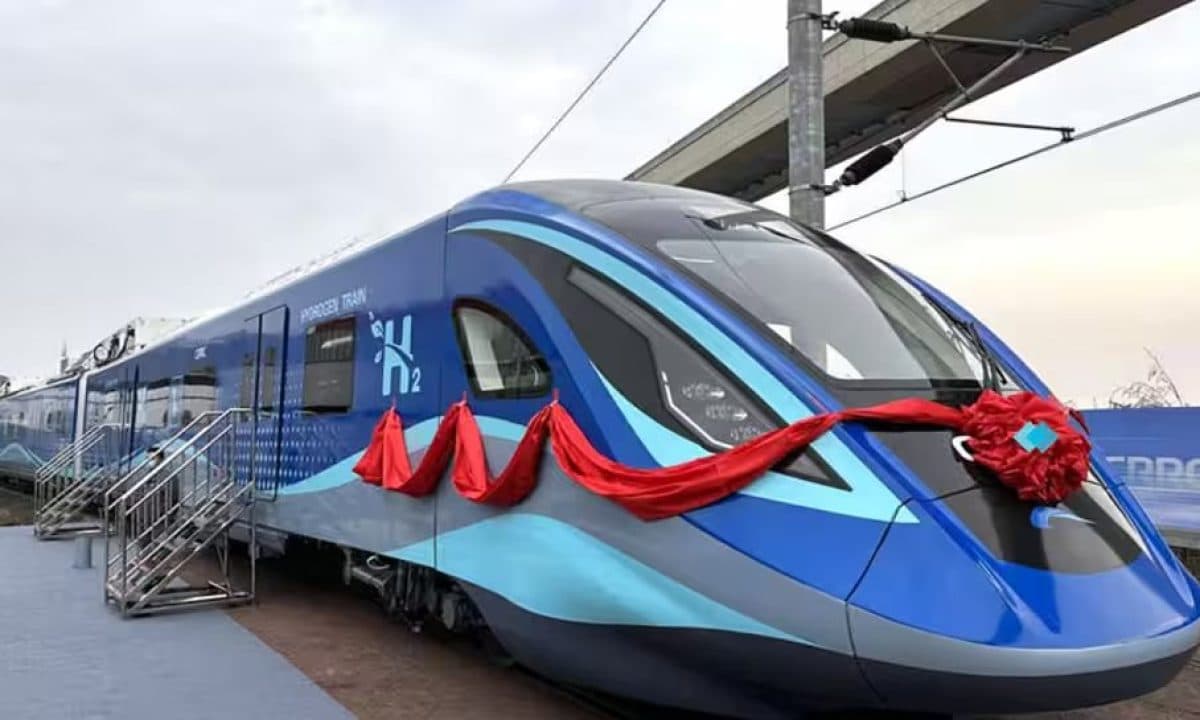
India's First Indigenous Hydrogen Train
Published on:
Share this post
Article Summary
Summary of India's Indigenous Hydrogen Train Initiative
Key Facts:
- Project Overview: Indian Railways has approved a hydrogen fuel cell-based train with 10 coaches, operating on the Jind-Sonipat section at a maximum speed of 75 km/h.
- Engine Power: The train is powered by a 1200 kW hydrogen fuel cell propulsion system.
- Environmental Impact: The technology generates electricity through a chemical reaction using hydrogen, with only water vapor as a byproduct, presenting a cleaner alternative to traditional fossil fuel-based trains.
Constitutional and Policy Context:
- This initiative aligns with India’s commitments to sustainable development and clean energy, supporting national goals for zero carbon emissions.
- The project fits within the framework of India's National Clean Energy and Climate Action Plans.
Government Schemes and Initiatives:
- The initiative is a part of Indian Railways' broader strategy to promote green and sustainable transportation solutions.
- The establishment of a hydrogen storage and refueling facility in Jind has been facilitated by the Petroleum and Explosives Safety Organization (PESO), which has provided necessary licenses for safe hydrogen storage and distribution.
Safety Measures:
- Safety protocols include regular checks and maintenance of hydrogen leak and fire detection systems.
- A dedicated compressor unit is being arranged for emergency situations, ensuring reliable operations.
- Trained and certified personnel will oversee operations, with continuous monitoring of the hydrogen refueling system.
International Context:
- India joins a select group of countries, including Germany, Japan, China, and the USA, that are exploring hydrogen as a clean fuel for rail transport.
- Hydrogen-based rail systems are being recognized globally as a promising solution for sustainable transportation.
Technical and Operational Aspects:
- The project includes comprehensive safety and operational protocols, including 24/7 monitoring of refueling systems and regular audits.
- The Research Designs and Standards Organisation (RDSO) has approved the operational and maintenance guidelines for the hydrogen train and facility.
Economic and Environmental Significance:
- This project reflects a significant step towards energy efficiency and innovation in transportation, reinforcing Indian Railways' commitment to environmentally sustainable practices.
- The initiative supports India's broader environmental goals, including reducing reliance on fossil fuels and enhancing energy efficiency in public transport systems.
Future Prospects:
- The pilot operations will provide insights into the feasibility and efficiency of hydrogen-based train systems in India.
- Successful implementation could pave the way for broader adoption of hydrogen technology in other sectors of transportation.
This initiative is a crucial part of India's journey towards sustainable energy solutions and demonstrates a commitment to innovative technologies in public transport.
Key Terms & Concepts
| Hydrogen Fuel Cell Technology | Clean energy propulsion system |
| 1200 kW Engine | Powering the hydrogen train |
| 75 km/h | Maximum train speed |
| Jind-Sonipat section | Pilot route for operations |
| Hydrogen Storage Facility | Fuel supply and storage |
| Petroleum and Explosives Safety Organization (PESO) | Regulatory body for licensing |
| Safety Sensors | Detect leaks and fires |
| RDSO | Approval authority for train |
| Zero Carbon Emission Goals | National energy commitment |
| Germany, Japan, China, USA | Countries exploring hydrogen trains |