iAspirants
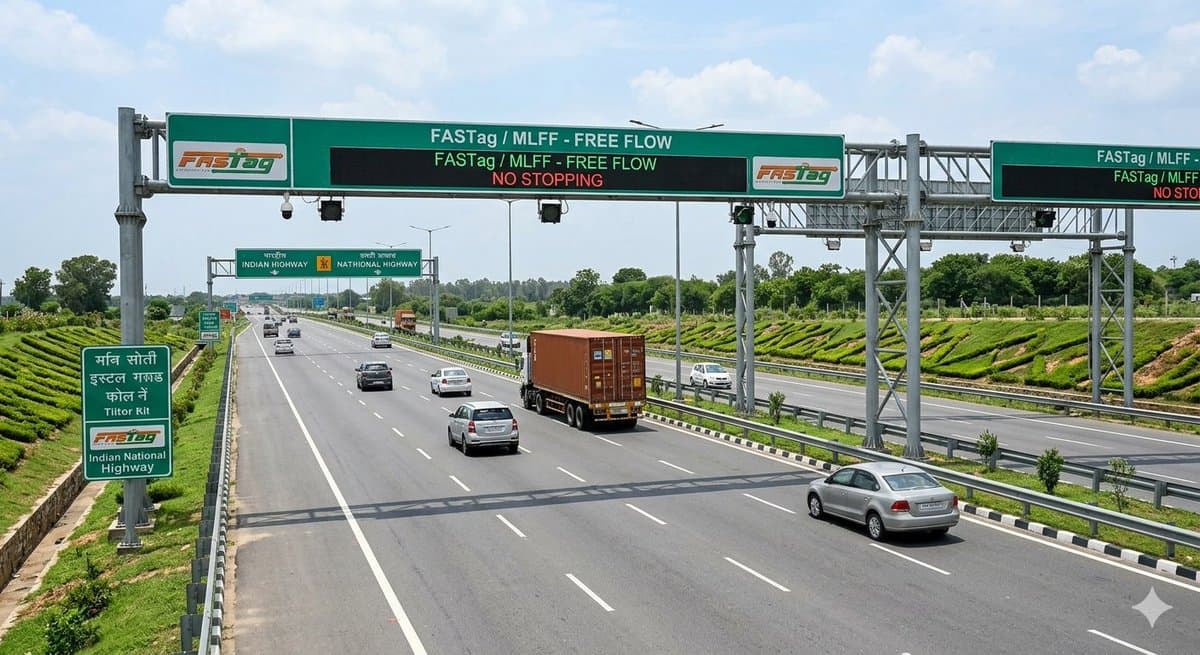
India's First Multi-Lane Free Flow Tolling
Published on:
Share this post
Article Summary
Key Highlights on Multi-Lane Free Flow Tolling System in Gujarat
Overview:
- The National Highways Authority of India (NHAI) launched India’s first Multi-Lane Free Flow (MLFF) tolling system at the Choraiyasi Toll Plaza on NH-48 (Surat-Bharuch section) in Gujarat.
Statistics:
- On the first day of implementation, approximately 41,500 vehicles crossed the MLFF toll plaza.
System Features:
- The MLFF system allows vehicles to pass through toll centers without stopping, ensuring a seamless traffic flow.
- It employs advanced technologies such as:
- Automatic Number Plate Recognition (ANPR)
- FASTag-based electronic toll collection for contactless operations.
Benefits:
- The introduction of the MLFF system is expected to:
- Reduce congestion on national highways.
- Enhance travel time efficiency.
- Improve fuel efficiency.
- Decrease emissions from vehicles.
User Guidelines:
- NHAI advises highway users to maintain adequate balance in their FASTag accounts for smooth operations.
- In cases of insufficient balance, invalid, or damaged FASTags, users will receive electronic notices (e-notices) for toll fee payment.
- Users have 72 hours to pay the normal user fee after receiving the e-notice.
- Failure to pay within the stipulated time results in a doubling of the toll fee based on vehicle category.
E-Notice System:
- E-notices can be accessed and paid through the portal: e-notice portal.
- Users can also lodge complaints regarding e-notices within 72 hours of issuance.
- Non-payment of e-notices may lead to blacklisting of FASTags and restrictions on other vehicular services associated with the vehicle.
Operational Impact:
- The MLFF system is designed to:
- Enhance transparency in toll operations.
- Reduce operational costs associated with toll plaza setups.
- Contribute to the development of a more robust, efficient, and cost-effective tolling system across the national highway network.
This initiative by NHAI represents a significant advancement in India’s tolling infrastructure, aimed at improving the overall travel experience for highway users while promoting efficiency and environmental sustainability.
Key Terms & Concepts
| NHAI | Implementing the tolling system |
| Gujarat | Location of the toll system |
| NH-48 | National Highway for tolling |
| 41,500 vehicles | Vehicles crossing on first day |
| ANPR | Technology used for tolling |
| Fastag | Electronic toll collection method |
| e-notice | Issued for payment failures |
| 72 hours | Time frame for payment |
| Toll Plaza | Location for toll collection |
| Transparency | Goal of the new system |