iAspirants
India's Leadership in Rice Exports
Published on:
Share this post
Article Summary
Exam-Focused Notes on Indian Rice Production and Export
1. Rice Export Data:
- India has been the world's largest rice exporter since 2011-12.
- In 2024-25, India exported 21.69 million tonnes (mt) of rice, significantly higher than Thailand's 7.86 mt and Vietnam's 8.06 mt.
- India is also the largest rice producer, with an output of 150 mt surpassing China's 145.28 mt.
2. Environmental Concerns:
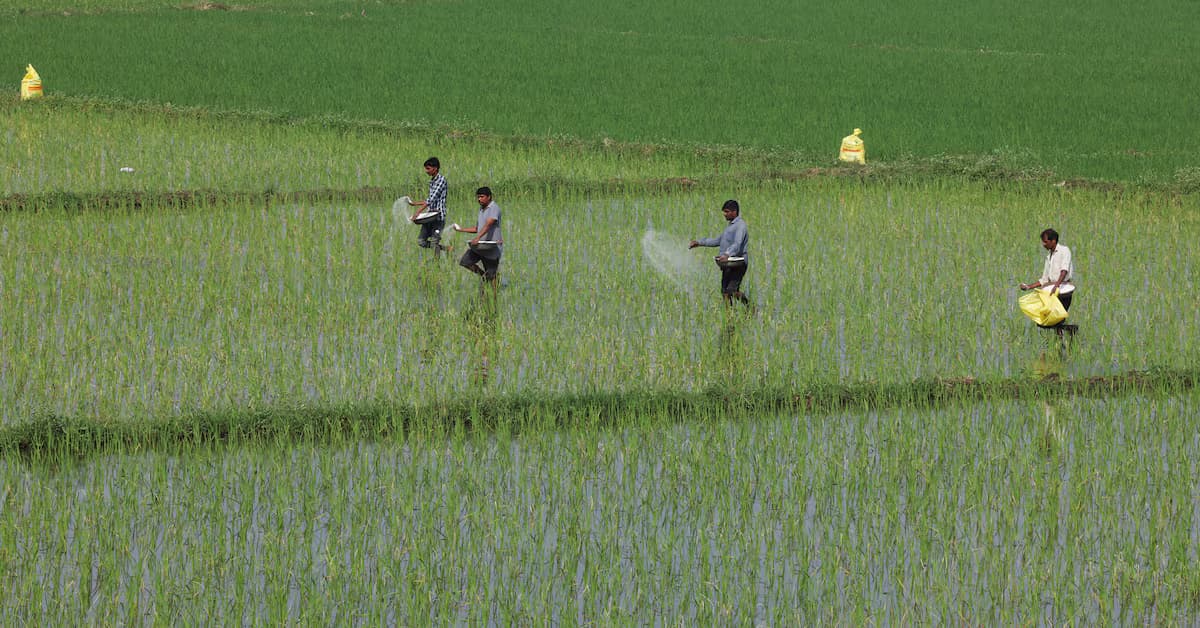
- Paddy cultivation is water-intensive; one irrigation requires 101,171.5 litres of water per acre.
- Conventional methods may consume about 5 million litres of water per acre for a yield of 2.5 tonnes.
- This results in 3,000 litres of water consumed for every kg of rice exported.
3. Financial Sustainability:
- Basmati exports (5-6 mt) are valued at $5.8-5.9 billion while non-basmati (11-14 mt) is valued at $4.5-6.5 billion.
- Average unit price: Basmati – Rs 82.9-92.3/kg vs Non-basmati – Rs 34-39.2/kg.
- Basmati consumes less water and is planted during monsoon, optimizing yield and quality.
4. Government Initiative & Recommendations:
- Promotion of high-value and less water-intensive rice varieties, including GI-protected short-grain aromatic varieties such as:
- Kalanamak, Adamchini, Katarni, Gobindobhog, Badshah Bhog, Koraput Kalajeera, Wayanad Jeerakasala, Gandhakasala, and Seeraga Samba.
- Expansion of basmati cultivation area to 6.2 million hectares (mh) to boost production.
- Suggestions for a floor price for basmati to protect farmers’ interests.
5. Agricultural Research & Breeding:
- Development of high-yield basmati varieties like Pusa Basmati-1509, yielding 2.5 tonnes/acre in 115-120 days.
- Breeding strategies have incorporated genes for disease resistance in basmati varieties, leading to advanced crops like Pusa Basmati-1847, 1885, and 1886.
- Transition towards predictive breeding involving genomic selection and machine learning to enhance crop traits effectively.
6. Economic Data:
- Increase in basmati shipments from 0.6-0.7 mt in early 2000s to currently 5-6 mt, indicating growth in value due to improved breeding techniques.
- Encourages sustainable agriculture practices aligning with India’s Minimum Support Price (MSP) policies and groundwater management strategies.
7. Constitutional References:
- Emphasis on Directive Principles of State Policy (DPSPs) related to agriculture and food security.
8. International Agreements:
- No specific international treaties mentioned, but the shift towards sustainable practices aligns with global environmental goals.
Summary:
India's rice production and export landscape showcase its leadership in global rice markets while grappling with environmental sustainability and financial viability. The government and agricultural scientists focus on promoting high-value varieties to enhance both economic returns and ecological balance in paddy cultivation. The strategies underscore the need for innovative breeding techniques and sustainable agricultural policies to maintain India's competitive edge in rice exports.
Key Terms & Concepts
| India | World's largest rice exporter |
| US Department of Agriculture | Provided export data |
| 21.69 million tonnes | Rice export quantity 2024-25 |
| Thailand | Second largest rice exporter |
| Vietnam | Third largest rice exporter |
| 150 million tonnes | Rice production in India 2024-25 |
| 145.28 million tonnes | China's rice production 2024-25 |
| 3,000 litres | Water exported per kg of rice |
| Basmati rice | High-value rice variety |
| $5.8-5.9 billion | Value of basmati exports 2023-25 |
| Pusa Basmati-1509 | High-yield basmati variety |
| 115-120 days | Maturity period of Pusa Basmati-1509 |
| 6.2 million hectares |