iAspirants
India's Monsoon Rainfall Deficit Report
Published on:
Share this post
Article Summary
Exam-Focused Notes on Monsoon and El Niño Impact on India
Weather and Rainfall Statistics
- Current Rainfall Status: As of June 16, India faces a 35% deficit in monsoon rainfall.
- Regional Deficits:
- Maharashtra and Konkan: Significant deficit as monsoon stalled.
- Northwest India: Received 5% above normal rainfall.
- East and Northeast India: 43% deficit; Central India: 63% deficit; South Peninsula: 14% deficit.
- June Historical Context: June deficits are not unusual, but significant in the context of a potential Super El Niño year.
El Niño Overview
- Definition: El Niño is characterized by the warming of central and eastern Pacific Ocean waters, which can suppress the Indian monsoon.
- Current Conditions: U.S. National Oceanic and Atmospheric Administration confirmed the formation of El Niño with a 63% probability of becoming very strong by winter.
- IMD Bulletin: El Niño conditions present and likely to affect monsoon, with 80% chance of occurrence between June and August.
Government Response and Agricultural Impact
- Monitoring & Preparations: Union Agriculture Minister directed states to identify districts with low rainfall for contingency planning.
- Priority Monitoring: 150 to 200 districts are under monitoring for agricultural impacts.
- Stock Availability: Minister assured adequate seed and fertilizer stocks, with reservoir storage at 30.4% capacity (above the 25.1% average in previous El Niño years).
Economic Implications
- Inflation Risk: Analysts like ICRA estimate a serious disruption in farming could increase retail food inflation by 0.4 percentage points.
- Fertilizer Supply Concerns: Issues with di-ammonium phosphate exports from China and high natural gas prices impacting urea production may result from the El Niño conditions.
Meteorological Insights
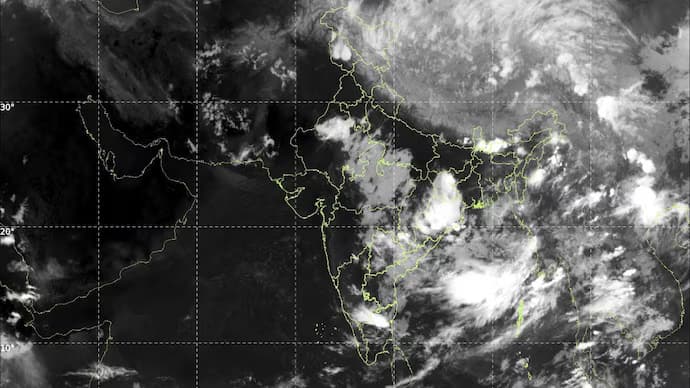
- Monsoon Dynamics: D.S. Pai from IMD explains that June monsoon onset is heavily influenced by local and regional factors. Anticyclonic circulation and mid-latitude weather systems have delayed monsoon establishment.
- Madden-Julian Oscillation: Currently in an unfavorable phase, suggesting a potential delay in monsoon advancement over Mumbai by an additional 5 to 6 days.
Conclusion
- The ongoing climatic events underline the interdependencies among local meteorological conditions and global phenomena like El Niño. Government preparedness and monitoring will be essential in mitigating adverse agricultural impacts and inflationary pressures.
Key Terms & Concepts
| Monsoon | Seasonal rainfall pattern |
| IMD | India's weather forecasting agency |
| El Niño | Ocean-atmosphere phenomenon affecting rains |
| Super El Niño | Predicted intense El Niño conditions |
| NOAA | U.S. weather agency monitoring El Niño |
| Kharif | Agricultural crop season |
| Madden-Julian Oscillation | Atmospheric phenomenon impacting monsoon |
| ICRA | Rating agency evaluating farm disruption impact |
| Retail Food Inflation | Economic indicator affected by agriculture |
| Reservoir Storage | Current level of water storage |
| 150 to 200 districts | Areas under priority monitoring |
| April | Month of early forecasts |