iAspirants
India's National Waste Management Crisis
Published on:
Share this post
Article Summary
Summary of India's Waste Crisis and the Solid Waste Management Rules, 2026
Current Waste Situation in India:
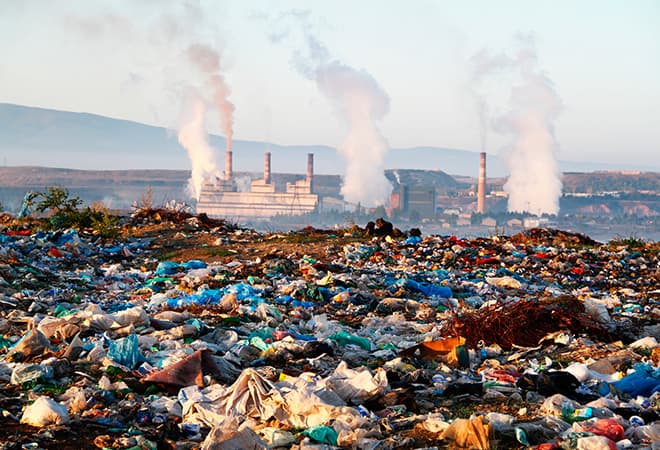
- India's waste crisis is a national ecological emergency affecting both urban and rural areas.
- Urban cities face issues like plastic-clogged drains, methane-emitting landfills, and air pollution from burning waste.
- Rural areas are impacted by plastic waste, sanitary products, e-waste, and pesticide containers.
Solid Waste Management Rules, 2026:
- These rules come into effect on April 1, 2026, replacing the 2016 rules.
- Objectives include:
- Improving source segregation.
- Regulating bulk waste generators.
- Promoting scientific waste processing.
- Reducing landfill dependence.
- Remediating legacy dumpsites.
- Advancing towards a circular economy with digital monitoring.
Legal Framework:
- Rules framed under the Environment (Protection) Act, 1986, via Article 253 of the Indian Constitution, which allows Parliament to fulfill international obligations (e.g., Stockholm Declaration of 1972).
- Caution against excessive centralization and erosion of State autonomy.
Federalism and Governance:
- Emphasis on the principle of subsidiarity: local governance should manage local issues.
- The belief that central oversight is necessary undermines the competence of States and local bodies.
- Need for policies tailored to regional ecological and administrative capacities.
Public Participation and Local Governance:
- Effective waste management requires local citizen engagement and accountability.
- Urban governance lacks a satisfactory framework equivalent to rural institutions like gram sabha for effective citizen involvement.
Concerns Regarding 2026 Rules Implementation:
- Obligation expansion without sufficient financing risks leading to underfunded mandates and ineffective compliance.
- Centralized reporting and standardized frameworks may prioritize bureaucratic compliance over actual governance and service delivery.
- Anticipation of potential public interest litigations due to non-compliance and inadequate resources.
Recommendations for Better Waste Management:
- Shift towards a model allowing States to develop their own waste management regulations for five years while adhering to minimum national standards.
- Creation of Metropolitan Waste Management Authorities in megacities for better local representation and oversight.
- Encourage community-level strategies based on local realities, such as household composting and collaborative waste management efforts across urban and rural areas.
Economic Implications:
- Failure of effective waste management may lead to future liabilities and judicial involvement which complicates governance.
By integrating these outlined principles, India could potentially overcome its waste management challenges and lay the groundwork for improved environmental governance.
Key Terms & Concepts
| Solid Waste Management Rules, 2026 | New waste management framework |
| Environment (Protection) Act, 1986 | Legal framework for regulation |
| Article 253 of the Constitution | Empowers implementation of laws |
| 1972 Stockholm Declaration | International obligation reference |
| New State Ice Co. v. Liebmann (1932) | Legal precedent on state experimentation |
| Central Pollution Control Board (CPCB) | Oversight for waste management |
| F.A. Hayek's knowledge problem | Concept on decision-making knowledge |
| Kenneth Arrow's learning by doing | Economic implications of capacity building |
| Gram panchayats | Local governance bodies |
| Metropolitan Waste Management Authorities | Proposed stronger institutions |
| Urban and rural solid waste management | Focus areas of the Rules |
| December 14, 2024 |