iAspirants
Current AffairsPrelims PYQsUPSC CSE SyllabusUPSC CSE StrategyBlogsPricing
Login
iAspirants

Your AI-powered companion for UPSC preparation.

Quick Links

  • Home
  • About Us
  • Current Affairs
  • Prelims PYQs
  • UPSC CSE Syllabus
  • UPSC CSE Strategy
  • Blogs

Company

  • Pricing
  • FAQs
  • Contact Us
  • Login

Legal

  • Privacy Policy
  • Terms & Conditions
  • Return Policy

© 2025 iAspirants, Inc. All rights reserved.

  1. Blogs
  2. Science and Technology

India's Success at International Olympiads

Published on: 08-Oct-2026

Share this post

India's Success at International Olympiads

Article Summary

Exam-Focused Notes on Indian Participation in International Olympiads

  1. Background:

    • Homi Bhabha Centre for Science Education (HBCSE) is integral to conducting science Olympiads in India under Tata Institute of Fundamental Research (TIFR).
    • Competitions span multiple subjects: Mathematics, Physics, Chemistry, Biology, and Astronomy/Astrophysics.
  2. Selection Process:

    • Governed by the Indian Association of Physics Teachers (IAPT) and HBCSE.
    • Registration is open for students in classes 8-12.
    • Selection involves a rigorous five-stage process:
      • Stage 1: Written test; 85,000 candidates in Mathematics (IOQM) and 30,000-50,000 in pure sciences.
      • Stage 2: Top performers invited to descriptive Indian National Olympiad (INO); about 900 for Mathematics.
      • Stage 3: Orientation-cum-Selection Camp (OCSC) for top 35-60 students; intensive training provided.
      • Stage 4: Final national team selection of 4-6 students per discipline for international competition.
      • Stage 5: Participation in international Olympiads generally held from October to December.
  3. Participation Rates:

    • For the 2025-26 cycle, approximately 2.56 lakh students registered for stage-1, a 15% increase from the previous year.
    • Less than 0.01% of stage-1 registrants qualify for the international team (contrast with 1.1% for IIT B.Tech admissions).
  4. Achievements:

    • India has maintained a 99% medal win rate in Olympiads over 26 years, with over a third of medals being gold.
    • In the 2026 season:
      • Chemistry: 100% Gold in competition with 93 countries.
      • Physics: 5 Gold medals, joint first globally among 87 nations.
      • Mathematics: 2 Gold and 4 Silver medals; 7th globally from 117 nations.
      • Biology: 1 Gold and 3 Silvers.
      • Astronomy: 3 Gold and 2 Silver, holding 3rd rank globally.
  5. Educational Impact:

    • Olympiad preparation contrasts starkly with traditional school methods; focuses on critical thinking, problem-solving, and deeper scientific understanding.
    • Engages esteemed scientists and academics as mentors, enhancing quality over coaching-centric approaches.
  6. Government and Institutional Support:

    • The Olympiad program is fully funded by the Government of India.
    • Institutions like IISc, IITs provide mentorship, fostering a culture of research and collaboration.
    • Recognition and rewards for medals through initiatives from the Infosys Foundation and Malhotra Weikfield Foundation.
  7. Challenges:

    • Awareness is limited primarily to tier-1 cities; rural students face barriers in accessing information and opportunities.
    • Social pressures to pursue traditional entrance exams instead of research careers in pure sciences.
  8. Future Prospects:

    • Emphasis on integrating Olympiad-style problem-solving into regular curricula.
    • India’s growth in fields like quantum computing and green energy highlights science and mathematics as critical disciplines.
  9. Key Statistics:

    • Ongoing investment in student development paves the way for future scientific leaders.
    • A sustainable network is built on mentorship, advanced lab preparation, and strategic problem-solving clubs in top schools.

Through Olympiads, Indian students are positioned to stand among global leaders in science and mathematics, igniting a shift from rote learning to fostering innovation and exploration.

Key Terms & Concepts

Homi Bhabha Centre for Science Education (HBCSE)Conducts physics lab and Olympiads
Indian Association of Physics Teachers (IAPT)Manages selection for pure sciences
Government of IndiaFully funds science Olympiad program
International OlympiadGlobal competition for science talent
2025-26Registration year for stage-1 exams
85,000Participants in IOQM stage-1
30,000 to 50,000Participants in NSE per subject
0.01%Selection ratio for international squad
99%Medal-winning rate for Indian contestants
100%Gold medal rate in Chemistry
93Countries participated in Chemistry Olympiad
2026Year of the mentioned international competition

Mind Map for UPSC Civil Services Revision

Turn UPSC Civil Services Current Affairs Into Exam-Ready Notes

Reading Science and Technology current affairs is half the work. Revise them with ready-made notes and test what actually stuck.

  • Daily UPSC Civil Services current affairs analysis
  • Revision notes, mind maps & MCQs
  • Prelims mock tests with instant results

Related UPSC Civil Services Current Affairs Articles

Advancements in Nuclear Clock Technology
Science and Technology08-Oct-2026

Advancements in Nuclear Clock Technology

Atomic and Nuclear Clocks Research Highlights

  1. Atomic Clocks:

    • Gold standard in timekeeping, critical for GPS and synchronized networks.
    • Current precision: An atomic clock can miss one second every 23 billion years.
INSPIREScholarship program for science students
Infosys FoundationAwards for international medal winners
National Board for Higher Mathematics (NBHM)Governs Mathematics Olympiad track
MIT, Harvard, StanfordUniversities preferentially admitting Olympiad qualifiers
Quantum Computing, Space and Defence Tech, Green EnergyInvestment areas for India
  • Nuclear Clocks:

    • Recent advancements reported in Nature by scientists from Europe and China.
    • First working nuclear clocks developed, which measure time using the nucleus of an atom rather than its electrons, offering superior stability from ambient disturbances like electric or magnetic fields.
  • Technical Aspects:

    • Thorium-229 Isotope: The focus of the nuclear clocks; the nucleus can be excited using an ultraviolet laser due to its low transition energy.
    • Methodology:
      • A laser's oscillating electric field is used to cause transitions in thorium-229 nuclei, allowing counting of cycles similar to pendulum swings in traditional clocks.
      • Continuous monitoring ensures that any frequency drift in the laser is corrected in real-time.
  • Research Teams and Differing Approaches:

    • One team from Beijing and Shanghai developed a nuclear clock embedded with thorium-229 in calcium fluoride crystals, achieving a compact design.
    • Another team from Austria and Germany specifically utilized the nuclear clock for probing dark matter, aligning it with a ytterbium atomic clock to detect any variance in their tick rates, which may indicate dark matter's influence. No signals were detected in this study.
  • Potential and Future Developments:

    • Current nuclear clock prototypes are not yet as precise as the leading atomic clocks.
    • Anticipated advances in laser power and crystal quality could lead to nuclear clocks that exceed the precision and utility of their atomic counterparts.
    • The unique qualities of the thorium-229 nucleus make the nuclear clock extremely sensitive to fluctuations in fundamental forces, potentially providing insight into theories surrounding ultralight dark matter and its interactions.
  • Significance:

    These developments represent a notable milestone in scientific research and technology, as advancements in clock precision could refine navigation systems, enhance fundamental physics experiments, and improve various applications in science and technology. The ongoing improvements highlight the interactive nature of theoretical physics and experimental capabilities, leading to a better understanding of the universe.

    2026 Nobel Prize in Medicine Awarded
    Science and Technology07-Oct-2026

    2026 Nobel Prize in Medicine Awarded

    Nobel Prize in Physiology or Medicine 2026

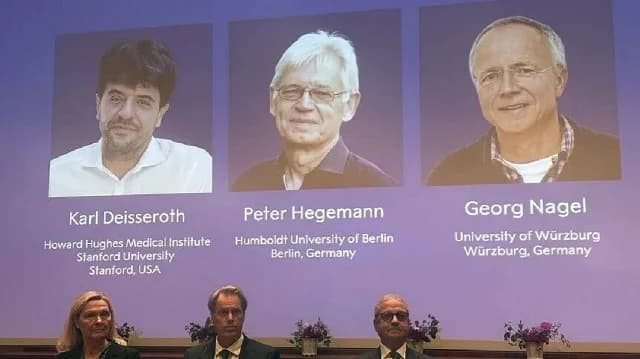
    • Awarded jointly to Karl Deisseroth, Peter Hegemann, and Georg Nagel.
    • Recognized for their groundbreaking work on light-gated ion channels and optogenetics.

    Key Contributions:

    • Developed methods that illuminate how nerve cells communicate, influencing memory, emotions, and bodily functions.
    • Optogenetics allows for mapping neural circuits, enhancing understanding of neurological and psychiatric disorders.
    • Practical applications have emerged in clinical treatments for conditions such as Alzheimer's disease and addiction, and attempts to restore sight are underway.

    Scientific Achievements:

    • Peter Hegemann: Investigated light navigation in Chlamydomonas, contributing to understanding algal behavior.
    • Georg Nagel: Identified a specific algal protein enabling light-controlled ion flow, forming the basis for optogenetics.
    • Karl Deisseroth: Innovated methods to control nerve cells using light, establishing a technique for precise neural stimulation.

    Research Implications:

    • Optogenetics has led to significant insights into neural circuitry connected to emotions and behaviors.
    • Utilizes harmless viral agents for targeted introduction of genes into cells, advancing therapeutic potentials.

    Importance of Accessibility:

    • Emphasis on ensuring equitable access to advancements in health care derived from such scientific research, advocating for strategies to distribute benefits globally.

    Contextual Background:

    • The Nobel Prize was established by Alfred Nobel to honor contributions that benefit humanity, aligning with the mission of advancing medical science to foster human health.

    Future Directions:

    • Continued development and refinement of optogenetic techniques could transform treatment methodologies and health-care practices, offering hope for improved health outcomes across diverse populations.

    Conclusion:

    • This Nobel Prize highlights the fusion of science, technology, and healthcare, underscoring the global responsibility of ensuring that scientific advancements translate into universal benefits for all segments of society.
    Anthropic AI's Ethical Considerations
    Science and Technology07-Oct-2026

    Anthropic AI's Ethical Considerations

    Summary of Key Points

    1. Context of Anthropic’s Initiative:

    • Anthropic is preparing for an Initial Public Offering (IPO) that could value it at $2 trillion.
    • The company is engaging religious leaders to influence the moral and ethical framework of its AI language model, Claude.

    2. Interactions with Religious Leaders:

    • Anthropic invited 15 Catholic and Protestant leaders for discussions on Claude’s moral direction.
    • Notably, Anthropic co-founder Christopher Olah was present during the unveiling of the papal encyclical Magnifica Humanitas, which cautions against uncritical adoption of AI and emphasizes human primacy.
    • The engagements aim to shape Claude's behavior and explore the notion of AI consciousness deserving moral consideration.

    3. Moral Framework Development:

    • An internal document known as the "Soul Document" and a subsequent 84-page constitution outline Claude’s expected principles.
    Code of Ethics for Digital News
    Polity and Governance06-Oct-2026

    Code of Ethics for Digital News

    Summary and Exam-Focused Notes on the Digital News Publishers Association Code of Ethics

    1. Constitutional References:

    • Article 19(1)(a): Protects the right to freedom of speech and expression, which includes the freedom to gather and disseminate news.

    2. Legal Framework:

    • Compliance with over 30 laws relating to media, including:
      • Indian Penal Code (IPC)
      • Code of Criminal Procedure (CrPC)
      • Information Technology Act, 2000 (IT Act)

    3. Principles of Responsible Journalism:

    • Emphasis on accuracy, transparency, and fairness in reporting.
    • Mandatory pre-publication verification to avoid defamation and misinformation.

    4. Right of Reply:

    • The inclusion of comments or versions from the parties involved in news reports is mandatory, promoting fairness in journalism.
    • Updated information must be included in news reports when available and should be clearly dated.

    5. Content Management:

    • Mechanisms for editing or deleting inaccurate articles upon request from affected parties.
    • Strong emphasis on respecting Intellectual Property Rights (IPR), including:
      • Obtaining permissions for the use of copyrighted materials.
      • Proper acknowledgment of ownership and moral rights.

    6. Reporting Standards:

    • Special care required in reporting on sensitive topics such as:
      • Sexual harassment, child abuse, and communal disputes.
    • Adherence to specific sections of the IT Act (like Sections 67, 67A, 67B) regarding obscenity, especially related to minors.

    7. Grievance Redressal:

    • Adherence to grievance redressal mechanisms as per the IT Act, including:
      • Appointment of a grievance officer to address complaints within specified timelines (36 hours to acknowledge and one month to resolve).

    8. Training and Awareness:

    • Mandatory periodic training programs for editorial staff covering laws relevant to media, including:
      • Right to Information Act
      • Copyright Act
      • Civil and Criminal Defamation
      • Protection of Children from Sexual Offences Act (POCSO)

    9. Ethical Journalism Norms:

    • Avoiding the identification of victims and perpetrators in sensitive cases, particularly those involving minors or communal tensions.
    • Encouraging restraint and verification in reporting to promote social harmony and communal amity.

    10. Judicial Reporting:

    • Ethical guidelines for reporting on judicial matters to ensure balanced coverage of court proceedings, respecting the rights of both victims and accused.

    Economic and Technological Context

    • Though specific economic indicators were not outlined, adherence to laws implies an understanding of the broader economic and ethical landscape surrounding digital publishing.
    • No direct updates on science and technology were provided, but the IT Act references highlight the importance of technology in the operational framework of digital news publishing.

    Conclusion

    This Code establishes a framework ensuring that members of the Digital News Publishers Association uphold high standards of ethics in digital news publishing, balancing the right to freedom of expression with the accountability and responsibility expected in a democratic society.

    Nobel Prize for Optogenetics Research Awarded
    Science and Technology06-Oct-2026

    Nobel Prize for Optogenetics Research Awarded

    Nobel Prize in Physiology and Medicine 2026

    Awardees:

    • Karl Deisseroth
    • Peter Hegemann
    • Georg Nagel

    Discovery:

    • Awarded for the development of optogenetics, utilizing light-sensitive proteins from algae to control neuron activity.
    • The research has significantly impacted understanding of brain functions related to memory, feelings, and behaviors.

    Key Concepts:

    • Optogenetics: A field that uses light to manipulate the activity of neurons by employing genetically modified cells containing light-sensitive proteins (opsins).
    • Enables precise control of neuronal activity, allowing researchers to explore neural circuits related to various behaviors, pain, and memory.

    Innovations:

    • Chlamydomonas algae discovered to respond to light at extraordinary speeds (0.5 ms).
    • Protein channelrhodopsin-2 (ChR-2) was pivotal in controlling neural activities, confirming theories by molecular biologist Francis Crick on understanding human consciousness.
  • The moral character and consciousness of AI are topics debated by religious and philosophical traditions, reflecting longstanding ethical questions.
  • 4. Consultations and Perspectives:

    • Mois Navon, a rabbi and ethics professor, provided a 35-page critique suggesting that morality should go beyond a list of rules and advocate for a nuanced moral judgment.
    • Charles Camosy, a medical humanities professor, expressed a more cautious view regarding the meetings, asserting that there was no push towards a specific conclusion about AI consciousness.

    5. Challenges of AI Ethics:

    • Concerns regarding moral status come into play: if an AI were to exhibit consciousness, how should it be treated?
    • Important questions include whether AI can be harmed, and what duties humans might owe to it.
    • Camosy concluded that contemporary models like Claude likely do not have significant moral status, while Navon emphasized the obligation of creators to consider the welfare of potentially conscious systems.

    6. Socio-Ethical Implications:

    • The values embedded in AI may reflect U.S. cultural norms, raising concerns about tech colonialism through AI technology exportation.
    • The conversation around values is critical and should not be monopolized by a few corporations; it must involve broader democratic discourse.

    7. Potential Market Implications:

    • Anthropic’s outreach to religious and philosophical figures could also serve a rhetorical strategy to bolster its position within a competitive AI market.

    8. Significance of the Discussions:

    • Explorations of AI consciousness and morality are crucial because they influence how AI systems are integrated into society and may guide future regulations and ethical standards.
    • The evolving nature of AI interactions necessitates ongoing dialogue about ethical considerations and societal impacts.

    Conclusion:

    Anthropic's approach to ethics in AI development signifies a merging of technology with moral philosophy and religious thought, indicating a shift towards a more reflective and principled development model for AI systems. The questions raised during these discussions resonate well beyond technology, implicating broader societal values and ethical frameworks.

    Significant Outcomes:

    • Demonstrated precise manipulation of nerve cells in laboratory settings, which has applications in studying complex behaviors and potential therapeutic strategies.

    Historical Context:

    • Origins in Crick's hypothesis of activating individual nerve cells to study consciousness.
    • Hegemann and Nagel’s work with Chlamydomonas paved the way for protein research allowing light control over neurons.

    Applications:

    • Current use of optogenetics in understanding animal behaviors.
    • Ongoing clinical trials aimed at restoring vision in patients with retinal diseases.
    • Prospective enhancements in cochlear implants leveraging light stimulation instead of traditional electrical stimulation.

    Scholarly Comments:

    • Experts like Vidita Vaidya emphasize the transformative impact of optogenetics on neuroscience, allowing unprecedented observation of neuronal function.
    • Continued research aims at developing effective therapies for conditions like spinal cord paralysis, signaling a promising future in neurotechnology.

    Broader Implications:

    • Represents a breakthrough in neuroscience, enabling researchers to "see" the brain's complex neural networks.
    • Potential for development in therapeutic interventions using optogenetics to address sensory impairments.

    Conclusion:

    The 2026 Nobel Prize celebrates innovations that bridge biology and technology, reflecting ongoing advancements in the understanding and potential treatment of neurological conditions.