iAspirants
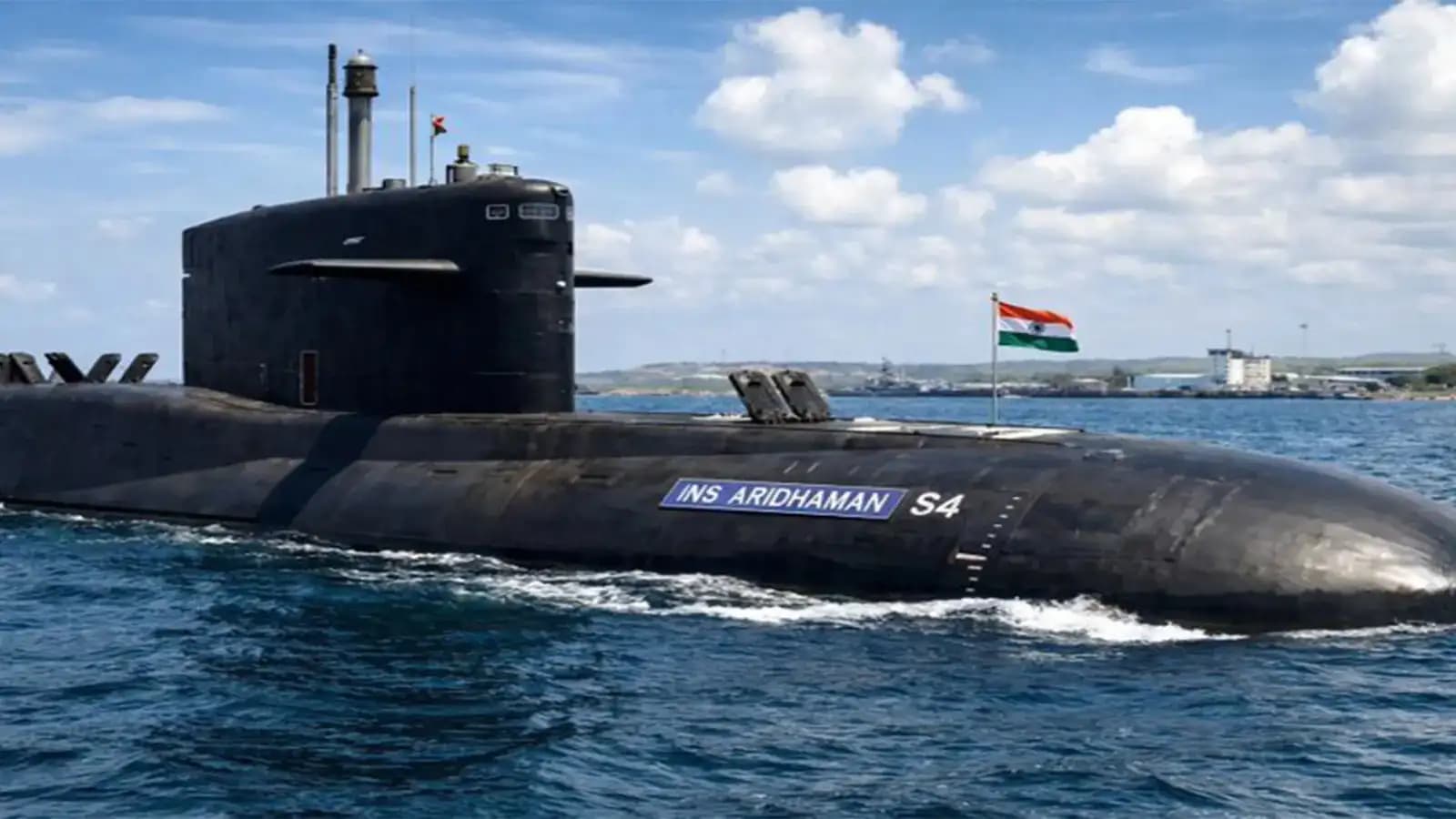
India's Third Nuclear Ballistic Submarine
Published on:
Share this post
Article Summary
Summary of Nuclear-Powered Submarine INS Aridaman Induction
Key Facts
- Date of Induction: INS Aridaman commissioned on 4 April 2026.
- Type: Third nuclear-powered ballistic missile submarine (SSBN) in India.
- Weight: 7,000 tons.
- Missile Capacity: Eight vertical launching system tubes, capable of holding K-15 and K-4 SLBMs:
- K-15 SLBM: Range over 700 km.
- K-4 SLBM: Range of 3,500 km.
Strategic Significance
- Enhances India's sea-based nuclear deterrence capabilities.
- Established India’s nuclear triad:
- Land-based: Agni missile series.
- Air-based: Fighter jets including Rafales, Su-30MKIs, and Mirage 2000s.
- Sea-based: Operational with INS Arihant, INS Arighaat, and now INS Aridaman.
- Supports India’s "no first use" nuclear doctrine, ensuring a second-strike capability.
Development and Background
- Part of a nuclear-powered submarine program initiated over three decades ago, involving private firms and the Defence Research & Development Organisation (DRDO) with Russian assistance.
- INS Arihant: Launched in 2009, commissioned in 2016 - first of its kind for India.
- INS Arighaat: Commissioned in 2024, technologically advanced compared to INS Arihant.
- Future plans include constructing a fourth SSBN and developing indigenous nuclear-powered attack submarines (SSNs).
National Defense Context
- India operates 16 conventional submarines, includes:
- 6 Kalvari-class (with French collaboration).
- 4 Shishumar-class.
- 6 Kilo-class (Sindhughosh).
- Authorized submarine strength is 18, but operationally only a fraction (approximately 70%) are active due to refits.
International Comparison
- Comparison with other nations:
- USA: 14 Ohio-class SSBNs, 53 fast-attack submarines.
- China: 12 nuclear submarines, including 6 nuclear-powered attack submarines.
Important Collaborations and Programs
- Ongoing collaboration with Germany for Project-75I, aiming to construct six advanced AIP-equipped conventional submarines with ThyssenKrupp Marine Systems and Mazagon Dock Shipbuilders Ltd.
- Plans to lease a nuclear-powered attack submarine from Russia expected by 2027-28.
Constitutional and Policy Framework
- India’s nuclear policy emphasizes deterrence and retaliation as per its doctrine, ensuring a responsive capability against potential nuclear threats.
This analysis provides an insightful view into India's strategic defense advancements with the launch of INS Aridaman, outlining the technological capabilities and future directions in bolstering national security.
Key Terms & Concepts
| INS Aridaman | Third nuclear-powered submarine |
| INS Arihant | First nuclear-powered submarine |
| INS Arighaat | Second nuclear-powered submarine |
| Agni series | Nuclear missile system |
| K-15 SLBM | Submarine-launched missile |
| K-4 SLBM | Longer-range missile |
| Nuclear triad | Defense strategy |
| 83 MW pressurised light-water reactor | Power source for submarines |
| Project-75I | Submarine construction program |
| ThyssenKrupp Marine Systems | German partner for submarine construction |
| Mazagon Dock Shipbuilders Ltd | Indian shipbuilding partner |
| 60% operational submarine strength | Fleet management metric |
| US Ohio-class SSBNs |