iAspirants
Indus Waters Treaty Review Needed
Published on:
Share this post
Article Summary
Summary of Key Points on the Indus Waters Treaty (IWT)
Background and Current Status:
- Indus Waters Treaty (IWT): Established in 1960 between India and Pakistan.
- Recent statements indicate that the IWT will require review and renegotiation to remain operational. Current conditions do not favor India’s interests.
- India placed the IWT in abeyance following the Pahalgam terror attack on April 20, 2025.
Constitutional and Legal Aspects:
- Preamble of the IWT: The treaty was founded on the basis of goodwill; however, ongoing terrorism support by Pakistan is seen as a breach of this goodwill.
- India maintains that as a sovereign entity, it cannot be compelled to remain bound by treaties that threaten its national interests.
Key Arguments Against Continuing with Current IWT:
- Pakistan’s ongoing support for terrorism creates circumstances justifying India’s reconsideration of the treaty.
- Climate change has reduced the water volume of eastern rivers within the Indus system, further complicating compliance.
Water Flow and Management Concerns:
- India claims that almost 50% of the water flow Pakistan receives under the treaty is wasted into the ocean due to Pakistan not having built adequate water storage facilities over 76 years.
- There are concerns regarding the efficiency and functionality of the IWT, with views that it has reached a point of exhaustion in options for India.
Comparisons with China:
- India's potential action on the IWT is not expected to set a precedent for China's management of the Brahmaputra River, as there is no existing treaty between India and China on this river.
- An expert-level mechanism exists between India and China to address trans-boundary river data sharing regarding river management.
Economic Development Projects:
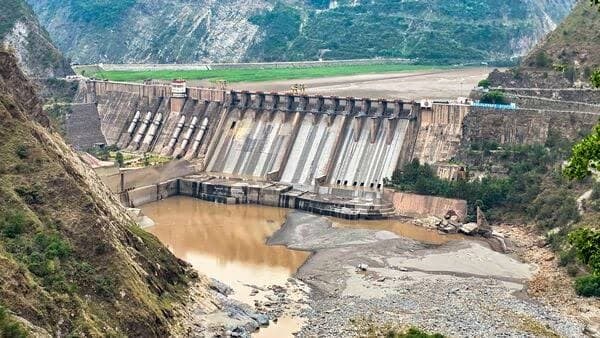
- India is pursuing major hydropower projects including Sawalkote, Pakal Dul, Ratle, Kiru, Kwar, and Dulhasti, with an anticipated generation capacity of around 5,300 megawatts over the coming five years.
- Projects such as Kiru and Pakal Dul are expected to be commissioned within the current year, contributing significantly to India's power supply.
Conclusion:
India's position on the IWT underscores a reaction to external threats and operational challenges that hinder water resource management. The interplay between geopolitical dynamics and actual water management continues to shape India-Pakistan relations, while internal development goals press on amidst these negotiations.
Key Terms & Concepts
| Indus Waters Treaty | Water sharing agreement |
| April 20, 2025 | Date of Pahalgam terror attack |
| 1950 | Date treaty came into force |
| Pakistan | Country supporting terrorism |
| China | Country without treaty |
| 5,300 megawatts | Expected electricity generation |
| Sawalkote, Pakal Dul, Ratle, Kiru, Kwar, Dulhasti | Electricity project names |
| climate change | Factor affecting water volume |
| water flow | Disrupted by management issues |