iAspirants
Innovative Nanobots Transform Cancer Treatment
Published on:
Share this post
Article Summary
Summary of Advances in Cancer Treatment Using Magnetic Nanorobots
Background and Research:
- Challenge in Cancer Therapy: Current therapies struggle to deliver medications deep within tumors while protecting healthy tissue. This is crucial for effective targeted and personalized medicine.
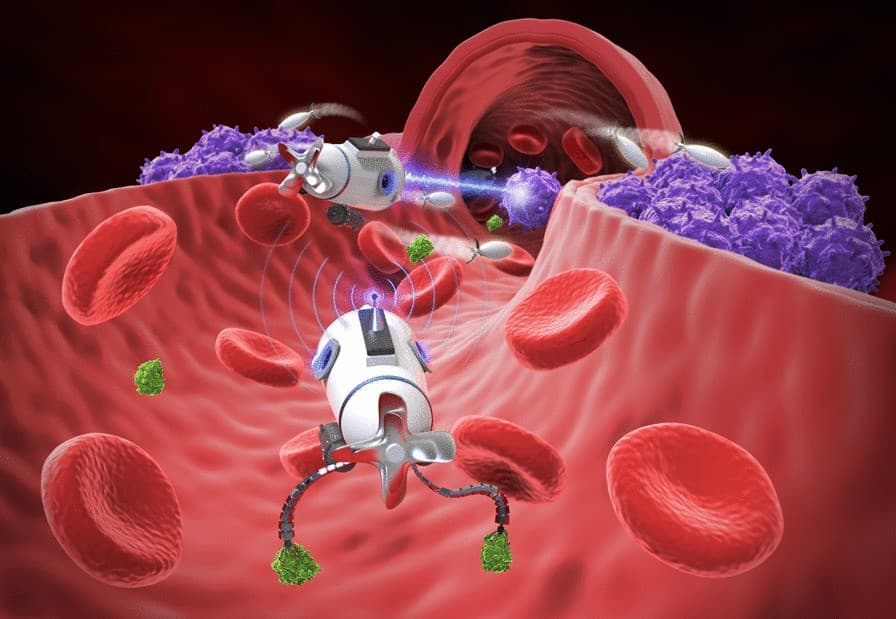
- Innovative Solution: Dr. Ambarish Ghosh from the Indian Institute of Science (IISc) Bangalore has developed magnetic nanorobots that can navigate through body fluids and dense tissues to target cancer cells effectively.
Design and Functionality:
- Nanobot Mechanism: The nanobots mimic bacterial motility with a helix-shaped tail that functions like a corkscrew, powered by a magnetic field. This enables precise navigation through tissues.
- Drug Delivery System: The nanobots can either be coated with medication on their surface or at their tip, using silica for compatibility with the human body and iron for the magnetic component.
Treatment Mechanisms:
- Target Precision: The nanobots can bind to cancer cells preferentially due to specific surface properties, minimizing impact on healthy cells.
- Thermal Therapy: They can generate localized heat (over 42°C) to destroy cancer cells while leaving surrounding healthy tissue unharmed.
- Multi-functionality: Besides delivering drugs, the nanobots can serve as beacons during MRI scans to help oncologists locate tumors.
Effectiveness:
- Cancer Targets: Initial studies show efficacy against ovarian and breast cancer, especially in cases where tumors are deeply embedded.
- Bacterial Infections: They have also shown promise in treating bacterial infections in dental applications (e.g., root canal treatments), outperforming traditional methods.
Clinical and Market Outlook:
- Next Steps: Clinical trials are planned following successful animal experimentation to ensure safety and efficacy before widespread healthcare application.
- Cost Considerations: The materials used are not excessively expensive, as standard technologies and components are leveraged.
- Entrepreneurial Venture: Plans for a startup to commercialize these nanobots are underway, with several US patents already secured and strong interest from international collaborations.
Recognition:
- Awards: Dr. Ghosh received the 2025 New York Academy of Sciences and Tata Sons’ Transformation Prize for his pioneering work in this area.
Key Takeaways:
- Potential Impact: The development of magnetic nanorobots represents a significant advancement in cancer treatment, with the potential to change treatment protocols by enabling non-invasive therapies with fewer side effects.
- Field Development: This research might pave the way for future innovations in nanotechnology applications across various medical fields, enhancing personalized medicine efforts and improving healthcare outcomes.
Key Terms & Concepts
| magnetic nanorobots | delivering drugs to tumors |
| Indian Institute of Science (IISc) Bangalore | research institution |
| 2025 New York Academy of Sciences and Tata Sons’ Transformation Prize | award for innovation |
| silica | material used in nanobots |
| iron | magnetic material in nanobots |
| ovarian and breast cancer | targeted cancer types |
| clinical trials | testing nanobots in humans |
| E.faecalis bacteria | target for nanobot treatment |
| sodium hypochlorite | conventional root canal irrigant |
| US patents | intellectual property protection |