iAspirants
Innovative Solar Farming in Rajasthan
Published on:
Source: The Hindu
Share this post
Article Summary
Summary of Agrivoltaics Initiative in Rajasthan
Project Overview
- Location: Kundanpura, Rajasthan
- Implemented by: Indian Council for Research on International Economic Relations (ICRIER)
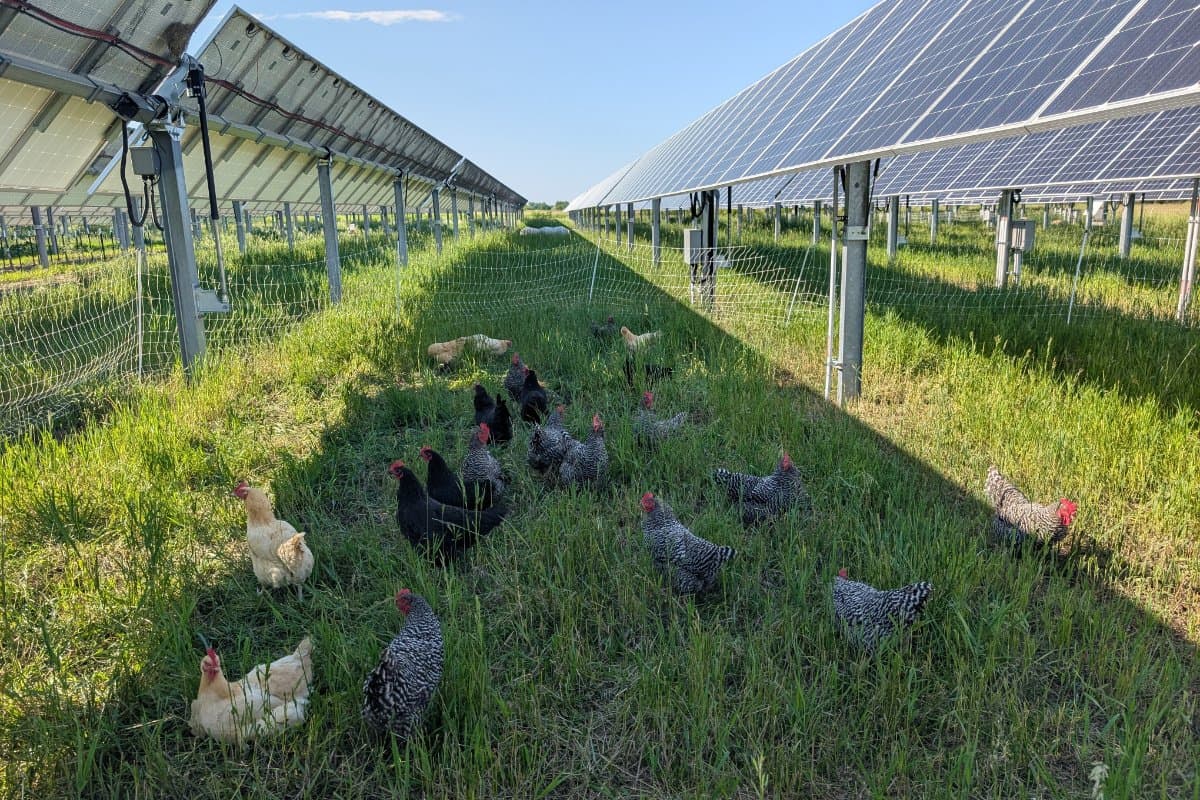
- Model: Agrivoltaics (Agrophotovoltaics - APV) combining agriculture and solar power generation.
- Key Figure: Kojadmal Jat, farmer and project participant.
- Pilot Size: 3 acres (roughly twice the size of a cricket ground).
- Electricity Generation: 600 kW, sufficient for irrigation power for approx. 250 farms.
Economic Impact
- Annual Income: Jat's income increased from ₹40,000 to ₹3 lakh due to the installation of solar panels.
- Cost: Elevated mounting structures cost ₹35 lakh, a barrier for smallholder farmers.
- Expected Returns: Profits are anticipated to rise from ₹3.76 lakh to ₹4.48 lakh per acre.
- Investment Recovery: Without viability gap funding (VGF), recovery time is 12 years; with VGF, it reduces to 6 years.
Government Schemes
- PM-KUSUM: Central government scheme promoting the use of solar energy among farmers, providing incentives.
- Viability Gap Funding: Government support that helps in reducing initial capital costs.
Legislative and Regulatory Framework
- Electricity Act, 2003: Requires distribution companies to procure a fixed share of their electricity from renewable sources.
- Challenges: No specific definitions or standards for agrivoltaic projects as compared to countries like Germany, France, and Japan.
Research and Development
- Study and Findings: A report titled ‘Solar as a Third Crop to Augment Farmers’ Income’ released by ICRIER in April 2025 highlights the economic potential and challenges of the agriPV model.
- Collaboration: The project involved partnerships with local organizations and farmer input in decision-making.
Challenges and Constraints
- High Upfront Costs: Financial barriers include steep loan rates (10.25% interest) and additional costs for equipment (meters, installation).
- Bureaucratic Hurdles: Variability in implementation and support among different States, with Rajasthan having streamlined processes compared to Madhya Pradesh.
- Technological Integration: Need for retrofitting existing solar plants while maintaining energy generation during construction.
Future Directions
- Policy Recommendations: Establishment of a centralized monitoring system under the Ministry of New and Renewable Energy (MNRE) is suggested to streamline agriPV implementation.
- Credit Guarantee: Proposed by NABARD to facilitate financing for smaller agriPV projects.
- Evidence Building: Calls for reliable data on agricultural productivity and solar generation to support scaling across agro-climatic regions.
Environmental Considerations
- Microclimate Benefits: APV helps in reducing heat stress and evaporation, potentially leading to better yields in dry regions.
- Global Hunger Context: India ranks 102nd out of 123 countries on the 2025 Global Hunger Index.
This summary encapsulates the agrivoltaics project in Rajasthan, highlighting its economic viability, challenges in financial and regulatory frameworks, and the importance of collaboration between farmers and research institutions.
Key Terms & Concepts
| Kojadmal Jat | Farmer adopting agrophotovoltaics |
| ICRIER | Research on agrophotovoltaics |
| maize | Crop grown under solar panels |
| 600 kW | Energy generated by solar farm |
| 2023 | Year of APV implementation by Jat |
| ₹3 lakh to ₹4 lakh | Annual returns per acre from APV |
| ₹35 lakh | Cost of elevated mounting structures |
| ₹3.14 per unit | Electricity sale price for 25 years |
| PM-KUSUM | Government scheme for solar projects |
| ₹35.3 lakh | Cost of retrofitting solar plant |
| 10.25% | Interest rate for bank loan |
| Global Hunger Index | India ranks 102nd out of 123 |
| NABARD |