iAspirants
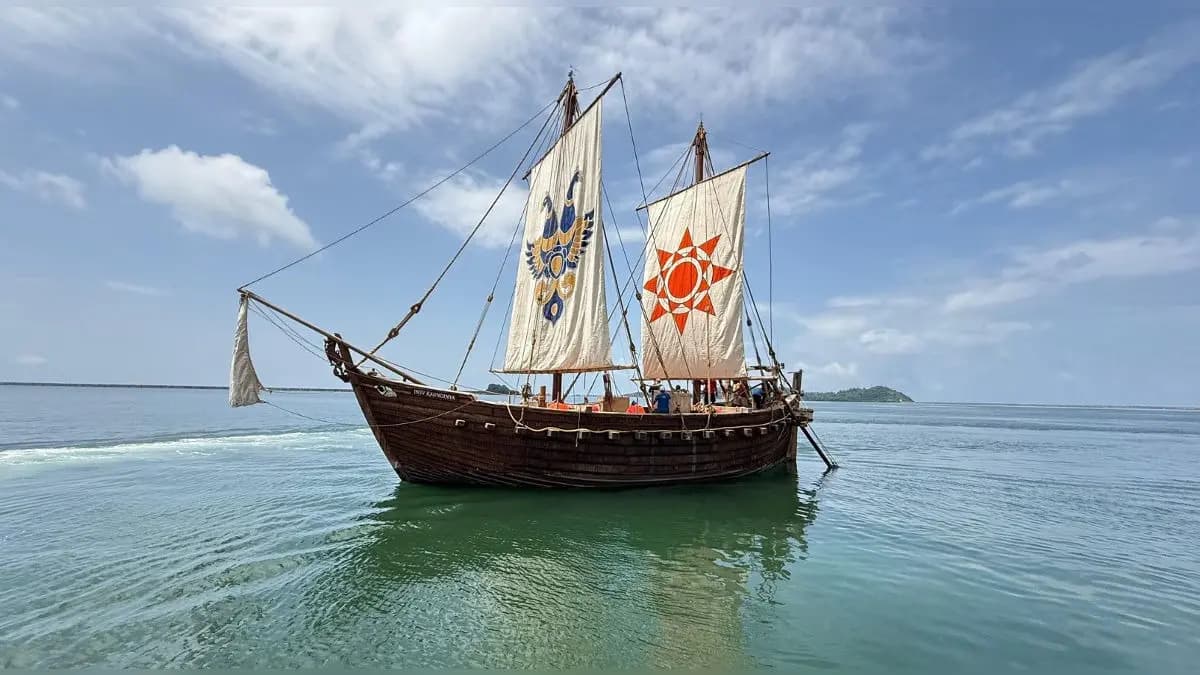
INSV Kaundinya's Historic Voyage
Published on:
Share this post
Article Summary
Key Points on INSV Kaundinya and India-Oman Maritime Relations
1. Vessel Commissioning and Historical Context:
- Vessel Name: INSV Kaundinya, commissioned after an 18-day maiden voyage from Porbandar to Muscat.
- Significance: Revives ancient Indian shipbuilding traditions using indigenous techniques, specifically stitching planks without nails.
- Cultural Reference: Named after the Indian sailor Kaundinya, associated with the founding of ancient Cambodia.
2. Maritime and Diplomatic Heritage:
- Celebrates over 5,000 years of maritime ties between India and Oman.
- Diplomatic Relations: The two countries commemorated 70 years of diplomatic relations.
- MoU: Signed a Memorandum of Understanding on Maritime Heritage and Museums, recognizing the civilizational nature of their relationship.
3. Historical Trade Dynamics:
- Oman, known as Magan in ancient times, was a key maritime trade hub specializing in shipbuilding and the trade of commodities like copper and frankincense.
- Trade networks between India and Oman date back to the Indus Valley civilization, contributing significantly to both economies; India was a major cotton supplier while Oman provided copper.
4. Cultural and People-to-People Connections:
- Omani merchants historically settled in Indian ports, facilitating cultural exchange.
- Notable historical figures, such as Ahmad bin Majid, were instrumental in navigation and furthered maritime scholarship.
- The presence of large Arab Muslim communities along the Malabar coast during the early Islamic period showcases deep cultural ties.
5. Economic Contributions:
- Ramdas Thakersay, a Gujarati merchant, became instrumental in establishing strong trade links, leading to significant business ventures in Oman.
- Khimji Ramdas Group: A prominent Omani business conglomerate with roots traced back to Indian merchants.
6. Modern Strategic Context:
- The Indian Ocean is currently a critical geopolitical zone with heightened competition from China and other regional powers.
- Oman’s strategic location near the Strait of Hormuz is vital for India’s trade and energy routes.
7. Recent Developments in Bilateral Relations:
- Agreements: Includes a Joint Vision Document on Maritime Cooperation and a Comprehensive Economic Partnership Agreement.
- India’s access to Duqm port enhances operational capabilities in the region.
8. Cultural Heritage Coordination:
- The historical maritime culture serves as a foundation for current collaborations, interweaving heritage with strategic partnerships.
Conclusion
The voyage of INSV Kaundinya symbolizes a profound connection between India's rich maritime history and its contemporary strategic interests with Oman, emphasizing the importance of cultural heritage, economic interdependence, and regional cooperation in the Indian Ocean.
Key Terms & Concepts
| INSV Kaundinya | Sailing vessel commissioned by India |
| Porbandar | Departure port of Kaundinya |
| Muscat | Arrival port of Kaundinya |
| January 14 | Date of maiden voyage completion |
| Kattumaran | Type of ship termed 'catamaran' |
| Oman | Country with historic ties to India |
| Five millennia | Duration of maritime relations |
| MoU on Maritime Heritage | Agreement between India and Oman |
| Third millennium BCE | Period of Oman's trade significance |
| Trade in copper, frankincense, timber, and pearls | Main goods traded by Oman |
| Roman world | Distant trading partner for India |
| Ahmad bin Majid | Fifteenth-century navigator |