iAspirants
Interfaith Dialogue in Jammu and Kashmir
Published on:
Share this post
Article Summary
Key Highlights: Jammu and Kashmir Interfaith Dialogue and Amarnath Yatra
Interfaith Dialogue Significance:
- Lieutenant Governor (L-G) Manoj Sinha emphasized the historical influence of Islamic Sufis and scholars, introduced in India during the 12th and 13th centuries, who adopted principles of coexistence inspired by Indian scriptures, including Vedas, Upanishads, Buddhism, and Jainism.
- He highlighted that these religious leaders found inspiration from India's culture, which is characterized by love, spirituality, compassion, and equality.
Cultural and Spiritual Unity:
- Mr. Sinha quoted the ancient prayer, “Sarve Bhavantu Sukhinaḥ, Sarve Santu Niramayaḥ,” advocating for universal welfare, reflecting India's identity of mutual respect across diverse religions.
- He stated that Hinduism (Sanatana Dharma) does not impose itself and promotes coexistence, fostering an environment where multiple faiths—such as Christianity, Islam, Judaism, and Zoroastrianism—thrive freely.
Contemporary Message:
- In light of global conflicts and intolerance, India’s philosophical principles were presented as a guiding light for achieving unity and peace among diverse cultures and religions.
- The L-G called on the younger generation to uphold this vision, underscoring the importance of mutual respect for global harmony.
Amarnath Yatra Preparations:
- The L-G engaged with civil society groups, business leaders, and religious heads to discuss the forthcoming Amarnath Yatra, scheduled from July 3 to August 28, 2026.
- He invited the community to support the pilgrimage, promoting it as a symbol of social harmony and a chance for collective faith and devotion among Hindus, Muslims, Sikhs, Christians, and others.
Cultural and Religious Importance of Yatra:
- The Amarnath Yatra is described as a significant event shaping the faith, culture, and identity of the region and serves as a time for unity and human service among various communities.
- Mr. Sinha expressed that the Yatra brings together prayer, hope, and aspirations from pilgrims worldwide, reinforcing their eternal bond with Lord Shiva, symbolizing power, knowledge, and compassion.
Implications:
- The statements of L-G Sinha underscore the ongoing efforts to foster interfaith dialogue and promote social harmony in a culturally diverse society.
- The Amarnath Yatra acts as an avenue for communal unity, combining spiritual aspirations with social cooperation.
Conclusion: The remarks made during the interfaith dialogue and the appeal for unity during the Yatra preparation reflect a broader objective of peace, respect for diversity, and active participation from all societal segments in building an inclusive environment in Jammu and Kashmir.
Key Terms & Concepts
| Islam Sufis | Introduced ideals of co-existence |
| Vedas | Source of spiritual knowledge |
| Upanishads | Philosophical foundation |
| Buddhism | Influenced Indian spiritual thought |
| Jainism | Part of India's cultural heritage |
| Amarnath Yatra | Pilgrimage symbolizing unity |
| July 3 to August 28 | Dates of the Amarnath Yatra |
| Sarve Bhavantu Sukhinaḥ | Universal peace prayer |
| Sanatana Dharma | Hinduism's principle of coexistence |
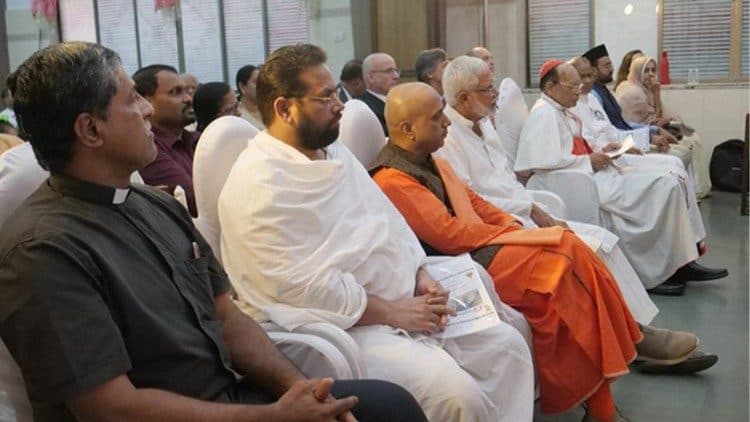
| National Council for Promotion of Urdu Language | Organizer of interfaith dialogue |
| Inter-Faith Harmony Foundation of India | Co-organizer of the event |