iAspirants
Iran's Revolution and Current Dissent
Published on:
Share this post
Article Summary
Summary of Key Facts and Developments in Iran's Socio-Political Landscape
Historical Context:
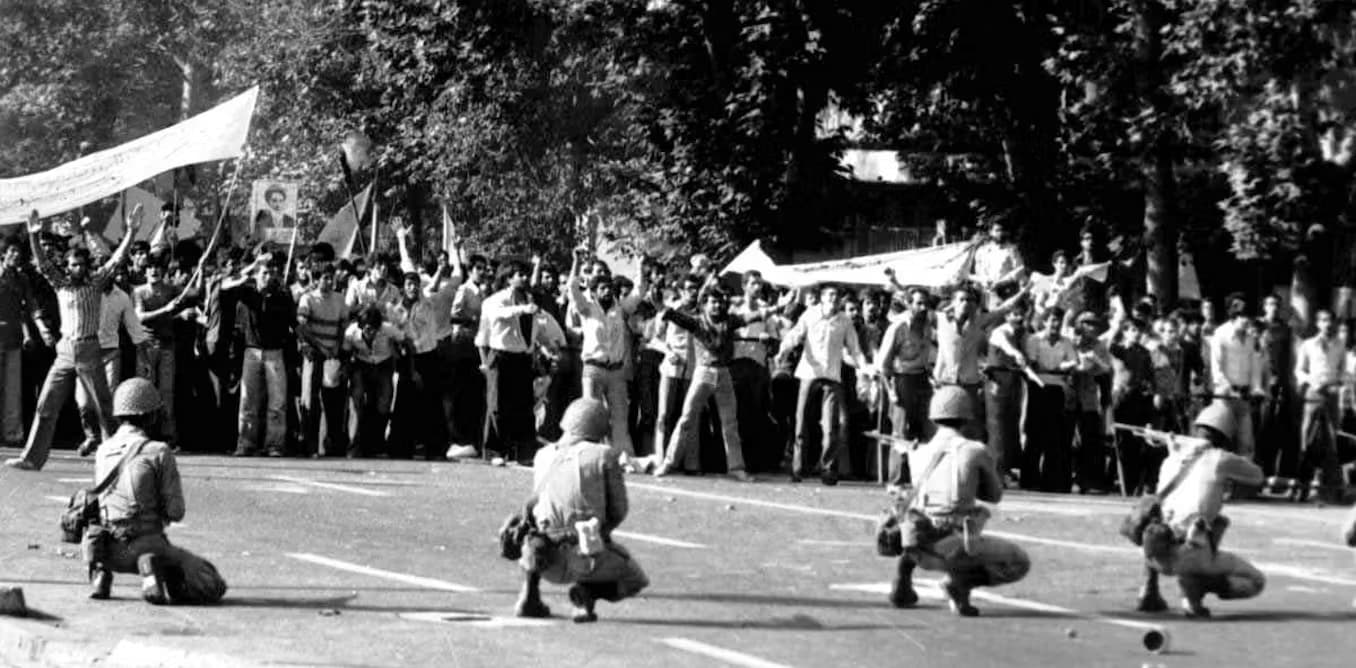
- The Iranian Revolution of 1979 aimed for three ideals: independence, freedom, and social justice.
- The regime's promises included ending foreign domination and ensuring political and civil freedoms.
Current Situation:
- Many Iranians perceive a failure of the revolution with political independence shifting to dependency on countries like China and Russia.
- Political freedoms are heavily restricted; civil liberties face significant surveillance and repression.
- Systemic corruption has exacerbated inequality, leading to economic challenges for the majority.
Economic Indicators:
- Chronic inflation and currency collapse impact daily life.
- Rising unemployment and economic insecurity contribute to public discontent.
Public Dissent:
- Protests have emerged in waves over recent decades, often suppressed violently.
- The latest protests began at Tehran’s Grand Bazaar, a historical hub supporting the regime but now expressing dissatisfaction.
- Transition from sector-specific protests to widespread national movements with political demands indicates deep-rooted unrest.
Government Response:
- Repression tactics include internet shutdowns, communication restrictions, and electricity cuts to manage dissent and suppress information.
- Reports indicate high numbers of protester casualties, though these figures are unverified due to communication blackouts.
International Dynamics:
- Iran's actions (nuclear program, ballistic missile development, support for proxy groups) have led to regional instability.
- The international community's response is critical, ranging from symbolic actions to targeted measures against Iran's military capabilities.
Leadership and Opposition:
- The Iranian regime's repression capacity is eroding despite its intent to suppress dissent.
- Opposition remains fragmented; divisions between republicans and monarchists thwart unified leadership.
- The absence of prominent leaders, such as Mir-Hossein Mousavi (under house arrest), complicates the political landscape.
Future Projections:
- The potential for change hinges on foreign power responses, unity among opposition factions, and societal tolerance of government repression.
- The ageing leadership of Iran presents a pivotal point; changes at the top could catalyze significant shifts within the political climate.
Constitutional and Human Rights Considerations:
- The ongoing repression raises fundamental questions regarding civil rights as outlined in various international human rights frameworks and possibly Iran's own constitutional stipulations regarding liberty and governance.
Global Reactions:
- International leaders, including the U.S. President, have expressed support for protestors and condemned government violence.
- Effective international support for reform in Iran requires alignment with the social forces from within the country.
Overall, Iran stands at a critical juncture, where increasing public dissent against systemic oppression is met with perpetual government repression and complex international relations. The ongoing struggles and responses will define Iran's trajectory in the coming years.
Key Terms & Concepts
| 1979 Iranian Revolution | Historical event of significance |
| Iran | Country facing internal unrest |
| United States | Previously dominated Iran's politics |
| China | Current ally of Iran |
| Russia | Supports Iran despite constraints |
| Tehran’s Grand Bazaar | Symbolic protest location |
| Chronic inflation | Economic condition in Iran |
| National currency collapse | Indicator of economic distress |
| U.S. President Donald Trump | Expressed support for protesters |
| Nuclear programme | Source of regional threat |
| Ballistic missile development | Military enhancement by Iran |
| Proxy groups in the Middle East | Iran's regional influence strategy |