iAspirants
Japan-China Tensions and Historical Context
Published on:
Share this post
Article Summary
Chinese-Japanese Diplomatic Tensions and Historical Context
Current Diplomatic Issues:
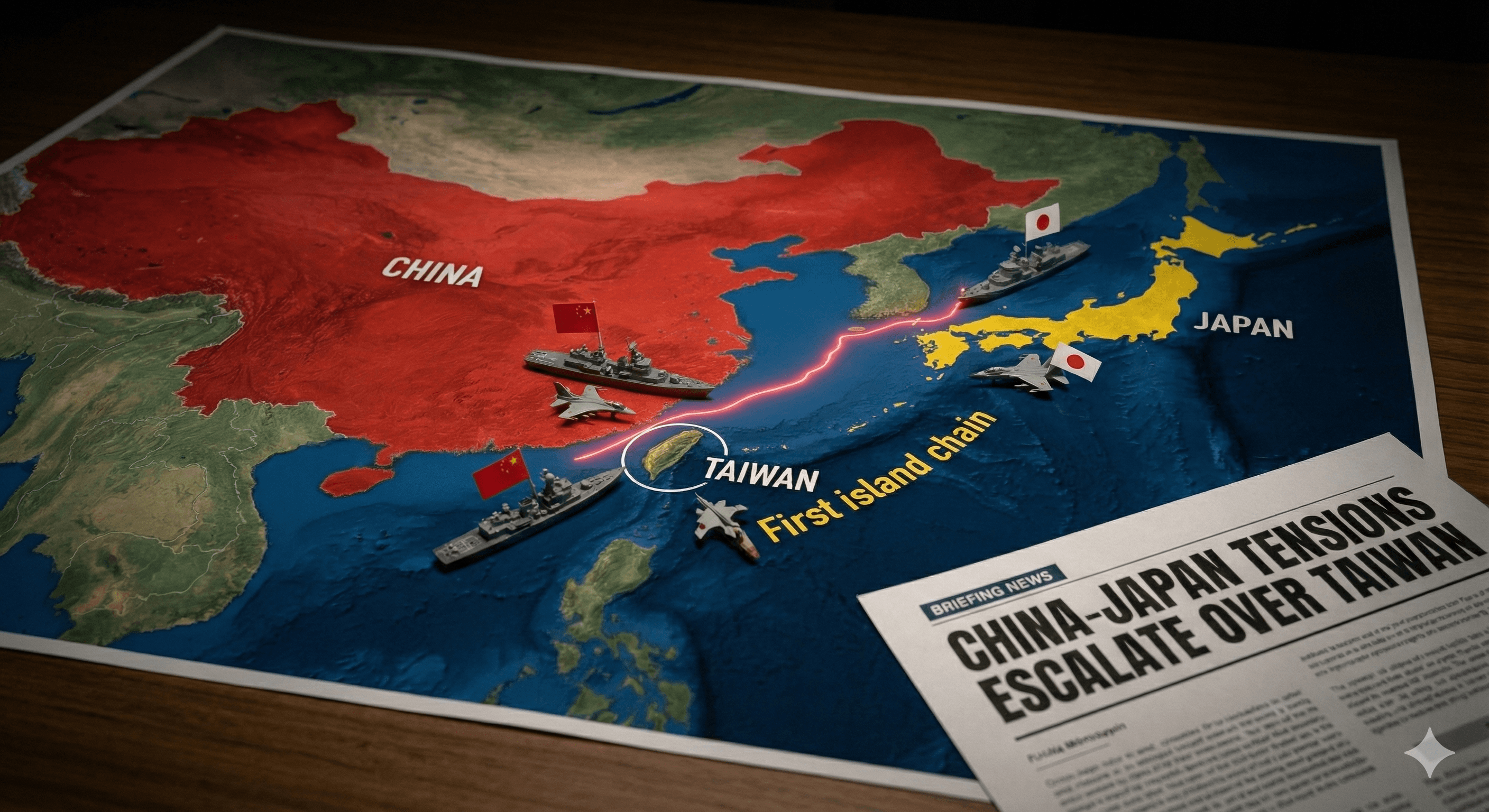
- Diplomatic tensions have escalated between China and Japan, particularly following remarks from Japanese Prime Minister Sanae Takaichi regarding military responses to a potential Chinese attack on Taiwan.
- Chinese officials, including Foreign Ministry spokesperson Guo Jiakun, have criticized Japan's leadership and highlighted Japan's militaristic past related to World War II.
Historical Background:
- The Nanjing Massacre, occurring on December 13, 1937, is a significant historical reference, where Japan's military actions led to the deaths of approximately 300,000 Chinese civilians and disarmed soldiers, including widespread sexual violence.
- Eyewitness accounts, including those from foreign nationals (missionaries, journalists), played a crucial role in documenting the atrocities.
International Military Tribunal (IMT) and War Crime Accountability:
- Post-World War II, Japan was held accountable for war crimes, with the IMT for the Far East presiding over cases against Japanese military leaders, including General Matsui Iwane, who was executed for his involvement in the Nanjing Massacre.
China-Japan Relations:
- The historical context of atrocities committed during the war, and subsequent political narratives, has maintained sensitivity between the two nations.
- The Chinese government's portrayal of these events ties into the "Century of Humiliation," a framework referring to periods of foreign domination and internal failures stretching from the 19th century to 1949.
Recent Developments and National Pride:
- The Chinese Communist Party has increasingly emphasized historical grievances to foster national unity and anti-nationalist sentiments since economic liberalization in the 1980s.
- Under President Xi Jinping, official commemorations of the Nanjing Massacre were instituted, directly linking historical narratives to current geopolitical posture and nationalistic sentiments.
Educational and Political Ramifications:
- Japan’s attempts to adjust historical narratives in textbooks have led to protests from China and reinforced long-standing grievances related to wartime atrocities.
- The interpretation of Nanjing and World War II atrocities continue to shape historical memory, nationalism, and bilateral relations in East Asia.
International Dimensions:
- The tensions also reflect broader regional dynamics involving territorial disputes, military posturing around Taiwan, and increasing geopolitical competition.
- Japan's military stance, articulated in response to China, indicates a shift towards a more assertive defense policy, potentially altering the balance of power in East Asia.
Conclusion: The historical events surrounding the Nanjing Massacre remain pivotal in shaping contemporary Sino-Japanese relations, influencing both nations' political narratives and foreign policies. Understanding this historical context is crucial in analyzing current events and potential future diplomatic strategies in East Asia.
Key Terms & Concepts
| Nanjing Massacre | Historical atrocity during WWII |
| December 13, 1937 | Date of Nanjing massacre |
| 300,000 | Estimated death toll in massacre |
| World War 2 | Global conflict involving Japan |
| International Military Tribunal for the Far East | War crimes tribunal post-WW2 |
| Xi Jinping | Current Chinese President referencing history |
| Cultural Revolution | Chinese political campaign affecting history narrative |
| Marco Polo Bridge Incident | Trigger for full-scale war |
| Harold Timperley | Journalist documenting Nanjing events |
| Rape of Nanking | Alternate name for Nanjing Massacre |