iAspirants
Current AffairsPrelims PYQsUPSC CSE SyllabusUPSC CSE StrategyBlogsPricing
Login
iAspirants

Your AI-powered companion for UPSC preparation.

Quick Links

  • Home
  • About Us
  • Current Affairs
  • Prelims PYQs
  • UPSC CSE Syllabus
  • UPSC CSE Strategy
  • Blogs

Company

  • Pricing
  • FAQs
  • Contact Us
  • Login

Legal

  • Privacy Policy
  • Terms & Conditions
  • Return Policy

© 2025 iAspirants, Inc. All rights reserved.

  1. Blogs
  2. Polity and Governance

Jharkhand Exam Irregularity Investigation Update

Published on: 09-Aug-2026

Share this post

Jharkhand Exam Irregularity Investigation Update

Article Summary

Summary of Jharkhand Government Recruitment Exam Investigation

Investigation Overview:

  • The Jharkhand State Crime Investigation Department (CID) is investigating alleged irregularities in competitive exams for government jobs, with a focus on the Jharkhand Public Service Commission (JPSC).
  • Notices have been issued to three serving JPSC members: Ajita Bhattacharya, Anima Hansda, and Jamal Ahmed, for questioning regarding their compliance with procedures before releasing examination results.

Key Details:

  • The agency summoned the JPSC members to appear on specific dates: August 10, 12, and 14.
  • The investigation centers around the selection of TSR Data Processing Private Limited (TDPL), previously blacklisted by the Jharkhand Staff Selection Commission (JSSC) in May 2025, for alleged irregularities.
  • Despite their blacklisting, TDPL conducted examinations for JPSC.

Current Status:

  • Former JPSC Chairman L Khyiangte has been questioned multiple times; 19 arrests have been made, including TDPL executives and JPSC staff.
  • Arrested individuals include:
    • TDPL Director: Ramveer Singh
    • Marketing Manager: Abhay Tiwari
    • Accountant: Rakshak Singh
    • Technical Programmers: Usman and Ebad
    • JPSC staff: Deputy Controller of Examinations Shweta Kumari Gupta and several others.

Procedural and Administrative Matters:

  • Investigators revealed that the signatures of the three JPSC members were not obtained before the Preliminary Test (PT) exam results were released.
  • Khyiangte noted that member signatures are not required for PT results as per JPSC rules, prompting inquiries into the procedural adherence.

Protests and Demands:

  • Protesters are demanding the cancellation of the Preliminary Test for the 14th JPSC Civil Services Examination and a reassessment of exams managed by organizations like TDPL.

Further Investigative Actions:

  • The CID is delving into:
    • The monitoring and administrative functions of JPSC.
    • Security of data handling during the examinations concerning TDPL's role.
  • Ongoing interrogations aim to uncover connections between arrested individuals and fraudulent activities, including tampering with OMR sheets and financial exchanges.

Anticipated Developments:

  • The investigation may lead to further summons of involved parties, including the former JPSC chairman, as the CID aligns statements from current members with existing evidence.

This situation highlights the importance of compliance and transparency in government recruitment processes and raises serious questions about the integrity of examination agencies.

Key Terms & Concepts

Jharkhand State Crime Investigation DepartmentInvestigating exam irregularities
Jharkhand Public Service CommissionConducting competitive exams
TSR Data Processing Private LimitedConducted blacklisted examinations
May 2025Date of blacklisting TDPL
14th JPSC Civil Services ExaminationSubject of protestor demands
19 arrestsTotal arrests in investigation
JPSC rulesRegulations on exam results
Financial transactionsFocus of investigation
OMR sheetsTampering evidence in exams
August 10, 12, 14Summons issued to JPSC members
Ramveer SinghTDPL Director arrested
Shweta Kumari GuptaDeputy Controller arrested

Mind Map for UPSC Civil Services Revision

Turn UPSC Civil Services Current Affairs Into Exam-Ready Notes

Reading Polity and Governance current affairs is half the work. Revise them with ready-made notes and test what actually stuck.

  • Daily UPSC Civil Services current affairs analysis
  • Revision notes, mind maps & MCQs
  • Prelims mock tests with instant results

Related UPSC Civil Services Current Affairs Articles

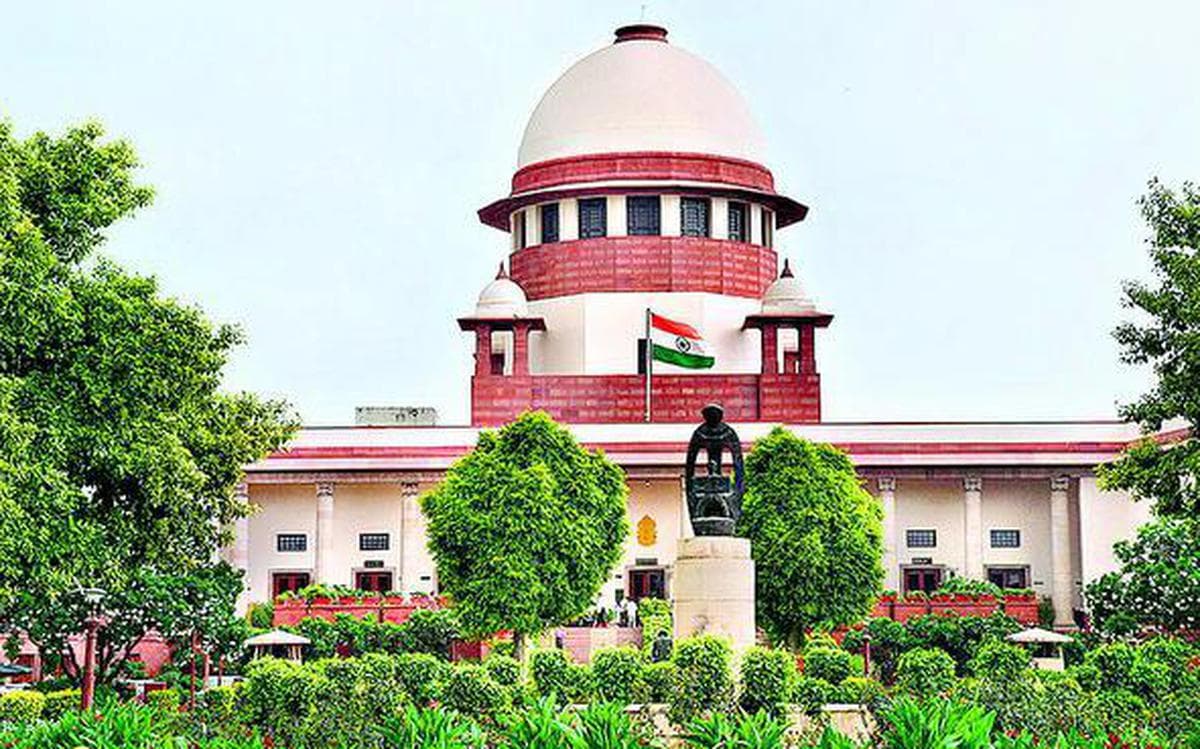
Supreme Court Ruling on Arrests
Polity and Governance23-Sep-2026

Supreme Court Ruling on Arrests

Summary of Supreme Court Ruling on Arrest Safeguards

Key Constitutional Articles:

  • Article 21: Right to life and personal liberty.
  • Article 22(1): Right to be informed of the grounds of arrest.
  • Article 22(2): Requirement to be produced before a magistrate within 24 hours.
Dharmendra Kumar
Computer operator interrogated

Supreme Court Ruling Highlights (September 21, 2026):

  • The Supreme Court clarified that a person released for not being informed of the grounds of arrest is not 'on bail' but from 'illegal and unconstitutional detention.'
  • The ruling establishes that any violation of Article 22(1) or Article 22(2) renders the arrest unconstitutional, mandating immediate release.

Judicial Procedures Established:

  • Arresting authorities must obtain judicial approval before re-arresting an accused whose initial arrest violated Article 22 rights.
  • Investigating agencies must furnish grounds for custody to the magistrate, along with an endorsement from the officer’s superior, ensuring accountability and oversight.

Case Background:

  • The case involved an individual arrested under the POCSO Act and associated criminal charges. His arrest was ruled unconstitutional due to a failure to provide written grounds of arrest within the stipulated 24-hour period.
  • Previous rulings included:
    • Pankaj Bansal v. Union of India (2023): Established the necessity for written grounds of arrest.
    • Mihir Rajesh Shah v. State of Maharashtra (2025): Affirmed that written communication of grounds is mandatory for all statutes.

Judicial Commentary:

  • The ruling reinforces that police discretion must not override constitutional safeguards.
  • It highlights the significance of providing written grounds, especially in serious offenses where bail is challenging.
  • It was emphasized that constitutional rights should not be diluted based on the nature of the offense.

Importance of the Ruling:

  • Asserts the integrity of constitutional provisions against illegal arrest and detention.
  • Addresses the significance of procedural fairness in protecting personal liberties.
  • Aims for increased accountability in police powers, improving the judicial oversight mechanism concerning arrests.

Implications:

  • This judgment serves as a crucial precedent, insisting that Article 22 protections are universal and cannot be contextually modified by legislative action unless specifically enacted by Parliament.
  • Advocates for fair compensation practices for victims of illegal arrests, promoting judicial consistency in enforcing constitutional rights.

Overall Significance: The Supreme Court’s decision solidifies procedural safeguards against wrongful arrests, ensuring that individual liberties are prioritized within the legal system. This ruling outlines a framework for accountability and judicial supervision to prevent abuse of power by law enforcement agencies.

Rethinking Democracy for the Future
Polity and Governance22-Sep-2026

Rethinking Democracy for the Future

Summary of Key Points

Context and Reimagining Democracy

  • The notion of a "new constitution" for the 21st century emphasizes a rethinking of democratic principles and power structures globally.
  • The current state of democracy exhibits challenges such as the crisis in the US and extreme right-wing movements in Europe.

Constitutional References

  • The concept of Swaraj, as interpreted by Gandhi, reflects a dual focus: rule of the self (individual autonomy) and rule over the self (ethical behavior towards others), suggesting a community-focused democratic practice.
  • Ambedkar’s emphasis on fraternity underlines the importance of social cohesion for functional democracy.

Historical Thinkers and Their Contributions

  • 20th-century Indian thinkers (e.g., Ambedkar, M. N. Roy, Jayaprakash Narayan, Rammanohar Lohia) critiqued existing post-Independence democratic frameworks and proposed alternate models.
  • Their ideas challenge conventional wisdom and encourage reconstitution of democratic frameworks, while not advocating for their original forms.

Design Defects in Modern Democracies

  1. Scale of Democracy: Large nation-states limit the effectiveness of self-rule and representation.
  2. Power Mismatch: Issues arise at levels lower than where decision-making occurs, suggesting a need for local governance aligned with the principle of subsidiarity.
  3. Accountability Cycle: Irregular election cycles hinder both long-term planning and immediate accountability, requiring reevaluation of electoral timelines.
  4. Majoritarianism: The premise of simple majority for governance creates a risk of concentrated power, suggesting a need for a more intricate decision-making framework.

Systemic Defects Identified

  1. Caste and Class Hierarchy: Existing social structures undermine the principle of equal citizen participation.
  2. Media Control: Corporate influence on media compromises genuine public discourse and democratic engagement.
  3. Political Oligarchies: Established political parties act as barriers to diverse political representation, reinforcing elite power structures.

Recommendations for a New Constitution

  • Any future constitution must embed mechanisms to prevent the concentration of economic power, control over mass media, and monopolization of political decision-making.
  • Institutional checks that ensure equal political representation and access are necessary for a reformed democratic framework.

Implications for India

  • India can serve not only as a case study for understanding democratic challenges but also as a source of innovative ideas for democratic regeneration.
  • The practical application of these principles could inform governance at local, national, and international levels.

Conclusion

The 21st-century constitution must address contemporary challenges through innovative frameworks that bridge historical wisdom with modern democratic needs, promoting genuine participation and accountability in governance.

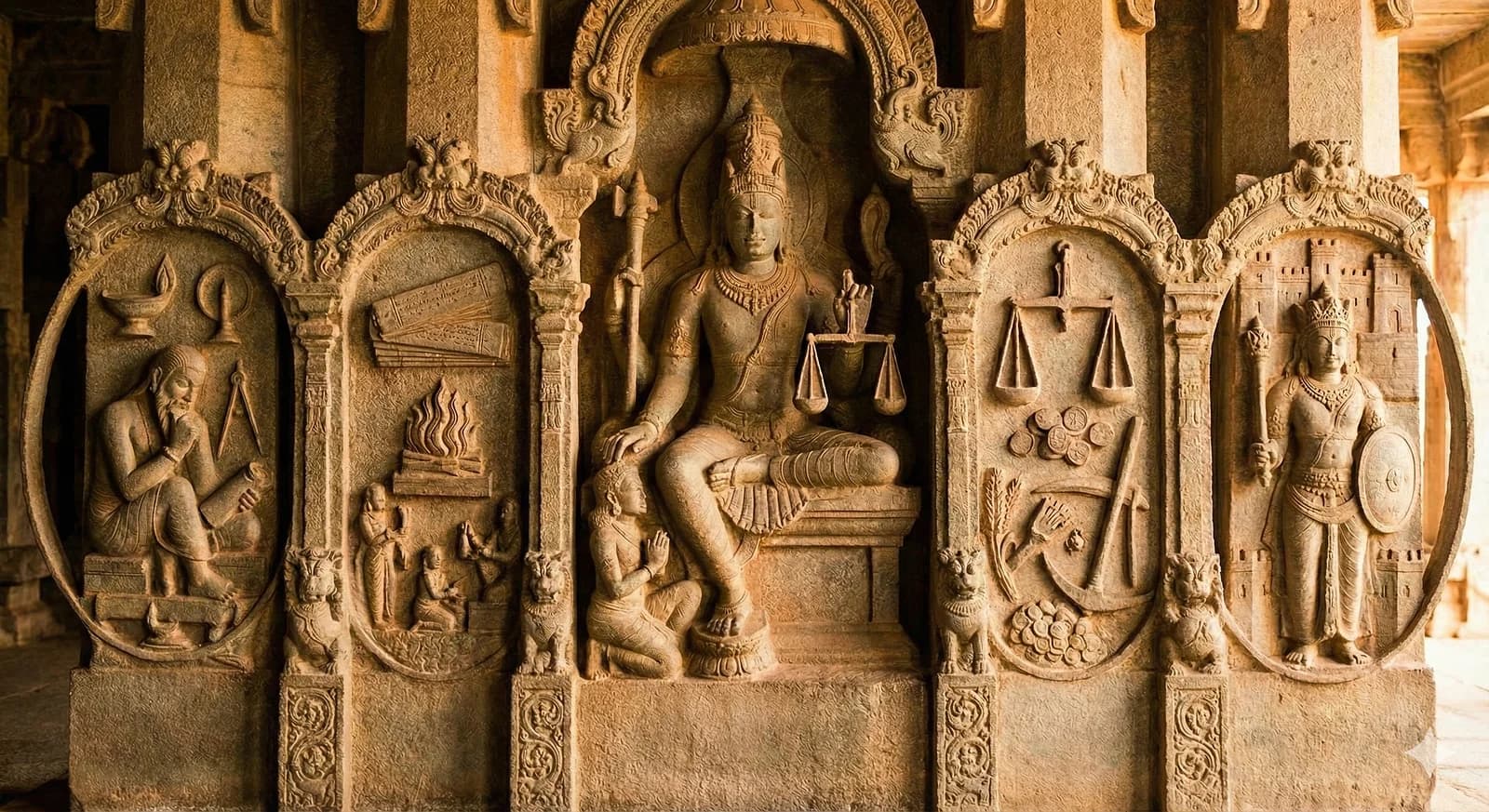
Dharma and Leadership in Governance
Polity and Governance21-Sep-2026

Dharma and Leadership in Governance

  • Key Characters: Dhritarashtra, Vidura, Duryodhana, Pandavas, Yudhishthira, Sakuni.
  • Dharma Sukshma: A complex understanding of righteous conduct that goes beyond mere knowledge of rules, emphasizing the need for situational awareness in decision-making.
  • Dhritarashtra's Concerns:
    • Unease over the consequences of the Pandavas' exile and the potential fallout of his family's actions in the assembly.
    • Acknowledges that his family cannot avoid repercussions for their actions against the Pandavas and the potential public backlash.
  • Governance and Ethics:
    • Vidura emphasizes that true governance is rooted in dharma (righteousness) and that seeking wealth and pleasures must align with ethical principles.
    • Leaders should not act out of prejudice or self-interest, as this can lead to the ruin of the state and its people.
  • Vidura's Counsel:
    • Urges Dhritarashtra to abandon his bias against the Pandavas and recognize that Yudhishthira embodies the qualities of a just king who is not driven by ambition or power.
    • Warns that continued injustice towards the Pandavas would culminate in the destruction of Dhritarashtra's family.
  • Leadership Qualities: Highlighted through comparison with Rama, who exemplifies selflessness and detachment from power, reinforcing the importance of integrity and ethical governance in leadership.
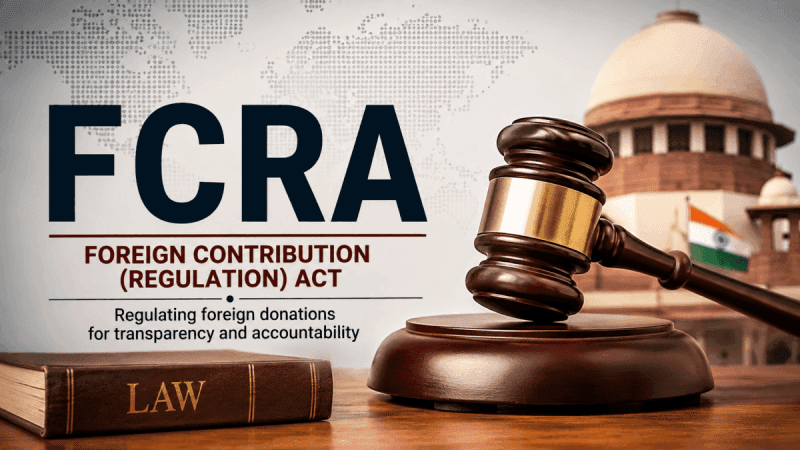
FCRA Amendment Bill Impacts NGOs
Polity and Governance21-Sep-2026

FCRA Amendment Bill Impacts NGOs

Foreign Contribution Regulation Act (FCRA) Amendment Bill, 2026 - Key Points

  1. Background of FCRA:

    • Initially enacted in 1976, the FCRA aims to regulate foreign contributions to NGOs in India due to concerns over foreign interference in domestic matters.
    • The proposed amendment Bill, 2026, seeks to introduce more stringent regulations amid fears of potential destabilization through foreign funding.
  2. Key Provisions of the Amendment:

    • If an FCRA certificate is cancelled or lapses, foreign contributions and related assets will be transferred to a government-appointed "designated authority".
    • Organizations can recover assets if registration is restored within a designated period; otherwise, assets may be sold or transferred to government departments with proceeds going to the Consolidated Fund of India.
    • The Bill allows for appeals to a District Judge in case of disputes.
  3. Current Statistics:

    • As of , FCRA registrations of have been cancelled since 2015, leaving NGOs eligible for foreign contributions.
September 2026
22,496 NGOs
14,466
  • Foreign contributions in 2006-07 amounted to ₹12,289.6 crore from private international donors; current figures are reportedly higher.
  • Concerns from NGO Sector:

    • NGOs, especially from Christian organizations, express fears that the legislation may not be religion-neutral and could harm beneficiaries dependent on their services, such as schools and hospitals.
    • Acknowledgment that foreign aid is perceived as crucial, flexible funding, providing unique resources compared to government grants.
  • Domestic Philanthropy Trends:

    • Domestic funding has seen an increase, with 3,332 billionaires globally and 229 in India as of 2026.
    • Projected private philanthropy to reach ₹1.43 lakh crore ($16 billion) by FY 2025.
    • Corporate Social Responsibility (CSR) expenditure reached ₹22,563 crore in FY 2025, a 17.5% increase from prior years.
  • Challenges:

    • Demand for funding exceeds supply, with projected needs reaching ₹18 lakh crore ($210 billion) by 2030.
  • Government's Stance:

    • The government has argued for the necessity of stringent regulations to preempt foreign destabilization and uphold national integrity.
  • Judicial Oversight:

    • Appeals regarding FCRA certificate cancellations can be reviewed by the judiciary, indicating judicial oversight in the regulation of foreign contributions.
  • Conclusion:

    • The balance between maintaining a vibrant civil society and regulating foreign influence remains a contentious issue. The effectiveness of the proposed amendments and their impacts on NGOs will be crucial for future civil society operations.
    • The emphasis on enhancing indigenous philanthropy represents a significant shift, suggesting a potential reliance on local funding to support civil institutions amid stricter foreign funding norms.
  • Implications for Civil Society:

    • The FCRA Amendment represents a critical juncture in the relationship between the Indian government and civil society organizations (CSOs).
    • Ongoing dialogue and responsive measures by Indian philanthropists and the government are required to sustain NGOs delivering essential services while navigating the implications of foreign funding restrictions.