iAspirants
Kaziranga Elevated Corridor Project Overview
Published on:
Share this post
Article Summary
Exam-Focused Notes on Kaziranga Elevated Corridor Project
Project Overview
- Name: Kaziranga Elevated Corridor
- Length: 34.5 kilometers
- Location: Kaziranga National Park, Assam
- Cost: ₹6,950 crore
- Purpose: Facilitate safer passage for wildlife; reduce animal-vehicle collisions on NH-715 (earlier NH-37).
Kaziranga National Park
- Significance: Home to the world's largest population of one-horned rhinoceros; hosts 37 mammal species and nearly 500 bird species.
- Geography: Situated on the Brahmaputra floodplains, spanning Nagaon and Golaghat districts.
National Highway 715
- Connection: Links Tezpur to Eastern Assam towns and is critical for connectivity between Guwahati and Kaziranga.
- Current Situation: Heavy traffic (average 13,800 vehicles daily), particularly problematic during seasonal floods leading to roadkill.
Economic & Infrastructure Development
- Cabinet Approval: The Cabinet Committee on Economic Affairs approved widening of a 86.675-km stretch of NH-715 to four lanes.
- Project Components:
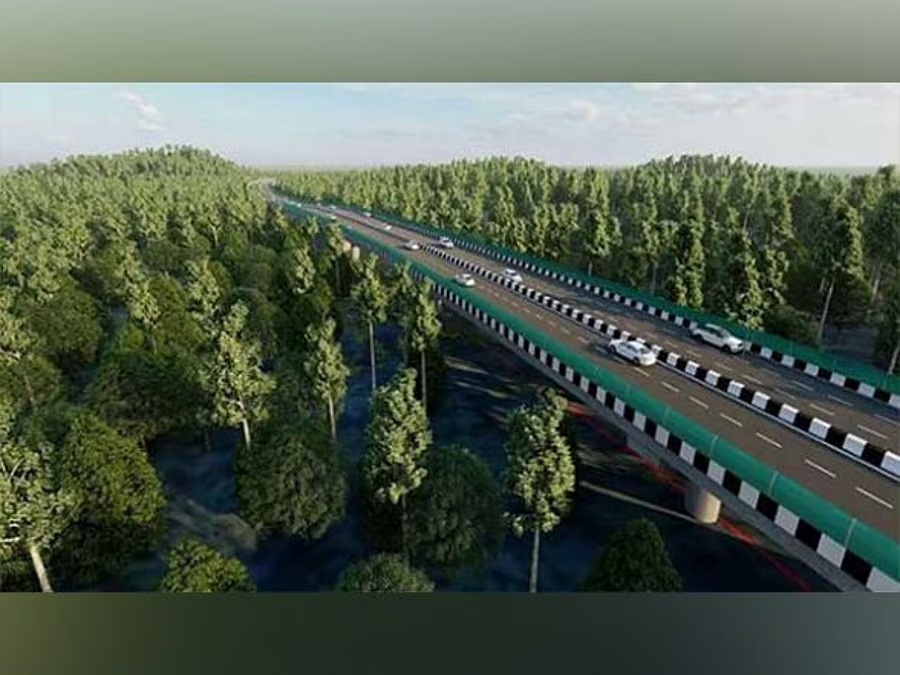
- Construction of 34.5-km elevated corridor.
- Upgrade of 30.22 km of existing roads.
- Creation of 21 km of new bypasses around Jakhalabandha and Bokakhat towns.
- Goals: Decongest traffic, improve safety, enhance connectivity among Guwahati, Kaziranga, and Numaligarh.
Environmental Impact
- Wildlife Threat: Increased traffic poses major threats to the park's wildlife, with significant mortality due to road accidents.
- Research Findings:
- Study from Gauhati University (2016-2017): Recorded 6,036 animal casualties, including Indian leopards; 63.6% during the flooding season.
- Recommendations to reduce speed limits and implement eco-friendly designs to protect wildlife.
Wildlife Management Measures
- Current Interventions: Animal sensor systems installed in major crossing areas to alert traffic when animals approach the highway.
- Challenges: Increased human encroachment and traffic disrupting traditional animal migration paths during floods.
Judicial and Conservation Perspectives
- Conservationists’ View: Experts believe development can coexist with conservation, stressing the need for eco-friendly infrastructure solutions.
- Long-Term Solution: Elevated corridor viewed as a permanent remedy to the human-animal conflict posed by road development in sensitive ecological zones.
Conclusion
This project reflects efforts to balance infrastructural development with wildlife conservation measures, steering towards questions of sustainable development and ecological preservation in a rapidly urbanizing environment. It underscores the imperative to incorporate wildlife-friendly initiatives in national road infrastructure planning.
Key Terms & Concepts
| Kaziranga National Park | Habitat for one-horned rhinoceros |
| 34.5-kilometre elevated corridor | Facilitates animal passage |
| Rs 6,950-crore | Cost of the project |
| National Highway 715 | Crucial roadway for connectivity |
| 13,800 passenger cars | Average daily traffic |
| 6,036 individual animals | Roadkill incidents recorded |
| April to September | Flooding period affecting wildlife |
| Animal sensor systems | Alerts for animal crossings |
| Government intervention | Measures to control roadkills |
| 30 years | Duration of concern for wildlife |