iAspirants
Land Subsidence Threatens Coastal Deltas
Published on:
Share this post
Article Summary
Key Facts and Data on Land Subsidence in River Deltas:
Research Overview:
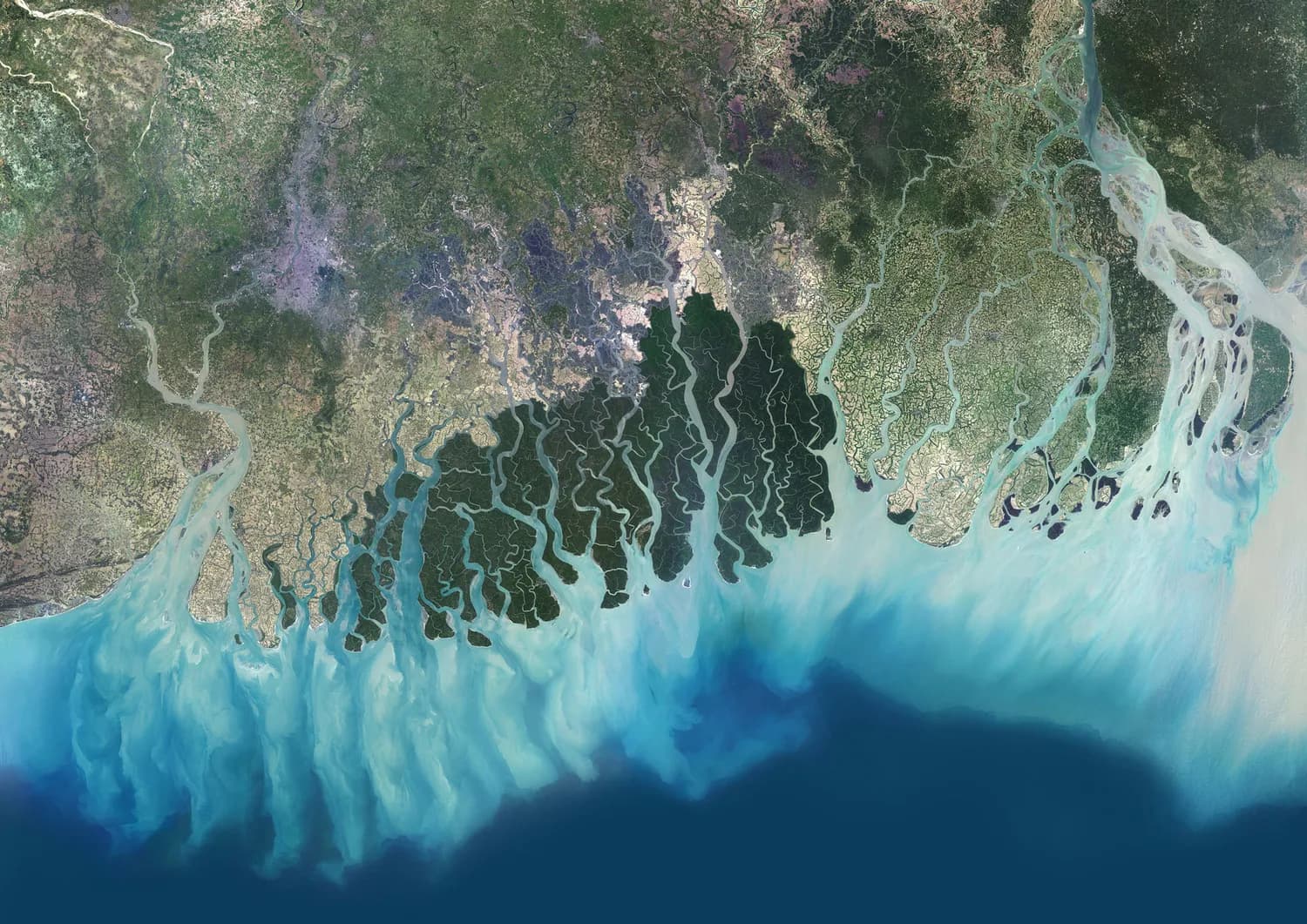
- A global analysis of 40 river deltas has highlighted land subsidence as a major threat, often exacerbating flooding risks in coastal areas.
- The analysis was published in Nature on January 14.
Land Subsidence vs. Sea-Level Rise:
- Land is sinking faster in many regions than the sea is rising, with over half of the studied deltas experiencing an average sinking rate exceeding 3 mm per year.
- In 13 deltas, such as Nile and Mekong, land subsidence occurs at rates surpassing the global sea-level rise rate.
Affected Regions:
- Deltas occupy only 1% of Earth's land surface but house 350-500 million people.
- South and Southeast Asia are particularly vulnerable, leading to significant population exposure (80% of the 76 million people in these regions live on sinking land).
Causes of Subsidence:
- The primary driver is groundwater extraction for various uses, with cities and agricultural sectors significantly contributing.
- Other contributors include reduced sediment supply due to dam construction, urban growth, and natural sediment compaction processes.
Impact of Subsidence:
- When land sinks, even small sea-level increases can exacerbate flooding risks and saltwater intrusion, adversely affecting agriculture and drinking water supplies.
- Major cities (e.g., Dhaka, Bangkok, Kolkata) built on deltas are often experiencing sinking rates comparable or greater than surrounding areas.
Challenges and Opportunities for Mitigation:
- The study emphasizes that local actions—such as regulating groundwater use, restoring natural sediment flows, and improving urban planning—can potentially mitigate subsidence.
- The capacity to implement these measures varies significantly, especially in low and middle-income countries with limited resources, making it challenging to address these issues effectively.
Economic and Social Implications:
- Continued subsidence could lead to increased displacement, food insecurity, and economic disruption in vulnerable regions, necessitating region-specific adaptation strategies.
- Countries with robust governance systems (e.g., Netherlands) show better adaptation capabilities, yet face challenges.
Recommendations for Action:
- Shift focus from solely combating climate change to addressing local land and water management issues to mitigate subsidence risks.
- Urgent action is required to avoid long-term instability and protect millions of people living in low-lying coastal areas.
Constitutional Reference: While not directly mentioned, issues related to local governance and water rights can intersect with constitutional articles enforcing protection of the environment and sustainable development (e.g., Article 48A and Article 51A(g) in the Indian Constitution).
Key Terms & Concepts
| 40 river deltas | Subject of global analysis |
| 350 to 500 million people | Population living on deltas |
| 3 mm per year | Average sinking rate of land |
| January 14, 2026 | Date of published research |
| Nile, Mekong, Yellow river, Chao Phraya | Deltas with rapid land sinking |
| 76 million people | Population in delta areas under risk |
| groundwater extraction | Main cause of subsidence |
| delta-starved | Condition due to sediment trapping |
| two-thirds of the deltas | High-risk category for adaptation |
| Mississippi Delta | Example of land loss |