iAspirants
Lebanon-Israel Conflict Escalates Further
Published on:
Share this post
Article Summary
Summary of Key Points from the Israel-Lebanon Conflict
1. Escalation of Hostilities:
- Lebanon's Prime Minister Nawaf Salam accused Israel of employing a "scorched-earth policy," urging for an immediate cessation of hostilities.
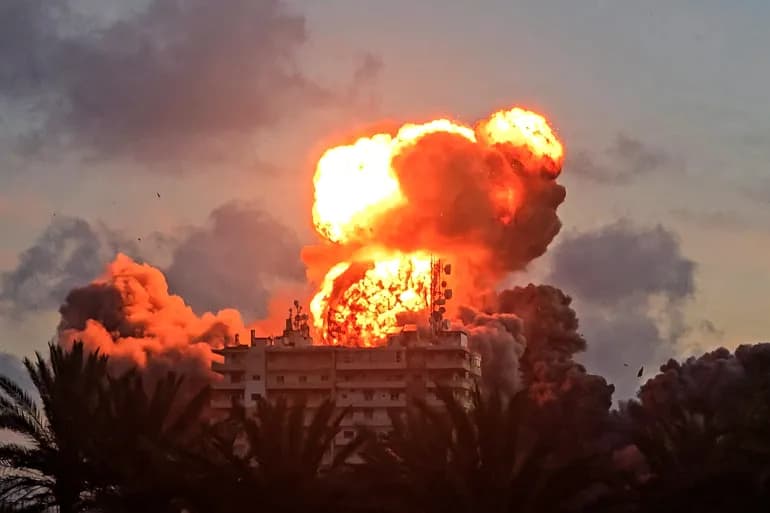
- Israeli airstrikes and evacuation warnings were issued for multiple locations in southern Lebanon.
- The conflict intensified with armed clashes and rocket fire reported from both sides.
2. Ceasefire and Negotiations:
- A truce, officially in effect since April 17, has not been adhered to; both parties accuse each other of breaches.
- Recent security talks occurred in Washington, with ongoing U.S.-brokered negotiations set for the following week.
- Prime Minister Salam described the negotiations as "the least costly path" while acknowledging their uncertain outcomes.
3. Casualties and Impacts:
- The Lebanese Health Ministry reported over 3,371 deaths due to Israeli attacks since March 2, 2026.
- Israeli military actions have significantly affected civilian areas, with many inhabitants displaced.
4. Military Actions:
- Israeli forces reportedly advanced beyond the Litani River, striking at Hezbollah positions directly.
- Hezbollah responded with rocket attacks targeting northern Israel, claiming these actions were retaliatory in nature.
- Movements of Israeli troops and Hezbollah engagements have been confirmed near towns including Zawtar al-Sharqiyah and Dibbine.
5. International Involvement:
- U.S. military-to-military discussions highlighted the need for continued dialogue without referencing the ceasefire directly.
- Iran's influence plays a critical role in the conflict, with Hezbollah drawing support in alignment with Iranian interests in the region, especially after the death of Iran's supreme leader in heightened conflicts.
6. Regional and Global Context:
- The conflict is part of broader regional tensions involving Iran, Israel and proxies within Lebanon.
- International responses and mediation efforts are ongoing amid the rising concerns of broader Middle East destabilization.
7. Humanitarian Concerns:
- The ongoing warfare has precipitated a humanitarian crisis, compounded by the destruction of infrastructure and displacement of civilians.
- Calls for ceasefires and humanitarian access have been emphasized to alleviate the civilian suffering amid ongoing violence.
Relevant Data:
- Death Toll: 3,371 reported deaths in Lebanon since March 2, 2026.
- Geography of Conflict: Israeli military operations have progressed approximately 30 kilometers into Lebanon, also affecting the Litani River area.
- Number of Projectiles: Over 25 projectiles launched from Lebanon towards Israel.
Conclusion:
The current situation between Israel and Lebanon remains volatile, characterized by ongoing military action, failed ceasefires, and critical diplomatic negotiations under U.S. facilitation, with severe implications for the civilian population and regional stability.
Key Terms & Concepts
| Hezbollah | Military engaged in conflict |
| Israel | Conducting airstrikes and offensive |
| Lebanon | Country facing conflict |
| Nabatieh | Location of military incidents |
| Litani River | Geographical boundary in conflict |
| 3,371 | Death toll from attacks |
| April 17, 2026 | Ceasefire took effect |
| February 28, 2026 | Death of Iran's leader |
| U.S. | Broker of negotiations |