iAspirants
Legacy of Mahatma Jotirao Phule
Published on:
Share this post
Article Summary
Key Points on Mahatma Jotirao Phule's Contributions and Constitutional Legacy
Historical Background:
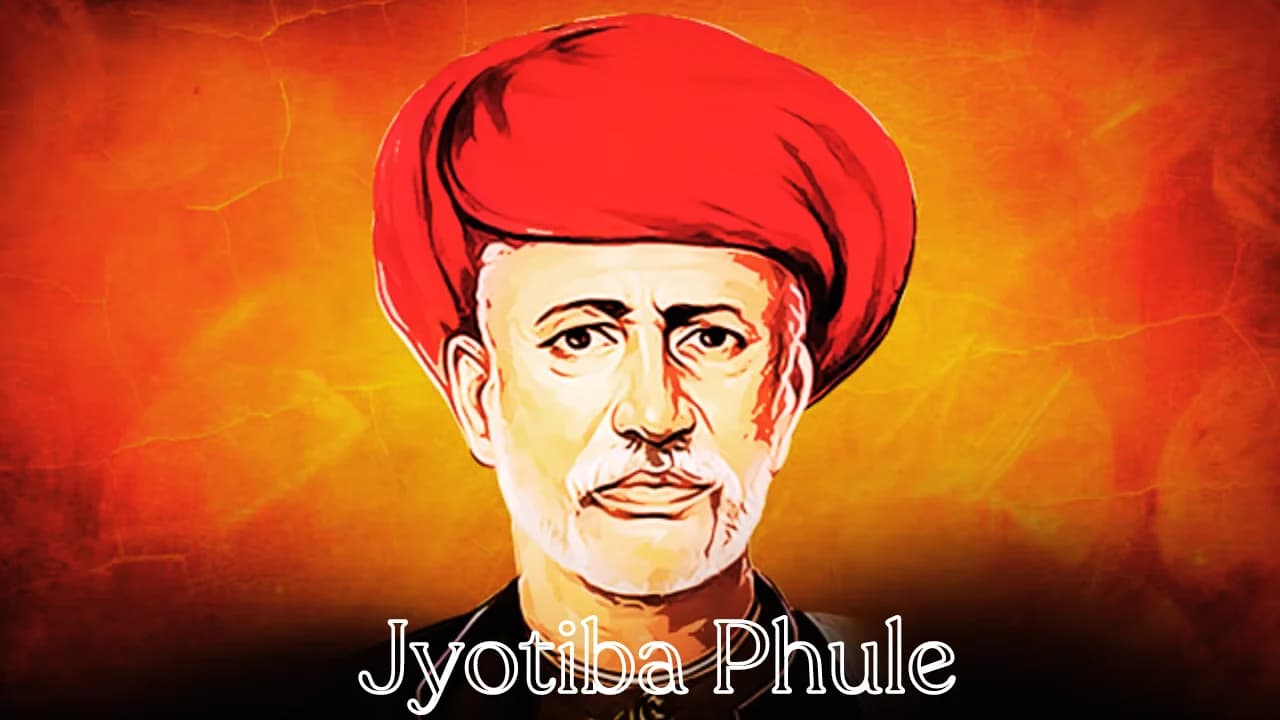
- Mahatma Jotirao Phule was born on April 11, 1827. He is recognized as a social reformer advocating for education, women's rights, and critiquing the caste system.
- His experiences as a member of a Shudra community informed his critique of social inequalities.
Philosophical Foundations:
- Phule’s work is likened to a "constitutional project," aiming to reimagine societal structures based on equality and dignity.
- Influenced by Thomas Paine's Rights of Man, Phule articulated ideas of rights, equality, and justice, emphasizing the role of constitutions in organizing political power for the general welfare.
Key Contributions:
- Educational Reforms:
- Established schools for women and marginalized castes.
- Advocated for compulsory primary education until age 12 and sought to provide scholarships for underprivileged communities.
- Social Reforms:
- Promoted widow remarriage and criticized child marriage.
- Worked to open public resources (like wells) to the “untouchable” community.
- Educational Reforms:
Global Context and Influence:
- In his book Gulamgiri (Slavery, 1873), Phule connected the struggle against caste oppression to global movements for emancipation, referencing the abolition of slavery in the United States.
- His writings reflect a commitment to transnational dialogues on human rights, inspiring movements for social justice in India.
Critique of Governance:
- Criticized colonial governance, especially the neglect of agrarian communities by foreign administrators.
- Highlighted how caste domination perpetuates economic exploitation, limiting educational opportunities for marginalized farmers.
Later Influence:
- Phule's ideas significantly influenced B.R. Ambedkar, who incorporated elements of his vision into the Indian Constitution, advocating for social justice and equality.
Constitutional References:
- Phule’s advocacy aligns with various principles found in the Constitution of India, especially in the context of Fundamental Rights (Articles 14-18, which ensure equality and prohibit discrimination) and the Directive Principles of State Policy (DPSP, aimed at promoting social and economic justice).
Contemporary Relevance:
- Phule’s bicentenary serves as a call to confront ongoing issues of inequality and to reinforce social justice as a governmental priority.
Conclusion
Mahatma Jotirao Phule's legacy is intricately tied to the development of constitutional thought in India, focusing on social reform, education, and rights for marginalized communities. His work presaged modern discussions about equality and justice enshrined in the Constitution of India, prompting continued efforts to address systemic inequalities in contemporary society.
Key Terms & Concepts
| Mahatma Jotirao Phule | Social reformer and educator |
| April 11, 1827 | Birthdate of Jotirao Phule |
| Rights of Man | Influential text by Thomas Paine |
| Gulamgiri | Phule's work on caste oppression |
| US Abolition of Slavery | Global constitutional development example |
| Education Commission of 1882 | Phule's proposal for education reforms |
| Compulsory primary education | Phule's advocacy for education up to age 12 |
| Shetkaryacha Asud | Phule's work discussing agrarian issues |
| B R Ambedkar | Adopted Phule's ideas in Constitution |
| 1890 | Year of Phule's death |