iAspirants
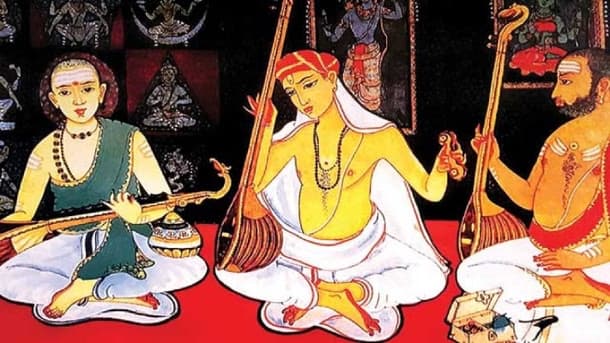
Legacy of Tyagaraja's Music and Devotion
Published on:
Share this post
Article Summary
Tyagaraja Contributions:
- Prominent figure in Carnatic music and the bhakti movement.
- Noted for bringing the teachings and devotion to Lord Rama to the masses.
- Similar in cultural reverence to Valmiki, who composed the Ramayana.
Historical Context:
- Flourished during the period from 1600-1900 in Thanjavur, which was a significant center for music due to royal patronage.
- Thanjavur court had 360 musicians with organized performance schedules, supporting a vibrant musical community.
Cultural Significance:
- Tyagaraja's life and music illustrate the connection between spirituality and art, emphasizing that devotion could lead to liberation (moksha).
- His teachings underscore the healing power of music, suggesting a deep-rooted connection between physical well-being and musical rhythm.
Musical Philosophy:
- Tyagaraja’s works are centered solely on divine themes, indicating a commitment to spiritual rather than secular themes.
- Cited a verse on the relationship between sound, breath (prana), and the eternal, portraying the essence of life through music.
Cultural Revitalization:
- Tyagaraja’s legacy is a bridge between different eras of music and continues to inspire devotion and spirituality through its practice.
This summary presents the essential facts and cultural relevance surrounding Tyagaraja without extraneous detail, aligning with academic and exam-related requirements.
Key Terms & Concepts
| Tyagaraja | Prominent composer and musician |
| Rama nama | Devotional chant by Tyagaraja |
| Thanjavur | Cultural epicenter for music |
| Kingdom period (1600-1900) | Era of royal music patronage |
| 360 musicians | Musicians at Thanjavur court |
| Moksha | Spiritual liberation through devotion |
| Bhakti movement | Spiritual movement in India |
| Ramayana | Epic poem rendition by Valmiki |