iAspirants
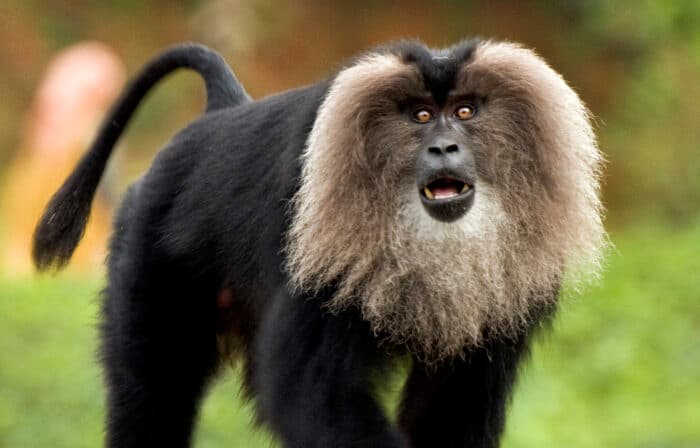
Lion-tailed Macaque Conservation Challenges
Published on:
Share this post
Article Summary
Summary of Key Facts and Data on Lion-Tailed Macaque Conservation
Species Overview:
- The lion-tailed macaque is one of India's most endangered primates, primarily found in the fragmented rainforests of the Western Ghats, particularly the Anamalai Hills.
Study Conducted:
- Longitudinal research spanning 40 years involving three institutions, including the CSIR–Centre for Cellular and Molecular Biology (CCMB).
- Investigated 37 macaque groups in both protected areas (tiger reserves) and non-protected areas (plantation regions and human settlements).
Findings:
- Macaque populations in non-protected areas have increased due to ample food sources linked to human activity, such as fruit-bearing trees and food waste.
- Protected populations are more stable even though they show slower growth; these groups maintain healthier demographic ratios, notably with more adult females.
- Group sizes in protected forests negatively correlate with canopy height, emphasizing the importance of a healthy forest canopy for the species' survival.
Risks Identified:
- Increased human presence exposes macaques to various threats, including:
- Road accidents
- Electrocution
- Tourism-induced disturbances
- Logging activities
- While birth rates between protected and non-protected populations are similar, the higher population stability in protected areas indicates greater long-term viability.
Conservation Recommendations:
- Urgent interventions suggested to mitigate threats from human activities:
- Traffic regulation and speed limits at wildlife crossings.
- Installation of speed breakers at critical points where macaques travel.
- Management of tourist inflows into sensitive areas to minimize disturbance.
- Pilot projects in Tamil Nadu demonstrated success and potential for scaling up.
Management Strategy:
- A comprehensive conservation strategy is recommended to safeguard the lion-tailed macaque, serving as a potential model for conservation efforts in other regions of the Western Ghats, recognized as a global biodiversity hotspot.
Publication Reference:
- Findings published in the Journal for Nature Conservation, emphasizing the need for scientific insight into mammal ecology and conservation strategy formulation.
Implications for Conservation Policy:
This research highlights the importance of balancing development with ecological preservation. Conservation efforts should focus on integrating wildlife protection within the broader socio-economic landscape to establish sustainable practices that benefit both macaques and local communities. The call for management plans also aligns with constitutional directives under the Directive Principles of State Policy (Article 48A) which mandates the state to protect and improve the environment and safeguard forests and wildlife.
Key Terms & Concepts
| Anamalai Hills | Location of study |
| Lion-tailed macaque | Endangered species studied |
| CSIR–Centre for Cellular and Molecular Biology (CCMB) | Research institution involved |
| Tiger reserves | Protected area for macaques |
| Journal for Nature Conservation | Publication of study findings |
| Tamil Nadu | Place for pilot efforts |
| Western Ghats | Global biodiversity hotspot |
| Population Stability | Key finding of the study |
| 40-year study | Duration of the research |
| Food waste | Source of food for macaques |
| Traffic regulation measures | Proposed interventions |
| Canopy continuity | Critical for macaque safety |
| Tourist inflows |